As Moscow muscles in on Ukraine, Russian money still poisons our shores

It is on the borders that you see the threads coming apart. In Ukraine and Bosnia the danger unravelling in Europe feels urgent as agreements that have kept us safe and peaceful are being challenged. With 100,000 Russian troops massed on the border it’s easy to focus on them, but it’s not just tanks that threaten, it’s cash.
Kyiv and Sarajevo feel a long way from London but the money flowing through both cities connects to our banks and markets. It’s not aid that fuels these conflicts, but corruption and our part in that is too important to ignore.
Over the last few decades Britain has become part of an international network of money transfers that have allowed economies around the world to prosper. Capital moving from rich to poor have started businesses and stabilised states more than any development project. But like the rats in the hold of a ship, the darker side of this trade has also brought money laundering.
Leaders in Moscow have used these routes to stash their holdings overseas. Billions have gone to the West from those who profit from the instability they cause but want to ensure they are immune from the consequences.
We have seen the price paid in murders in London where the disputes have been decided not just in our courts but in our morgues. Both Nikolai Glushkov, strangled in his London home, and Alexander Litvinenko, poisoned on the Kremlin’s orders, died because of Russian influence on our shores.
If it were just tax evasion or crime, that would be a police matter, but this goes further. The money hidden in accounts and properties is used to undermine the security of the UK and the British people. This is about us and how we protect ourselves.
From Ukraine the perspective is clear. After more than 20 years of mostly peaceful cooperation Moscow launched an invasion in 2014, illegally annexed Crimea and now occupies part of the east of the country. This is the first time a European border has been changed by force since the Second World War.
From Bosnia, the position is slightly more masked but no less dangerous.
Russian influence is driving corruption in leaders, who seek wealth over worth as they unpick the very same agreements that brought peace to a country that gave the world the term “ethnic cleansing”.
Both of these dangers are connected through Moscow, but sadly through the City too, and they risk not just their futures but our own.
The consequences for us are clear.
In Ukraine some 44 million people enjoy visa free travel in the European Union and many would no doubt use that right in the case of an invasion. Migrants in Eastern European are already weaponised to destabilise NATO partners. In the face of an outright attack, these tensions will only deepen.
In Bosnia, the danger of a collapse could lead to a failed state on the border of the EU.
For the UK, connected by alliances and trade across the continent, and with our defence capabilities near historic lows, these crises could cost us very dear at home.
Increasing the armed forces to respond to instability would not come cheap, nor would the loss of economic output from eastern allies forced to divert resources to their own defence and away from prosperity. The politics would be made all the harder by the challenge of migration.
But all that is unnecessary. The UK can hit back—hard—and without risking conflict if we use the tools we already have.
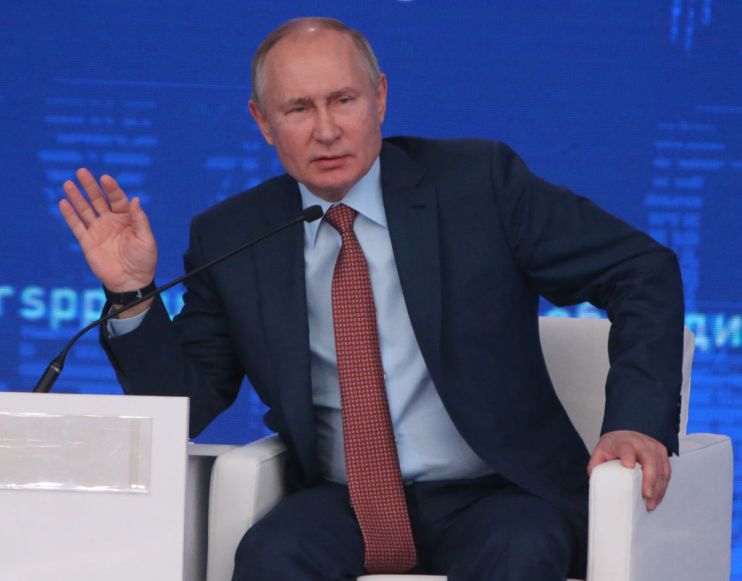
President Vladimir Putin really cares about control of Moscow, not Ukraine. He’s worried about the spread of democracy undermining his own power and the wealth it brings. We need to close down the options that allow his friends to spend it. We can do that without risking war and by acting as we should at home by cleaning up our own city, and helping others do the same.
In 2018, the Foreign Affairs Committee published Moscow’s Gold warning of the threat to us all. Now, four years later, we need the economic crimes bill we called for then. The warnings are flashing red and can no longer be ignored.