Bank of England’s Pill warns against ‘wait and see’ interest rates approach

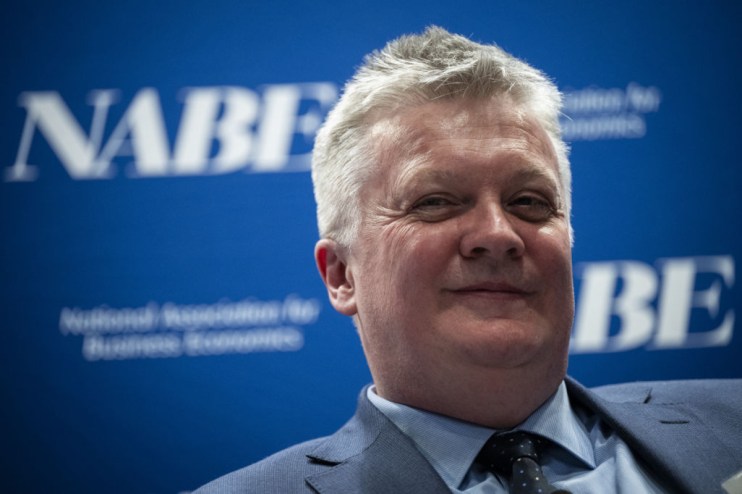
The Bank of England’s chief economist has warned that a “wait and see approach” to setting interest rates amid the ongoing Iran war could unleash a fresh wave of inflation that the central bank will find hard to contain if left unchecked.
Huw Pill, who has long been one of the most hawkish rate-setters on the Monetary Policy Committee, warned that while so-called second-round effects from the conflict are unlikely to be as severe as at the start of Russia’s invasion of Ukraine, officials may still find themselves playing catch-up without proactive action.
“The problem with… a wait-and-see approach is that these uncertainties may not resolve themselves as quickly or definitively as we would hope, leading to a status quo bias in the setting of Bank Rate,” he told a group of business leaders in Scotland. “In turn, such a bias could lead monetary policy to fall ‘behind-the-curve’ in addressing emerging inflationary risks.”
Pill added that the Bank needed to act “clearly, promptly and decisively” at its next decision on 17 September. Doing so would cut through the barrage of uncertainty wrought by the US’s ongoing conflict in the Gulf, which has sent energy prices spiralling and reignited inflation fears.
Bank of England decision on knife edge
In July, Pill was one of three members of the MPC to vote for the Bank to raise its central interest rate by 25 basis points, citing looming price pressures from the Iran war. Ultimately, the panel chose to keep rates on hold at 3.75 per cent, in what was the fifth consecutive meeting where members chose to leave interest rates unchanged.
But in minutes published alongside the decision, the Bank of England economist warned that an “insidious” wage-price spiral scenario could be unleashed if policymakers keep interest rates on hold for too long.
In such a scenario, price rises would be slower to emerge in the economy but “prove more lasting and create greater intrinsic inflation persistence”, he said.
Inflation fears have worsened since July’s MPC decision, when the US and Iran were abiding by a ‘memorandum of understanding’ that brought about a pause to hostilities and boosted oil exports through the Strait of Hormuz shipping lane. Since then, peace talks have all but fully broken down, prompting a sharp jump in oil prices and interest rates on loans in the private sector.
Pill said there was little evidence that higher energy prices were filtering through into the wider UK economy, a key determinant for monetary policy decisions given the volatile nature of energy prices. in October, household energy bills are set to rise to their highest level since the height of the Ukraine invasion – but thanks to a weak labour market, economists believe most workers will not be able to bargain for higher wages as a result.
“I am broadly convinced by modelling work suggesting that second-round effects are likely to be more modest in an environment of labour market slack (such as we are facing now) than when the labour market is tight (as experienced in 2022-23),” he told the Edinburgh Chamber of Commerce. “At the same time, I am not convinced that the existence of some labour market slack implies there will be no second-round effects at all.”