Autumn Statement 2014: What free marketeers want from George Osborne and what they’re likely to get

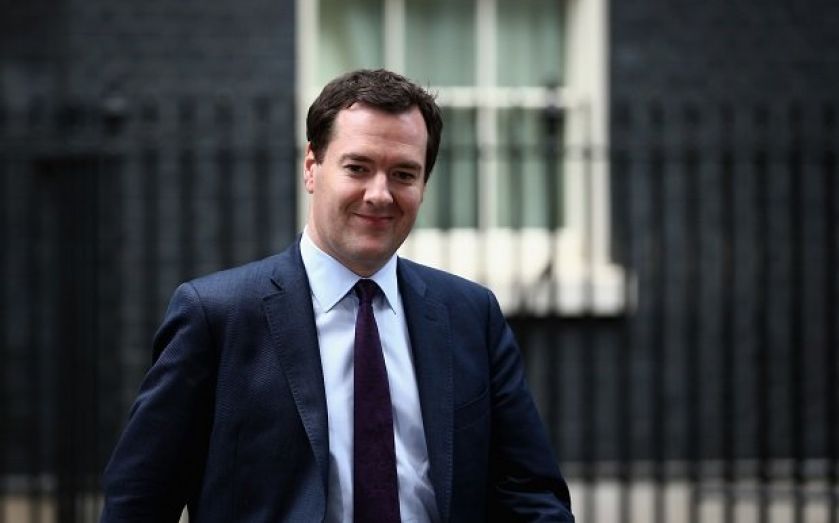
With the Autumn Statement just a week away, George Osborne is already being inundated with suggestions on how to boost growth and cut the deficit.
The CBI has already weighed in with its suggestions, including raising the threshold for employee National Insurance Contributions and cutting business rates.
Britain's unemployment rate may have dropped like a stone and growth is stronger than any other country in the G7, but the deficit remains stubbornly high and the chancellor has fallen well short of his promise to eliminate the structural deficit by the end of this parliament.
To give us a preview of what the chancellor might say next week and what he should say, a panel of economists and MPs from the Conservatives' Free Enterprise Group gathered at the Institute of Economic Affairs (IEA) this morning to deliver give their insights.
One thing we are very likely to see, however, given George Osborne's ceaseless media appearances on building sites in a hard hat is several announcements on infrastructure investment.
DEFICIT REDUCTION
Kwasi Kwarteng, MP for Spelthorne, said the poor performance on deficit reduction was in large part due to poor tax receipts and low wage growth. He added that most of the low-hanging fruit in terms of spending cuts had already been picked, and tough choices lay ahead.
Kwarteng, long an opponent of the idea of ring-fencing departments said after the next election the consensus on areas of spending such as international aid would come under strain.
Andrew Sentance, the former member of the Bank of England's Monetary Policy Committee (MPC), said in a pessimistic note that the Autumn Statement we need economically is not the one we are going to get. There was still significant room for spending restraint in the area of welfare, Sentance argued, and cutting unemployment benefits for the under 25s would be a sensible move by the chancellor.
The IEA's own Ryan Bourne pointed out that the UK had not been able to raise more than 38 per cent of GDP in taxes since the 1960s and there needed be a fundamental rethink about what the government should actually do rather than carrying on with departmental "salami slicing".
To cut back on the deficit, Bourne suggested the government should stop trying to expand its role in areas such as social and child care. An expansion of these programmes would in many instances end up as just another form of "middle-class welfare", according to Bourne. Furthermore, removing ring-fencing of budgets and another comprehensive spending review would also help bring a more balanced approach to deficit reduction.
On the other end of the age spectrum, Bourne said the government's triple lock pension scheme had been a "costly mistake" and pensioners needed to share in the burden of deficit reduction.
TAX REFORM
The tax system was in the sights of all the panellists. Sentance said the priority for low earners should be to lift the threshold for National Insurance Contributions, so they are more aligned with the personal allowance. Sentance went on to argue there should be a "bonfire" of exemptions and allowances to make room for the lowering of tax rates.
He added that Britain hadn't had a real tax-reforming chancellor since the days of Nigel Lawson, and that the tax system still reflected an era before the most recent wave of globalisation. These sentiments were echoed by Bourne, who said the equalisation, and/or merging of NICs and the personal allowance, could be a positive step forward.
He added that the government needed to go much further in tackling the crippling marginal tax rates many face in their interaction with tax credits and other income support schemes. Iain Duncan Smith's universal credit is making some steps in this direction.
Tory MP Mark Garnier, a member of the Treasury Select Committee, highlighted the need to give "certainty" to risk takers and entrepreneurs over the top rate of tax.
GOVERNMENT REFORM AND THE EU
Garnier insisted that while the EU had many faults, what was needed, above all, was certainly Britain's approach to Europe. One of the reasons London was so highly prized by the financial services industry was its access to the single market, Garnier argued.
One area where Osborne could make decent savings and significantly increase the efficiency of government, Sentance suggested, was merging government departments. He said we should move to a situation where there were only 10-12 government departments.