Skip to content
Tuesday 11 August 2026London --:--Frankfurt --:--Zurich --:--
NewslettersSearchEN · DE
MorningWire

European business, markets and politics

FTSE 100
10,844.19
-0.17%
DAX
26,391.42
+0.26%
CAC 40
8,714.94
-0.13%
STOXX 50
6,551.22
+0.24%
  • Europe
  • Markets
  • Business
  • Economy
  • Technology
  • Politics
  • Opinion
More
GermanyFranceBankingAIEnergyFintechPropertyCapital Markets
  • Germany
  • France
  • Europe
  • Markets
  • Business
  • Economy
  • Technology
  • Politics
  • Opinion
  • DE
Thursday 26 June 2025 1:52 pm  |  Updated:  Friday 27 June 2025 8:02 am

Bailey watching labour market softening ‘very closely’

By: Ali Lyon

Add as a preferred source on Google
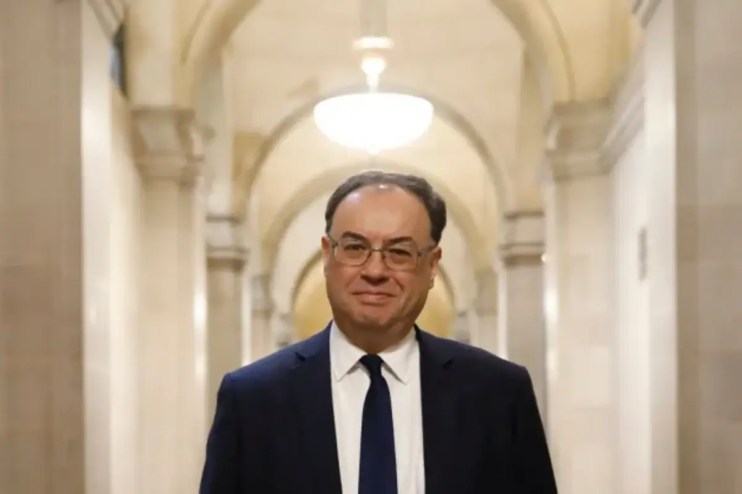
Bank of England Governor Andrew Bailey said cited several indicators that the labour market was softening.
Bailey voted for interest rates to be held.

Andrew Bailey has said his Monetary Policy Committee are watching signals of a rapidly softening labour market “very closely” in the wake of several soft employment readings and stark warnings of a slowdown from the recruitment industry.

The Governor of the Bank of England told the British Chambers of Commerce’s summit that sticky wage growth had been a significant factor through much of this year in officials’ decision to keep interest rates higher for longer than many had expected.

“We watch [pay] very carefully,” he said. “Wage growth remains an important factor behind the remaining persistence in services price inflation in particular.”

But he added that the momentum behind those rises in the latest data was slowing, pointing to a “significant decline in wage growth in the year ahead”.

Bailey also highlighted a softening in employment , after several years of the labour market being “very tight in the past few years”.

“Real time data from HMRC suggest that the number of payrolled employees fell by 0.4 per cent in the three months to May, and have now fallen in each of the last 7 months, with a contraction of more than 100,000 people on the month,” he said, adding: “Survey-based measures and intelligence from the Bank’s Agents corroborate the pattern of continued loosening.”

Bailey’s comments follow a succession of concerning data on the labour market, which had been holding up better than many economists had feared against continued geopolitical uncertainty and rising tax and cost pressures.

The latest monthly figures from the Office for National Statistics, which are often subject to retrospective revisions, revealed that in May employers shed the most jobs in a single month since the pandemic.

And in the service sector specifically, employment levels have been falling for eight consecutive months according to S&P Global, the longest streak since the financial crash.

Read more

Bank of England governor opens door to ‘simplifying’ financial rulebook

Bank of England Governor Andrew Bailey said cited several indicators that the labour market was softening.

Recent data has been supplemented by panicked warnings from headhunting industry heavyweights of a rapid decline in the recruitment landscape.

Writing in Morning Wire on Wednesday, Reed chair and chief executive James Reed branded the the current market as being “among the worst he’s seen”.

“Official statistics show 35 consecutive periods of decline,” he said. “Next month, it will be three years, with vacancies falling from a peak of around 1.3m then to 761,000 now.”

Bailey also cited softer vacancy readings as playing into rate-setters decision-making, telling Morning Wire: “One of the things we look at quite a bit is also the position on vacancies, and that has come down. That too therefore indicates, we think, some softening of the labour market.”

With the next MPC decision in August, Bailey reiterated his uncertainty around the likely impact on prices of the culmination of Donald Trump’s 90-day tariff reprieve next month, and warned the return to a higher trade barrier environment globally could push up or down on UK prices.

He said: “These trade disruptions, could go either way for inflation. For activity, I’m afraid reducing the openness of the economy is negative… but it could either lead to more or less inflation.

“If China starts exporting a lot more stuff into the UK that would have gone to the US, that will tend to push down on inflation, because we’ll get more stuff coming in more supply.”

“But if we get the disruption of supply chains then that would have the opposite effect,” he added. “It would tend to disrupt the supply of stuff and push inflation up.”

Read more

How patient can the Bank of England be?

Historic Royal Exchange building in London with modern skyscrapers behind, clear blue sky.

Share this article

  • Facebook
  • X
  • LinkedIn
  • WhatsApp
  • Email

Similarly tagged content:

Sections

  • News

Categories

  • Business

People & Organisations

  • Andrew Bailey
  • Bank of England
  • British Chambers of Commerce
  • Jobs
  • Labour market

Trending Articles

  • Five-star Mayfair hotel hit with HMRC winding-up petition

  • Nottingham Forest owner Marinakis sues Crystal Palace for defamation

  • Back to basics: Sainsbury’s gradual retreat from the British high street

  • Hargreaves Lansdown orders staff back to office

  • As it happened: Intel, Arm shares slide; Oil climbs higher

More from Morning Wire

  • Bank of England governor opens door to ‘simplifying’ financial rulebook

    Regulation
    Bank of England Governor Andrew Bailey said cited several indicators that the labour market was softening.
  • How patient can the Bank of England be?

    AD
    Historic Royal Exchange building in London with modern skyscrapers behind, clear blue sky.
  • Hold interest rates but ‘sound hawkish’, Morning Wire Shadow MPC tells Bank of England

    Economics
    Andrew Bailey, Governor of the Bank of England, with the Bank of England building and Union Jack flag in the background
  • Bank of England holds interest rates but warns of rises to come

    Economics
    Bank of England headquarters in 2025, showcasing modern architecture and iconic London skyline in the background.
  • Bank of England to hold interest rates as oil price surge threatens UK economy

    Economics
    Bank of England building on Threadneedle Street, London, showcasing its historic architecture and financial significance
  • We should all get behind this wealth tax

    Opinion
    LONDON, ENGLAND - JUNE 01: A general view of a house along Kensington Palace Gardens, which has been named as Britain's most expensive street on June 1, 2011 in London, England. Many of the mansions are occupied by billionaire businessmen, embassies and ambassadorial residences. (Photo by Oli Scarff/Getty Images)
  • London workers most exposed to AI jobs cull

    Economics
    London skyline with modern skyscrapers and lush green foliage in foreground on a clear day, highlighting urban nature balance
  • IMF warns Bank of England against cutting interest rates

    Economics
    IMF Chief Kristalina Georgieva issues caution to Bank of England amid economic concerns
MorningWire

Independent European business, markets and political news for decision-makers.

Morning Briefing

Europe

  • Germany
  • France
  • Europe
  • UK & Ireland

Business

  • Markets
  • Banking
  • Technology
  • Energy
  • Property
  • Fintech

Editorial

  • Opinion
  • Editorial Policy
  • Corrections
  • Contact

Company

  • About Morning Wire
  • Privacy Policy
  • Terms of Use
  • Cookie Policy
© 2026 Morning Wire Ltd · Published by Morning Wire Media, Bahnhofstrasse 65, 8001 Zürich, Switzerland
Privacy · Terms · Cookies · Facebook