Bank of England warns of rising global threat as lenders’ capital rules slashed

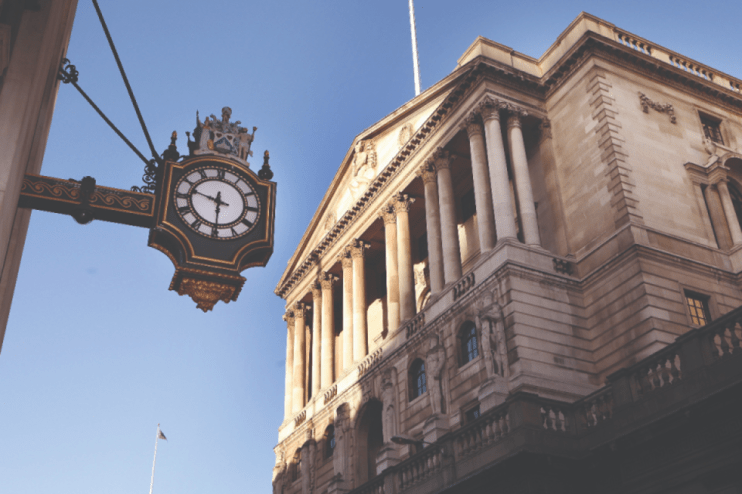
The Bank of England has warned of increased global risks to financial stability, even as it slashed rules imposed on UK lenders dictating the amount of capital they must hold.
The central bank said “risks to financial stability have increased during 2025”.
“Global risks remain elevated and material uncertainty in the global macroeconomic outlook persists,” the Bank added.
The Financial Policy Committee (FPC) identified geopolitical tensions, the fragmentation of trade and financial markets as well as pressures on sovereign debt markets as key sources of risk.
“As an open economy with a large financial centre, the UK is exposed to global shocks, that could transmit through multiple, interconnected channels,” it added.
The Bank also doubled down on previous warnings surrounding an AI bubble stating many equities “remain materially stretched” and drew comparisons to the dot-com bubble and the global financial crisis.
“This heightens the risk of a sharp correction,” the report said.
It also gave a stark warning on the role debt financing was playing in the AI sector.
“Deeper links between AI firms and credit markets, and increasing interconnections between those firms, mean that, should an asset price correction occur, losses on lending could increase financial stability risks.”
On private credig, the Bank cited “potential weaknesses” with reference to the collapse of First Brands and Tricolor, which it said “intensified focus” on these weaknesses.
The Bank reiterated warnings that due to the UK’s open economy “stress in one market… could spillover into other markets”.
The FTSE 100 suffered one of its worst trading sessions all year in October amid the private credit jitters with steep losses across UK banks.
Karim Haji, head of financial services at KPMG, said: “UK Financial Services firms have proved resilient time and again both by regulatory stress tests and real life shocks. But global risks persist.
“The past year has shown that risks aren’t confined to traditional economic shocks and when an event happens the impacts are felt immediately due to the interconnectedness of the financial system and technology.”
Bank takes chop to lenders’ capital rules
Elsewhere, the central bank took the chop to rules around capital requirements following lobbying efforts from the banking industry body UK Finance, which claimed up to £54bn of extra capital has been racked up by the sector due to holding rules.
Following the FPC’s latest report, UK lenders’ capital requirements will be eased to 13 per cent from 14 per cent previously.
This means 13 per cent of a bank’s risk-weighted assets must be funds that can absorb unexpected losses without putting customers or the financial system at risk.
The fresh changes come after the UK’s top seven banks, Lloyds, Barclays, Natwest, Santander UK, Nationwide and Standard Chartered, breezed through stress tests with the conclusion the lenders were strong enough to continue lending through “a severe but plausible” economic shock.
Bank of England Governor Andrew Bailey said the decision was a “sensible reflection of conditions” and a “sensible reflection of the health of the banking system”.
When asked whether regulation was ‘overdone’ in the fallout of the 2008 crisis, Bailey said the banking sector had come through “very substantial” economic shocks “robustly”.
He later added: “We learn from experience.. that’s why we feel comfortable making these changes.”
The move is expected to mark a major shift in the deregulation mission, as sought out by the Treasury, with analysts expecting the changes to have a more tangible impact than Rachel Reeves’ Leeds Reforms package announced earlier this year and free up billions for lenders to pump into the economy.
Haji said: “Regulations need to be robust but proportionate and UK banks have huge pools of capital. The recommendation to update the CET1 benchmark is a helpful step towards maintaining the UK’s resilience whilst also being supportive of growth.”
The cash cushion – known as Common Equity Tier 1 (CET1) – is designed to protect a lender against shocks or economic turmoil and consists of bank funds that do not need to be repaid.
Top banking bosses had called for such changes to be introduce in meetings with lawmakers earlier this year.
“I think more in terms of looking at how we measure capital… I think that will put a competitive strain on UK banks in particular when you look at what’s happening in the United States,” Michael Roberts, chief executive of HSBC Bank, said in a House of Lords session.