Skip to content
Friday 7 August 2026London --:--Frankfurt --:--Zurich --:--
NewslettersSearchEN · DE
MorningWire

European business, markets and politics

FTSE 100
10,867.89
-0.19%
DAX
26,140.13
0.00%
CAC 40
8,699.71
0.00%
STOXX 50
6,502.56
0.00%
  • Europe
  • Markets
  • Business
  • Economy
  • Technology
  • Politics
  • Opinion
More
GermanyFranceBankingAIEnergyFintechPropertyCapital Markets
  • Germany
  • France
  • Europe
  • Markets
  • Business
  • Economy
  • Technology
  • Politics
  • Opinion
  • DE
Tuesday 07 July 2026 11:39 am  |  Updated:  Tuesday 07 July 2026 12:12 pm

Bank of England to relax capital rules despite warning of economic threats

By: Samuel Norman

Senior City Reporter

Add as a preferred source on Google
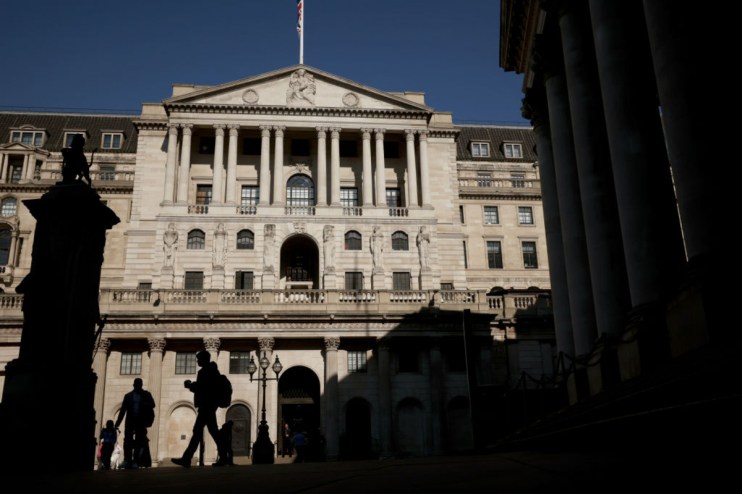
Bank of England building on Threadneedle Street, London, showcasing its historic architecture and financial significance
The Bank of England is set to hold interest rates.

The Bank of England set out proposals to relax UK banks’ capital rules even as it sounded the alarm on the growing risk of multiple threats hitting the UK economy. 

In the latest meeting of the central bank’s Financial Policy Committee top officials said it would work with watchdogs on a package of “broad reforms” that aim to make the banks’ capital requirements “more proportionate and more effective”.

Britain’s top domestic-leaning banks including the likes of Nationwide, Natwest and Lloyds will be set to benefit from the streamlined rules that could unlock billions in capital previously tied up in buffers.

But the shake-up of regulatory system came as the Bank warned the “rapid progress” in AI capabilities this year had increased the “risks to financial stability from cyber and operational vulnerabilities”.

It added the vulnerabilities had transcended beyond just AI. The central bank said when excluding the top 30 AI-related stocks, the tracking of cyclically adjusted earnings yield compared to 10-year government bond yields was still the lowest since 2007.

The committee said this indicated the “stretch in valuations is more broad-based than AI-related optimism”. 

The Bank warned there was “fragilities in the financing arrangements around AI investment, which could amplify the impact of a shock”. 

“One example of this is when technology companies invest in Al companies which in turn purchase those technology companies’ products. This creates self-reinforcing capital loops.” 

Andrew Bailey, the Bank’s governor, pushed back when questioned on the timing of capital changes amidst the growing risk. He described the changes as “targeted” and “appropriate”. 

Bank warns ‘increased’ chance of multiple risks

The committee had previously warned the UK was at risk of “large and overlapping” shocks should vulnerabilities with AI crystallise simultaneously with the economy.

Read more

Bank of England warns Burnham of UK economy’s ‘big issue’

Bank of England Governor Andrew Bailey said the future of interest rates was "more uncertain".

It said the likelihood of these risks occurring at the same time had “increased” since December, “potentially amplifying their combined impacts on financial stability”.

Still, the central bank said it was aiming to simplify the bank capital regulations through cutting away the countercyclical leverage buffer, which serves as an emergency financial cushion for lenders.

The plans also aim to align the calculations for systematically-important banks with international standards as well as redesign the core rules so that a large proportion of banks required financial reserves can be used for lending to families and businesses during financial stress.

Banks had been on a lobbying offensive over the last year for reforms to the capital regime.

A report earlier this year from the Association for Financial Markets in Europe (AFME) – which represents over 150 global banks, including the UK’s ‘big four’ – called for the removal of “excessive conservatism” in banking regulation.

Bailey said it would be “inappropriate” for the Bank to dictate whether the freed up capital is returned to shareholders.

“There is a decision to be taken in banks and with shareholders on how that capital is used… those decisions should be taken by institutions in a market economy”.

The decision to set lender’s capital requirements rests with the Financial Policy Committee, which reduced the minimum requirment to 13 per cent from 14 per cent at the end of 2025.

The rule dictates how much of a bank’s risk-weighted assets must be funds that can absorb unexpected losses without putting customers or the financial system at risk. 

Read more

Rachel Reeves’ legacy of tinkering with the City is not enough, says Mel Stride

Mel Stride addressing an audience at a business conference, standing at a podium with a presentation screen behind him

Share this article

  • Facebook
  • X
  • LinkedIn
  • WhatsApp
  • Email

Similarly tagged content:

Sections

  • News

Categories

  • Business
  • Banking
  • Economics
  • Markets
  • Regulation
  • Stock Market
  • Tech

People & Organisations

  • AI
  • ai action plan
  • ai adoption
  • ai adoption summit
  • ai ads
  • AI agents
  • ai ambitions
  • artifical intelligence
  • Artificial Inteligence
  • artificial intelligence
  • Bank of England
  • Bank of England independence
  • banking
  • cost of regulation
  • deregulation
  • Economy
  • financial services
  • FPC
  • governor of the bank of england
  • Labour
  • market
  • market conditions
  • market dominance
  • market drop
  • market economy
  • markets
  • Private credit
  • Rachel Reeves
  • regulation
  • Regulation UK
  • The Bank of England
  • UK economy

Trending Articles

  • Rupert Lowe axes pensions triple lock and pledges tax cuts in economic plan

  • Revolut founder’s wealth set to balloon amid talks of share award at $500bn valuation

  • As it happened: Stocks rise as oil fluctuates after Red Sea attack; US-Iran deal ‘being circulated’

  • Liverpool owners tipped to sell – but not to Amazon boss Bezos – by former CEO

  • WPP slashes jobs as revenue continues to fall

More from Morning Wire

  • Bank of England warns Burnham of UK economy’s ‘big issue’

    Economics
    Bank of England Governor Andrew Bailey said the future of interest rates was "more uncertain".
  • Rachel Reeves’ legacy of tinkering with the City is not enough, says Mel Stride

    Economics
    Mel Stride addressing an audience at a business conference, standing at a podium with a presentation screen behind him
  • Kemi Badenoch’s economic revolution could set the City free

    Opinion
    Kemi Badenoch will push to restore the Tories' economic credibility in the eyes of the public in a key speech.
  • Rachel Reeves to unveil next steps for ring-fencing reform at Mansion House

    Banking
    Descriptive image related to a news or business article with focus on general themes and engaging visual elements.
  • Bank of England governor opens door to ‘simplifying’ financial rulebook

    Regulation
    Bank of England Governor Andrew Bailey said cited several indicators that the labour market was softening.
  • Bank regulation, not austerity, explains why Britain is poorer than America 

    Opinion
    Aerial view of a residential cul-de-sac with houses, green lawns, trees, and a swimming pool
  • Dimon threatens to ditch JP Morgan tower in tax warning to Burnham

    Banking
    Jamie Dimon speaking at a JP Morgan event, wearing a suit and tie, addressing financial trends and market strategies.
  • Starling plans to ‘come out swinging’ in diversification bid

    Fintech
    Smiling woman, potentially Starling CEO, over city skyline with STARLING branding
MorningWire

Independent European business, markets and political news for decision-makers.

Morning Briefing

Europe

  • Germany
  • France
  • Europe
  • UK & Ireland

Business

  • Markets
  • Banking
  • Technology
  • Energy
  • Property
  • Fintech

Editorial

  • Opinion
  • Editorial Policy
  • Corrections
  • Contact

Company

  • About Morning Wire
  • Privacy Policy
  • Terms of Use
  • Cookie Policy
© 2026 Morning Wire Ltd · Published by Morning Wire Media, Bahnhofstrasse 65, 8001 Zürich, Switzerland
Privacy · Terms · Cookies · Facebook