Skip to content
Friday 7 August 2026London --:--Frankfurt --:--Zurich --:--
NewslettersSearchEN · DE
MorningWire

European business, markets and politics

FTSE 100
10,867.89
-0.19%
DAX
26,140.13
0.00%
CAC 40
8,699.71
0.00%
STOXX 50
6,502.56
0.00%
  • Europe
  • Markets
  • Business
  • Economy
  • Technology
  • Politics
  • Opinion
More
GermanyFranceBankingAIEnergyFintechPropertyCapital Markets
  • Germany
  • France
  • Europe
  • Markets
  • Business
  • Economy
  • Technology
  • Politics
  • Opinion
  • DE
Friday 29 May 2026 11:39 am

Bank of England’s Bailey: Interest rates hike may not be needed

By: Ali Lyon

Add as a preferred source on Google
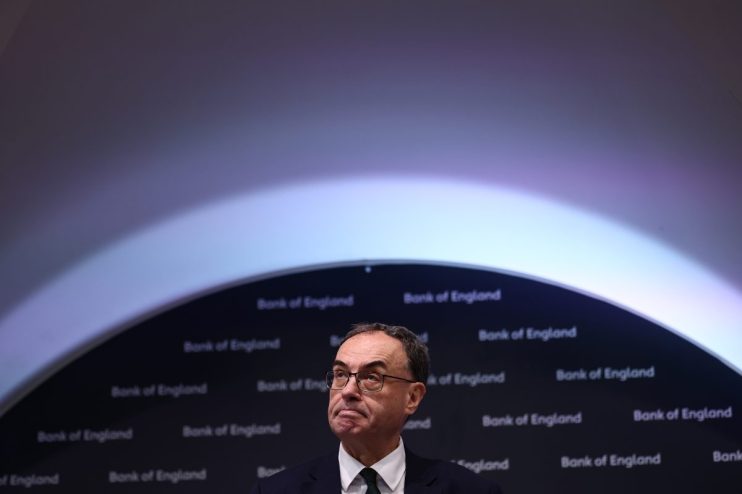
Andrew Bailey, Governor of the Bank of England, used his speech to stress the importance of effective regulation. Credit: Henry Nicholls/PA Wire
Bailey: The Bank of England has effectively already tightened monetary policy

The Bank of England may not raise interest rates in response to the Iran war and has already effectively tightened monetary policy by taking the prospect of future rate cuts off the table, governor Andrew Bailey has said.

In a speech in Iceland, the central banking chief said that inflation is “likely to go higher” as a result of the conflict in the Middle East but that the rate-setting Monetary Policy Committee (MPC) could ignore those higher prices if they do not filter through into wage bargaining and household expectations.

“Monetary policy generally looks through the direct effects of energy prices on inflation,” he said. “It takes time for changes in interest rates to affect the economy and inflation, so higher interest rates might only push inflation below [the Bank’s two per cent] target once the energy price shock has passed, resulting in undesirable volatility in both inflation and activity.”

The remarks are some of Bailey’s most dovish since the outbreak of the Iran war prompted the closure of the vital Strait of Hormuz shipping lane. The governor and other central bank officials had signalled at previous MPC meetings that the Bank of England was likely to raise its central interest rate were the conflict in the Middle East to stretch over several months.

But Bailey told the Reykjavík Economic Conference on Friday that despite the closure of the Strait stretching into its fourth month, a hike to the so-called Bank Rate may not be needed because of the weak domestic outlook for the UK economy.

“Continued weakness in the UK activity and the labour market is likely to lessen the strength of second-round effects from higher energy prices,” he said, “while recognising that these effects are likely to be stronger, the larger and more persistent is the rise in energy prices.”

Bank of England messaging shift effectively raised interest rates

Monetary policy officials are particularly wary of price rises from an energy shock might become embedded into an economy because they lead employees to bargain for higher wages, or leave a company for a better paying job.

Read more

Bank of England holds interest rates but warns of rises to come

Bank of England headquarters in 2025, showcasing modern architecture and iconic London skyline in the background.

This scenario – known as ‘second-round effects’ – can then develop into a wage-price spiral, whereby employers are forced to raise staff’s wages after a price shock in order to to prevent them from leaving, stoking more demand in the economy which could further push up prices.

But the Bank of England governor told delegates that protracted erosion of the labour market in Britain, which has seen job vacancies hit a five year low and unemployment hit five per cent, means that scenario is unlikely.

He also said that the sudden change in messaging from the MPC since the closure of the Strait of Hormuz had also had the effect of raising interest rates in the wider economy, even if the central rate remained unchanged.

Before the war, financial markets and mortgage providers had priced products and set borrowing costs on the assumption that the central bank would vote through three 0.25 per cent rate cuts over the course of 2026.

But by taking those cuts “off the table” the Bank of England has forced private lenders to withdraw loans and products the offered at the start of the year and price them differently, Bailey said.

He added: “We have already tightened policy considerably in response to the shock relative to what had been expected by markets. That is already affecting the economy. Key quoted rates on mortgages have increased since the onset of the conflict.”

Read more

Interest rate cut is ‘off the table’, says Bank of England governor

Governor Andrew Bailey has launched a defence of the Federal Reserve's independence.

Share this article

  • Facebook
  • X
  • LinkedIn
  • WhatsApp
  • Email

Similarly tagged content:

Sections

  • News

Categories

  • Business
  • Economics

People & Organisations

  • Andrew Bailey
  • Bailey
  • Bank of England
  • interest rate
  • interest rates
  • iran war
  • Labour market
  • monetary policy
  • Monetary policy committee
  • unemployment

Trending Articles

  • Rupert Lowe axes pensions triple lock and pledges tax cuts in economic plan

  • Revolut founder’s wealth set to balloon amid talks of share award at $500bn valuation

  • As it happened: Stocks rise as oil fluctuates after Red Sea attack; US-Iran deal ‘being circulated’

  • Liverpool owners tipped to sell – but not to Amazon boss Bezos – by former CEO

  • WPP slashes jobs as revenue continues to fall

More from Morning Wire

  • Bank of England holds interest rates but warns of rises to come

    Economics
    Bank of England headquarters in 2025, showcasing modern architecture and iconic London skyline in the background.
  • Interest rate cut is ‘off the table’, says Bank of England governor

    Economics
    Governor Andrew Bailey has launched a defence of the Federal Reserve's independence.
  • Bank of England may set the stage for interest rate hikes this year

    Economics
    Bank of England recession warning
  • Bank of England to hold interest rates as oil price surge threatens UK economy

    Economics
    Bank of England building on Threadneedle Street, London, showcasing its historic architecture and financial significance
  • ‘Door is open’ to interest rate hike as inflation fears return

    Economics
    Bank of England headquarters in 2025, showcasing modern architecture and iconic London skyline in the background.
  • Hold interest rates but ‘sound hawkish’, Morning Wire Shadow MPC tells Bank of England

    Economics
    Andrew Bailey, Governor of the Bank of England, with the Bank of England building and Union Jack flag in the background
  • IMF warns Bank of England against cutting interest rates

    Economics
    IMF Chief Kristalina Georgieva issues caution to Bank of England amid economic concerns
  • As it happened: FTSE 100 hits new high after interest rates held

    Markets
    Andrew Bailey, Governor of the Bank of England, in a suit and tie, looking thoughtful during a press conference.
MorningWire

Independent European business, markets and political news for decision-makers.

Morning Briefing

Europe

  • Germany
  • France
  • Europe
  • UK & Ireland

Business

  • Markets
  • Banking
  • Technology
  • Energy
  • Property
  • Fintech

Editorial

  • Opinion
  • Editorial Policy
  • Corrections
  • Contact

Company

  • About Morning Wire
  • Privacy Policy
  • Terms of Use
  • Cookie Policy
© 2026 Morning Wire Ltd · Published by Morning Wire Media, Bahnhofstrasse 65, 8001 Zürich, Switzerland
Privacy · Terms · Cookies · Facebook