Skip to content
Sunday 23 August 2026London --:--Frankfurt --:--Zurich --:--
NewslettersSearchEN · DE · FR
MorningWire

European business, markets and politics

FTSE 100
10,816.56
+0.64%
DAX
26,136.56
+0.59%
CAC 40
8,484.43
+0.37%
STOXX 50
6,462.22
+0.63%
  • Europe
  • Markets
  • Business
  • Economy
  • Regulation
  • Politics
  • Opinion
More
GermanyFranceEU InstitutionsCompetitionPublic AffairsBankingTechnologyEnergy
  • Germany
  • France
  • Europe
  • Markets
  • Business
  • Economy
  • Regulation
  • Politics
  • Opinion
  • DE
Wednesday 12 July 2023 7:47 am  |  Updated:  Wednesday 12 July 2023 11:57 am

Bank of England says UK’s big banks passed stress test and are ‘resilient’ to rising rates

By: Chris Dorrell

Add as a preferred source on Google
Mann has long been one of the most hawkish members on the MPC, persistently warning about the dangers of stubborn inflation.

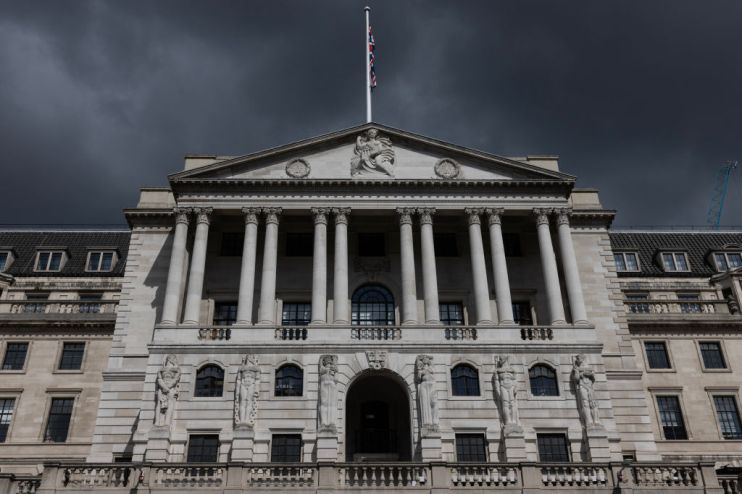
The UK’s largest lenders passed the Bank of England’s stress tests with flying colours, even as concerns grow around the health of the mortgage market.

In its latest stress test, the Bank of England concluded that banks were “resilient”, enabling them to withstand persistently higher inflation and a deep global recession.

“The UK banking system has the capacity to support households and businesses through a period of higher interest rates, even if economic and financial conditions were to be substantially worse than expected,” the Bank of England said.

Lenders started the stress test with improved asset quality and higher deposit balances than in 2019, the last cyclical stress test. This meant that banks had to use less capital in order to get through the test even though the stressed scenario was broadly similar.

Banks’ capital ratios remain well above the required capital rate in the stress, falling from an aggregate start-point CET1 ratio of 14.2 per cent to a low point of 10.8 per cent. The CET1 ratio is a measure of a bank’s financial strength.

“By far the most striking thing about the stress test is the fact that the capital drawdown of capital is really quite a lot smaller than last time we ran a test on this scale,” Sam Woods, head of the Prudential Regulation Authority said.

Each bank had different requirements, but the aggregate hurdle was 6.9 per cent. Barclays and Standard Chartered recorded the biggest falls in their CET1 ratio, falling to 8.5 per cent and 8.8 per cent respectively.

No individual bank was required to strengthen its capital position as a result of the test. The Bank noted that the resilience of lenders relies partly on their ability to cut dividends and bonuses.

Read more

The European fintech American dream is being called into question

Wise logo with downward trending stock chart, highlighting fintechs share decline amid Belgium fraud investigation

“All banks were safely above the hurdle rates for CET1 and leverage ratio. However, there is a clear warning to investors that in the event of a severe stress, banks would reign in distributions,” Peter Rothwell, head of banking at KPMG said.

Shares in banks were trading higher on Wednesday morning, with Virgin Money rising over seven per cent after it said it would resume its buyback programme this year.

The results come amid growing concerns around the mortgage market. Yesterday rates on a two-year fixed deal hit their highest level since 2008.

However, notwithstanding concerns in particular segments of the market, the costs of remortgaging were not expected to pose a risk to financial stability.

Stress tests are designed to test the resilience of banks against potential shocks and inform what level of capital banks must hold. This year the test focused especially on the resilience of banks’ retail divisions against rising interest rates.

The eight banks being tested were HSBC, Barclays, Standard Chartered, Lloyds, Natwest, Santander, Virgin Money and Nationwide. Together the banks make up 75 per cent of the lending to the UK economy.

For the first time, ring-fenced banks were tested on a standalone basis, where these differed significantly from the wider group.

The scenario covered five years, testing how banks would respond if the Bank’s base rate had hit six per cent earlier this year alongside a five per cent fall in GDP and a 31 per cent slump in house prices. The scenario was more severe than the financial crisis.

Read more

Starling plans to ‘come out swinging’ in diversification bid

Smiling woman, potentially Starling CEO, over city skyline with STARLING branding

Share this article

  • Facebook
  • X
  • LinkedIn
  • WhatsApp
  • Email

Similarly tagged content:

Sections

  • News

Categories

  • Banking

Related Topics

  • Bank of England

Trending Articles

  • Ratcliffe’s Ineos saves Runcorn plant

  • Can debt-ridden Morrisons become a Big Four supermarket again?

  • Mike Ashley’s Frasers offers to pay personal shoppers in Harvey Nichols takeover

  • Amazon says it buys books in bulk to ‘improve products’

  • Burnham predicted to raise taxes for ‘fundamental’ cost of living support

More from Morning Wire

  • The European fintech American dream is being called into question

    Fintech
    Wise logo with downward trending stock chart, highlighting fintechs share decline amid Belgium fraud investigation
  • Starling plans to ‘come out swinging’ in diversification bid

    Fintech
    Smiling woman, potentially Starling CEO, over city skyline with STARLING branding
  • Inflation leaps to 2.9 per cent in blow to Burnham 

    Economics
    Burnham cityscape showcasing modern architecture, bustling streets, and vibrant community life in a thriving urban setting
  • Metro Bank profit jumps as it bucks branch closure trend

    Banking
    Metro Bank logo on a blue sign above a modern building entrance with reflective windows
  • Big bank bosses on alert as tax noise gets louder under Burnham

    Banking
    Two men, one in a white shirt and red tie, the other in a navy jacket, conversing outdoors.
  • Revealed: Natwest banked company used by MFS founder to ‘siphon off’ funds

    Banking
    Hand holding a NatWest debit card with a colorful design, blurred NatWest logo in the background.
  • How patient can the Bank of England be?

    AD
    Historic Royal Exchange building in London with modern skyscrapers behind, clear blue sky.
  • UK economy weathers Iran war shocks but slowdown incoming

    Economics
    Chancellor John Healey smiling, wearing a navy suit, white shirt, and red tie.
MorningWire

Independent European business, markets and political news for decision-makers.

Morning Briefing

Europe

  • Germany
  • France
  • EU Institutions
  • Europe

Business

  • Markets
  • Business
  • Economy
  • Regulation
  • Competition
  • Public Affairs

Editorial

  • Opinion
  • Editorial Policy
  • Corrections
  • Contact

Company

  • About Morning Wire
  • Privacy Policy
  • Terms of Use
  • Cookie Policy
© 2026 Morning Wire Ltd · Published by Morning Wire Media, Bahnhofstrasse 65, 8001 Zürich, Switzerland
Privacy · Terms · Cookies · Facebook