Bank of England ‘should wait’ before cutting interest rates, Morning Wire Shadow MPC says

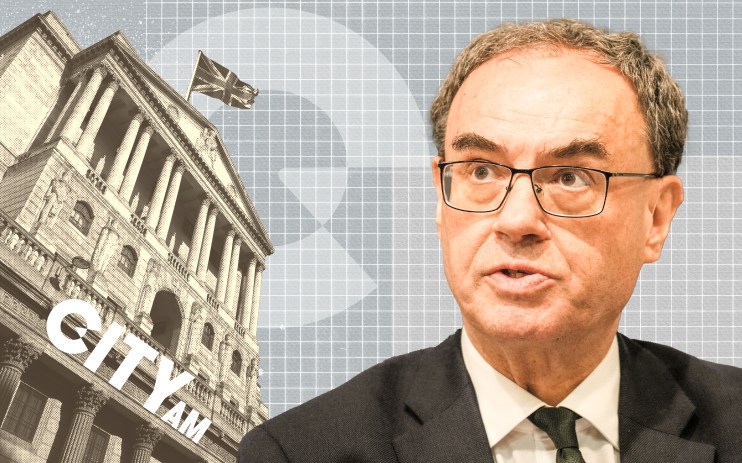
The Bank of England should “wait and see” how long the war in Iran goes on for before cutting interest rates again, leading economists on Morning Wire’s Shadow Monetary Policy Committee have said.
The crisis in the Middle East has pushed up energy prices and heightened fears that the UK economy is heading for a period of high inflation and low growth, with some analysts warning the prospect of a recession cannot be ruled out.
Top economists from academia and City giants have said the Bank should hold interest rates at 3.75 per cent in the risk that the Iran war persists and leads to spiralling price rises over the coming year.
Members of Morning Wire’s Shadow MPC voted 7-2 in favour of leaving interest rates unchanged. Economists, who responded independently from their respective organisations, suggested that an interest rate cut would have been more likely if the war in Iran had not broken out.
A decision to keep monetary policy restrictive may be a reluctant one given rising unemployment and predictions that price growth could ease to two per cent next month.
Some members including Julian Jessop suggested that the Bank should leave the option of cutting borrowing costs open in upcoming meetings.
Jessop said: “It is still right to look past the temporary impact of commodity price shocks, especially if these will also dampen economic activity. Nonetheless, it will take time to gauge all the second round effects, including on inflation expectations.”
Katharine Neiss, chief European economist at PGIM Fixed Income, said she would have backed an interest rate cut had there not been a war in the Middle East, though she added that delaying a cut carried its own economic risks and was “not a free lunch”.
Crunch decision on interest rates
Recent data by the Office for National Statistics (ONS) has pointed to rising unemployment, near stagnation in the UK economy and falling inflation.
Forecasters have suggested that bleaker economic data may come in the second half of the year given the energy price cap will only be reset in July.
Sir Keir Starmer’s government has held off announcing a multi-billion pound energy support package despite the Brent Crude Oil price, an international benchmark, remaining above $100 per barrel.
The government has instead intervened to support households that use heating oil. Rachel Reeves has indicated that there was “scope” for the government to offer a larger package.
A delay in interest rate cuts, however, could leave public finances in a more perilous position.
The Chancellor’s headroom inched up by nearly £2bn at the Spring Statement in part due to the Office for Budget Responsibility’s more optimistic forecasts on government borrowing costs over the next five years.
Anna Leach – Institute of Directors, chief economist
Vote: Hold
What has influenced your decision?
“The inflationary outlook has become highly uncertain. The outbreak of conflict in Iran has stoked oil and gas price volatility, driving oil prices above $100 a barrel and gas prices to more than double their pre-conflict levels.
“Inflation expectations among households and businesses remain elevated at three to four per cent and domestic inflationary pressures were already not coming down as quickly as the Bank had hoped.
“The Strait of Hormuz remains closed and the International Energy Agency has described the disruption to oil markets as ‘unprecedented’.
“In light of this new shock, it makes sense for the Bank to take a moment to see how the conflict evolves. But inflation is much lower than it was ahead of the Ukraine conflict. This creates more wriggle room for the Bank when it comes to balancing growth and inflation objectives.”
Ben Ramanauskas – Policy Exchange, senior research fellow in economics
Vote: Cut by 25 basis points
What has influenced your decision?
“The situation in the Middle East will likely cause a slight uptick in headline inflation followed, potentially, by a modest increase in core inflation. However, this is likely to be transitory and so the Bank should look through the impact of this supply side shock.
“High unemployment, low consumer and investor confidence, and weak growth were already set to persist and will likely be exacerbated by the energy shock. As such, we should expect inflation to continue to fall, return to target, and potentially undershoot.
“Monetary policy remains restrictive. The MPC should continue to cut Bank Rate with the aim of arriving at a neutral rate of around three per cent by the end of the year.”
Jack Meaning – Barclays, chief UK economist
Vote: Cut by 25 basis points
What has influenced your decision?
“The flow of UK data has continued to be weak: the economy is stagnant and unemployment is rising. This raises a risk that interest rates need to be cut to stabilise the economy as demand softens. Weighed against this is the evolving energy price shock.
“If current oil and gas price levels were to persist then this would keep inflation above the two per cent target for the next 12 months, and may risk raising inflation expectations. That said, this is not 2022 and I think the risk of rising expectations leading to persistent inflation becoming embedded is reduced given the current economic weakness.
“This increases the likelihood that the boost to inflation is temporary. With two significant risks on either side, for me, the correct position, in my view, is one of balance. I therefore think Bank Rate should be neutral and remain there until there is evidence that it needs to lean one way or the other.
“A 25 basis point cut, to 3.5 per cent, would take us to the top of my estimated range of a neutral interest rate.
Jonathan Haskel – Imperial College Business School, professor of economics and former MPC member
Vote: Hold
What has influenced your decision?
“With much uncertainty around the duration of the current Middle East conflict, there is value for any policymaker to wait and gain more information.
“That value, to my mind, outweighs the concern that holding rates keeps monetary policy restrictive.”
Julian Jessop – Independent economist
Vote: Hold – but with a dovish statement.
What has influenced your decision?
“The fallout from the Iran war means that inflation will be higher for longer. It is still right to look past the temporary impact of commodity price shocks, especially if these will also dampen economic activity.
“Nonetheless, it will take time to gauge all the second round effects, including on inflation expectations.
“This creates a difficult balancing act. Rates should remain on hold at least until the next set of staff forecasts in April. But in the meantime, this week’s statement could support confidence by signalling that the MPC still has a bias towards cutting rates further.”
Kallum Pickering – Peel Hunt, chief economist
Vote: Hold
What has influenced your decision?
“The escalating conflict in the Middle East poses the most serious downside risk to the UK economy since the Russian invasion of Ukraine in 2022. By disrupting global energy production and trade flows, it could severely impair production and add to inflationary pressures – in turn creating a complex and uneasy trade-off for monetary policy.
“In such times, the urge to act can be strong.
“However, for now, the benefits of remaining cautious outweigh the risks of trying to pre-emptively stabilise output or prices. Cutting the Bank Rate in an attempt to support output risks undermining the Bank’s credibility if inflation resurges, while raising the Bank Rate would risk unnecessary harm if the conflict ends soon.
“Financial markets are priced for a short conflict, but risks are skewed towards a protracted one.”
Katharine Neiss – PGIM Fixed Income, chief European economist
Vote: Hold
What has influenced your decision?
“Prior to the recent events in the Middle East, I would have advocated a cut in Bank Rate to 3.5 per cent.
“The uncertain geopolitical situation and the extreme impact it can have on energy suggests a wait and see approach for now.
“That said, waiting is not a free lunch and there are risks associated with being behind the curve given the marked weakening in the UK labour market data.”
Ruth Gregory – Capital Economics, deputy chief UK economist
Vote: Hold
What has influenced your decision?
“If oil and gas prices peak around current levels and soon fall back, inflation probably wouldn’t breach the three to four per cent range that can generate more second-round effects.
“In this scenario, interest rate cuts would probably be delayed rather than cancelled.
“In a more severe scenario in which the oil price rises to $150 per barrel and the gas price increases to 250p per therm, inflation could jump to a peak of eight per cent next year and stay above six per cent until mid-2027.
“That would mean the chances of large and long lasting second-round effects would be high and interest rate hikes would be required to limit them.
“So, various scenarios point to vastly different paths for Bank Rate. And it makes sense to keep rates on hold until there is more clarity on the situation in the Middle East and what’s coming down the line for UK inflation.”
Vicky Pryce – Centre for Economics and Business Research, chief economic adviser
Vote: Hold
What has influenced your decision?
“Huge uncertainty right now makes a decision either way difficult.
“But holding rates should be accompanied by a stop, at least temporarily, of quantitative tightening by the Bank of England to ease pressure on bond yields and on mortgage rates.”