Skip to content
Wednesday 2 September 2026London --:--Frankfurt --:--Zurich --:--
NewslettersSearchEN · DE · FR
MorningWire

European business, markets and politics

FTSE 100
10,774.11
-0.14%
DAX
25,886.15
-0.32%
CAC 40
8,298.56
-0.04%
STOXX 50
6,369.80
+0.01%
  • Europe
  • Markets
  • Business
  • Economy
  • Regulation
  • Politics
  • Opinion
More
GermanyFranceEU InstitutionsCompetitionPublic AffairsBankingTechnologyEnergy
  • Germany
  • France
  • Europe
  • Markets
  • Business
  • Economy
  • Regulation
  • Politics
  • Opinion
  • DE
Thursday 12 March 2020 12:17 pm  |  Updated:  Thursday 12 March 2020 12:30 pm

Bank of England weighs pros and cons of central bank digital currencies

By: Harry Robertson

Add as a preferred source on Google
Bank of England weighs pros and cons of central bank digital currencies
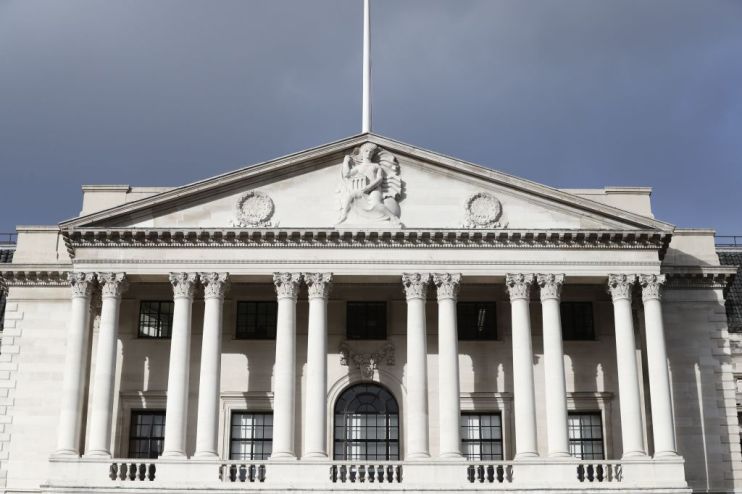
The Bank of England is increasingly taking seriously the idea of central bank digital currencies

The Bank of England has asked for people’s views on the creation of a central bank digital currency (CBDC) as it weighs the pros and cons of launching its own.

Governor Mark Carney said in a discussion paper published today that although “the creation of a CBDC poses a number of opportunities, it could raise significant challenges for maintaining monetary and financial stability”.

A CBDC would give people and businesses a new form of money issued by a central bank – making it completely safe – that would create a new way to make payments. Currently, the public can only hold central-bank issued money in the form of coins and notes.

CBDCs differ from digital cash, which is just an electronic representation of physical money. A central bank currency would be a complete replacement for notes and coins, although the two could be convertible.

The BoE is unsure exactly what the design of the CBDC would be, should it go ahead. That is why it has asked for public engagement on the topic, it said today.

The threat of private digital currencies, such as Facebook’s libra, has prompted central banks to think hard about whether they will launch their own currencies.

Several central banks – including those of Sweden and China – are working on their own CBDCs.

Carney said a CBDC for the UK “could support a more resilient payments landscape”. He added: “It also has the potential to allow households and businesses to make fast, efficient and reliable payments, and to benefit from an innovative, competitive and inclusive payment system.”

The Bank has said that a CBDC would not make existing payment systems redundant, although they may become so in the very long term. Its staff think there is no reason two payments systems could not operate alongside each other.

Among the drawbacks of a digital currency are that it could lead to financial disruption if everyone switched from one system to the other, the Bank’s discussion paper said.

Carney said the CBDC “would need to be very carefully designed if it were to be introduced”.

The Bank requested written responses from people with thoughts about the idea by 12 June.

Read more

Government pushes Bank of England to innovate on payments and digital currencies

Bank of England building on Threadneedle Street, London, showcasing its historic architecture and financial significance

Share this article

  • Facebook
  • X
  • LinkedIn
  • WhatsApp
  • Email

Similarly tagged content:

Sections

  • Markets & Economics
  • News

Categories

  • Banking
  • Economics

Trending Articles

  • Vodafone and Deliveroo look to patch up Reform ties after Yusuf prison threats

  • Trio of firms poised to quit London Stock Exchange as exodus gathers pace

  • Jaguar reveals the Type 01’s screen-free interior

  • Easyjet’s over-60s recruitment push is economically necessary

  • FCA ‘worked backwards’ to justify motor finance redress, say lenders

More from Morning Wire

  • Government pushes Bank of England to innovate on payments and digital currencies

    Regulation
    Bank of England building on Threadneedle Street, London, showcasing its historic architecture and financial significance
  • Economists urge Bank of England to halt bond sales as borrowing costs climb

    Economics
    Bank of England headquarters with financial charts overlay, illustrating private credit stress test analysis
  • How the Treasury got ‘fed up’ with the Bank of England’s payments plan

    Fintech
    The Bank of England's Breeden argued the recent inflation bump was transitory (Photo by Chris Ratcliffe/Bloomberg via Getty Images)
  • Revolut lands fresh banking licence after wrestling with Europe friction

    Fintech
    Revolut Banque Française ad on a Morris column in Paris, with the July Column and blurred traffic in the background.
  • Elavon renews partnership with Sage to simplify payments for growing businesses

    Business Wire
  • How patient can the Bank of England be?

    AD
    Historic Royal Exchange building in London with modern skyscrapers behind, clear blue sky.
  • House prices suffer biggest August slump in eight years 

    Property
    Aerial view of colorful residential houses built on a hillside, nestled among green trees, representing housing markets
  • Mike Ashley’s Frasers weighs move to oust Hugo Boss chief 

    Retail
    Mike Ashley, founder of Frasers Group Plc. Photographer: Chris J. Ratcliffe/Bloomberg via Getty Images
MorningWire

Independent European business, markets and political news for decision-makers.

Morning Briefing

Europe

  • Germany
  • France
  • EU Institutions
  • Europe

Business

  • Markets
  • Business
  • Economy
  • Regulation
  • Competition
  • Public Affairs

Editorial

  • Opinion
  • Editorial Policy
  • Corrections
  • Contact

Company

  • About Morning Wire
  • Privacy Policy
  • Terms of Use
  • Cookie Policy
© 2026 Morning Wire Ltd · Published by Morning Wire Media, Bahnhofstrasse 65, 8001 Zürich, Switzerland
Privacy · Terms · Cookies · Facebook