Skip to content
Wednesday 19 August 2026London --:--Frankfurt --:--Zurich --:--
NewslettersSearchEN · DE · FR
MorningWire

European business, markets and politics

FTSE 100
10,727.03
-0.01%
DAX
26,129.44
0.00%
CAC 40
8,538.58
+0.34%
STOXX 50
6,478.47
+0.16%
  • Europe
  • Markets
  • Business
  • Economy
  • Regulation
  • Politics
  • Opinion
More
GermanyFranceEU InstitutionsCompetitionPublic AffairsBankingTechnologyEnergy
  • Germany
  • France
  • Europe
  • Markets
  • Business
  • Economy
  • Regulation
  • Politics
  • Opinion
  • DE
Monday 08 May 2023 1:23 pm

Banking crisis reinforces need for ringfencing as government’s consultation comes to an end

By: Chris Dorrell

Add as a preferred source on Google
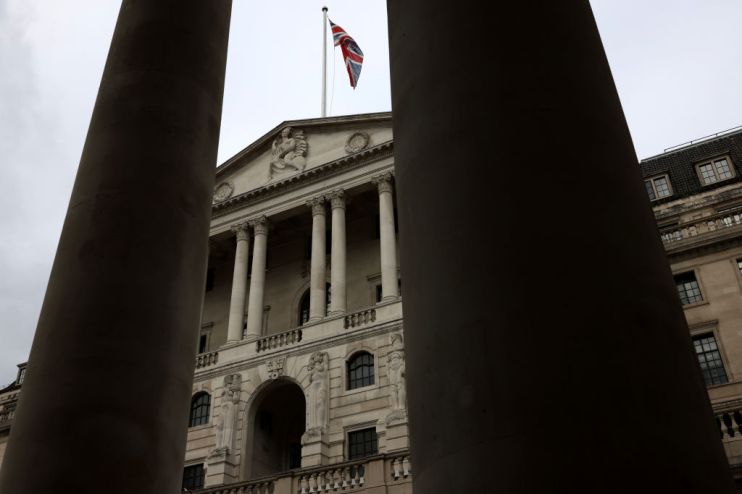
Bank Of England Monetary Policy Report Press Conference
Ringfencing, which was introduced post-financial crisis, separates a bank’s investment banking division from its retail

Experts have warned that the recent banking stresses demonstrate the importance of the ringfencing regime as the government’s consultation comes to an end. 

Treasury ministers are keen to push forward with changes to how banks are forced to separate their retail and commercial activities with, for instance, investment banking operations – reducing the number of firms subject to the rules by increasing the threshold at which the rules kick in.

The government has said it believes the resolution regime – which kicks in when a bank is set to fail – will become embedded and reduce the need for strict ring-fencing rules.

Anindya Ghosh Chowdhury, director at Mazars, argued that although there are benefits to reforming the ring-fencing regime, the timing was not right. 

“The timing of this change is of concern as the alternate approach to safeguarding financial stability – resolution – is largely untested,” Chowdhury told Morning Wire.  

Resolution regimes were developed post-financial crisis to make it easier to deal with a collapsed bank without falling back on bailouts. Many suggest it performs the same role as ringfencing by ensuring banks are not ‘too big to fail.’

The government’s own proposals on ringfencing are based on the argument that the resolution regime has overtaken the ringfencing regime, meaning it can be reformed and removed.

However, as Chowdhury noted, over the past few months regulators have avoided using the resolution regime despite a number of bank collapses. “Three banks have failed in the recent past, and issues with the effectiveness of the implementation of resolution plans in each case is well known,” he said.  

These concerns have previously been voiced by professor John Vickers, one of the architects of the ringfencing regime.

Read more

Rachel Reeves to unveil next steps for ring-fencing reform at Mansion House

Descriptive image related to a news or business article with focus on general themes and engaging visual elements.

In March he told Morning Wire that “recent events have shown that it (resolution regime) doesn’t necessarily work as advertised when push comes to shove.” Vickers argued that “the fundamental UK architecture of ring-fencing should remain the same.”

With stress in the banking sector continuing in the US, Chowdhury said “the impact of the phase-out at this time on market confidence is anyone’s guess.”

Ringfencing, which was introduced post-financial crisis, separates a bank’s investment banking division from its retail with the intention of protecting the core retail division from shocks originating elsewhere. It covers banks with more than £25bn of deposits. 

The government’s consultation on changes to the ringfencing regime closed on Sunday. It proposes to lift the threshold at which ringfencing applies to £35bn. 

Supporters of reform argue it will make the UK’s financial system more competitive. KPMG’s head of banking Peter Rothwell commented: “One of the key questions to be considered will relate to competitiveness – both in respect of the UK banking sector internationally, but also the impact domestically between large, ring-fenced entities and other domestic competition.”  

Supporters of reform suggest the regime is expensive and prevents banks from growing or innovating. For example, there is some evidence that banks limit their growth to stay below the threshold.  

Some also argue that it prevents funds from being used efficiently as they can be trapped within the ringfenced division. 

Many also point out that a raft of new reforms to improve the safety of the financial system have been introduced since ringfencing was introduced, including tighter capital and liquidity rules. 

“Some may argue that the objectives of ring fencing have been achieved through other prudential means,” Rothwell said. 

Read more

Kemi Badenoch’s economic revolution could set the City free

Kemi Badenoch will push to restore the Tories' economic credibility in the eyes of the public in a key speech.

Share this article

  • Facebook
  • X
  • LinkedIn
  • WhatsApp
  • Email

Similarly tagged content:

Sections

  • News

Categories

  • Banking

Trending Articles

  • Jobless Banquet: Youth unemployment surge ‘sends Neets to KFC’

  • As it happened: FTSE 100 drops as oil prices rise after Trump makes Hormuz threat

  • US bond market jitters spark UK economy recession warning

  • Monzo chair makes early exit after boardroom rift

  • Amanda Blanc has worked her magic at Aviva

More from Morning Wire

  • Rachel Reeves to unveil next steps for ring-fencing reform at Mansion House

    Banking
    Descriptive image related to a news or business article with focus on general themes and engaging visual elements.
  • Kemi Badenoch’s economic revolution could set the City free

    Opinion
    Kemi Badenoch will push to restore the Tories' economic credibility in the eyes of the public in a key speech.
  • Rachel Reeves’ legacy of tinkering with the City is not enough, says Mel Stride

    Economics
    Mel Stride addressing an audience at a business conference, standing at a podium with a presentation screen behind him
  • As it happened: Choppy day for FTSE 100 after Iran closes Strait of Hormuz as strikes ramp up

    Markets
    Donald Trump delivering a speech at a podium during a formal event, emphasizing key points to an attentive audience.
  • IPO tweaks are welcome, but London’s market needs root and branch reform

    Opinion
    Busy London Stock Exchange trading floor in the 1980s with brokers at hexagonal trading posts.
  • City watchdog eyes rules overhaul for UK asset managers

    Regulation
    The FCA has appointed Liam Coleman interim chair of the FOS.
  • Bank of England to relax capital rules despite warning of economic threats

    Banking
    Bank of England building on Threadneedle Street, London, showcasing its historic architecture and financial significance
  • Senior exec layoffs surge as firms brace for major employment law change

    Business
    Businessman eating lunch outdoors in Canada financial district
MorningWire

Independent European business, markets and political news for decision-makers.

Morning Briefing

Europe

  • Germany
  • France
  • EU Institutions
  • Europe

Business

  • Markets
  • Business
  • Economy
  • Regulation
  • Competition
  • Public Affairs

Editorial

  • Opinion
  • Editorial Policy
  • Corrections
  • Contact

Company

  • About Morning Wire
  • Privacy Policy
  • Terms of Use
  • Cookie Policy
© 2026 Morning Wire Ltd · Published by Morning Wire Media, Bahnhofstrasse 65, 8001 Zürich, Switzerland
Privacy · Terms · Cookies · Facebook