
De Beers just launched a Game of Stones

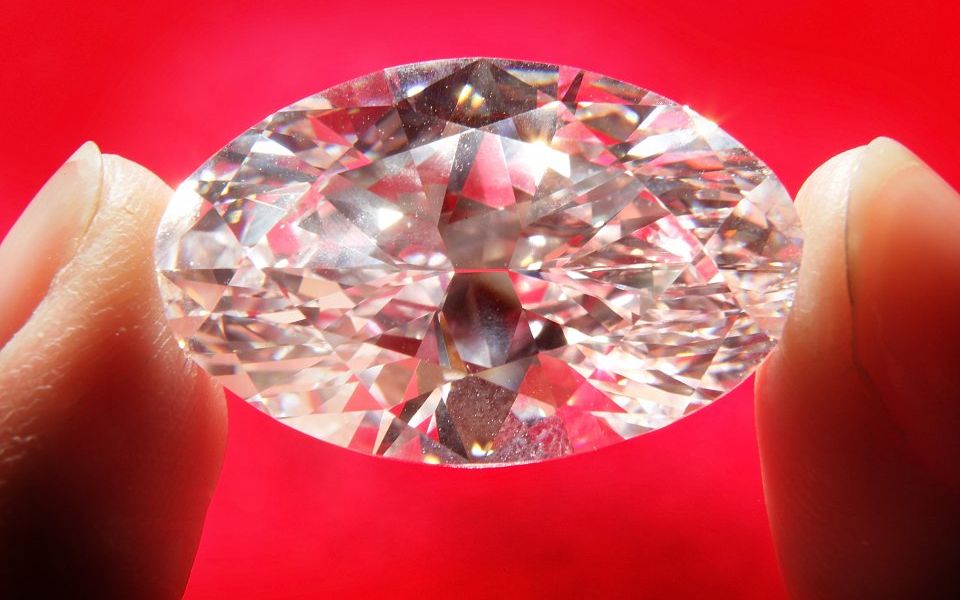
Diamond pioneer De Beers has always insisted it would never market man-made, or “fake”, diamonds. It recently made a surprise U-turn, revealing it will soon sell laboratory-grown stones, despite its current “real is rare” marketing campaign. So what has sparked this change of heart?
De Beers, owned by Anglo American and the Government of Botswana, will invest $94m (£71m) in new production facilities to support its Lightbox brand, which will sell earrings and necklaces made with synthetic diamonds at “affordable” prices. Significantly, Lightbox will not be selling engagement rings. It is important to note that lab-made diamonds are not exactly cubic zirconia. They have the same physical and chemical properties of a mined diamond and are difficult to tell apart. They are, however, much cheaper. “We see this is as opening up new gifting occasions, where perhaps a natural diamond would say too much or, frankly, be too expensive,” Steve Coe, general manager of Lightbox, said. “This is something you might buy for a best friend or for a Sweet 16.”
Ethics matter
Price is important, but the main advantage of a synthetic stone appears to be ethical – offering a direct marketing play into the millennial mindset. Synthetics are produced to be indistinguishable from their natural counterparts – but free of any controversy. So-called blood diamonds have been a major issue in Africa, where they have been sold to fund conflicts in places such as Angola, the Democratic Republic of Congo and Liberia. Indeed, Leonardo DiCaprio, the Hollywood actor who earned an Oscar nomination for his role in the 2006 movieBlood Diamond, has been something of an evangelist for the synthetic sector, investing in private Silicon Valley-based producer Diamond Foundry. The industry has tried to solve this ethical problem through certification via a scheme called the Kimberley Process, and there is even talk of a new system based on Blockchain, the technology behind cryptocurrencies, which could improve traceability and clear the supply chain of imposters and conflict stones. But the issue still makes some uneasy.
Another advantage of synthetics is the lack of what some would refer to as “cartel pricing”. The market is dominated by large players such as De Beers and Russia’s Alrosa and they are able to control supply to support prices. This is not the case when it comes to lab-produced stones.
So, how much cheaper is it to produce a synthetic gem? The actual cost of producing laboratory diamonds is not exactly known – but they have been sold at a discount of more than 30% to the “real” thing. It is believed that producing lab-grown diamonds is not particularly cheap because the high-pressure, high-temperature method needed is energy intensive. Morgan Stanley took a stab at estimating the cost of production a couple of years ago, estimating that the capital costs for lab-grown diamonds were negligibly lower than mined diamonds: $343 per carat compared with $367 for diamonds dug up from the ground. However, the technology for producing synthetics is rapidly evolving – so the cost is likely to continue to come down.
Undercut rivals
De Beers has been producing synthetic stones for some time. Its Element Six unit, named after the carbon atom’s atomic number, was established to help diamond buyers distinguish between mined and lab-made stones. However, the industry has been growing and there are a number of players in the market now selling these “ethical” diamonds. De Beers’ strategy appears to be designed to undercut rival manufacturers, as it looks likely to price the stones at a lower level than businesses such as Diamond Foundry. This looks like an attempt to split the industry between the “luxury” end of the market with mined stones, particularly engagement rings that will not be produced by Lightbox, and lab-made fashion jewellery aimed at millennials with student debts and a lower disposable income at the bottom end. They want to make synthetics the new costume jewellery.
Of course, some investors – wisely or not – buy diamonds as an investment. They are seen as a readily-transportable store of wealth that is not easy to track. However, they are relatively illiquid – especially the larger stones – and there is a lack of price transparency in the market. Brokerage fees are likely to be high and there is substantial risk relating to their quality. The resale value of manufactured gemstones could be significantly lower, so investors are unlikely to have any interest here. Investing directly in the mid-cap London diamond sector can also be pretty racy, with the share price of Petra Diamonds halving over the last year, although Gem Diamonds shares have performed much better. There have been a number of attempts to launch exchange-traded funds (ETFs) that are physically backed by gemstones, but the main problem here is that, unlike silver or gold, each diamond is unique and valued individually. Indeed, one fund that was launched in the US, the PureFunds ISE Diamond/Gemstone ETF, was liquidated in 2014 after just two years of operation because of a lack of interest.
De Beers appears to have changed its strategy to try and nip the laboratory-grown diamond industry in the bud. It certainly has the financial firepower to undercut its rivals on pricing. It appears this week’s announcement is the start of a battle between the big producers and upstart synthetic companies. Maybe it should be dubbed a Game of Stones.
Nothing on this website should be construed as personal advice based on your circumstances. No news or research item is a personal recommendation to deal.