Being an MP is a miserable job – but why must they inflict it on the rest of us?

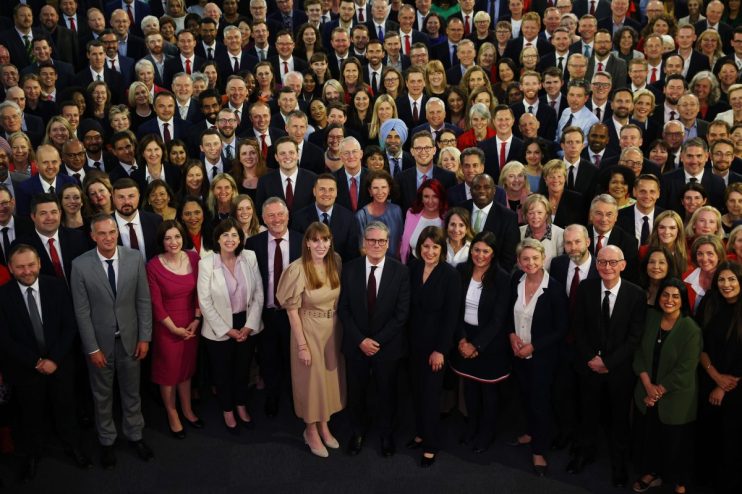
With all the stress that comes with their own job, you’d think MPs would have more empathy for the rest of us, writes Emma Revell
“Do you want to be an MP?” Speak to anyone who has worked in Westminster, or public policy more broadly, for any length of time and they’ll confirm that they’ve been asked the question many times – usually either by a well-meaning MP who thinks your particular demographic qualities are under-represented in the Commons Chamber, or by a relative who has no concept other jobs exist in SW1.
Personally, my answer as to whether I want to run has always been: “No thanks.” Partly because, having grown out of my youthful dalliance with the Lib Dems, I have yet to find a party whose policy prescriptions overlap accurately enough precisely with my idiosyncratic blend of beliefs, prejudices and hobbyhorses. But mostly because it sounds too damn stressful.
A few years ago, the All-Party Group for Compassionate Politics interviewed a range of parliamentary staff and MPs and reported that more than a third of respondents believed that working in Westminster had a negative impact on their mental health – higher than the national benchmark. A separate survey reported by the Guardian last year claimed that 46 per cent of parliamentary staff met the medical threshold for psychological distress – more than twice the level in the general population.
That shouldn’t come as much of a surprise. Our MPs are effectively running 650 small businesses. You’d like to think then that MPs and their parliamentary offices would understand the stress of a small business owner.
Yet all too often it feels like, rather than empathising with those in a similar situation, our politicians are responding to high levels of stress by trying to bring everyone else down to their level. Because it seems like the one thing the private sector can count on is that policymakers somewhere in Whitehall are – inadvertently but almost certainly – planning changes that will make their lives worse.
Labour’s war on the job market
For example, despite promising otherwise in their manifesto, Labour have hiked taxes on workers via the back door – trying to argue that increasing employer’s National Insurance doesn’t count as raising National Insurance, as though making employers pay higher taxes for each worker they hire doesn’t have an impact on wages, or even the jobs being there in the first place.
As my colleagues at the Centre for Policy Studies have pointed out, between the election and April 2026, the cost of employing a full-time worker on minimum wage has shot up from £22,438 to £25,852. If that worker is younger, or an apprentice, the increases are even higher.
Of the 5.7m private sector businesses in the UK, 5.64m employ fewer than 49 people. Some 1.1m of those employ fewer than nine people. In such small organisations, the opportunity cost of employing another worker is enormous. And if the government continues to make it more expensive to do so, much needed jobs simply won’t be created.
It goes without saying that all business owners, regardless of size, are worried about the bottom line. But it’s fair to assume that the smaller the business, the smaller the margin for error. When money runs short, business owners are often forced to dip into savings, borrow from friends and family, or even stop paying themselves. Research commissioned by Santander in late 2024 found that the average SME had less than £6,000 to help get it up and running, with 37 per cent of respondents saying they failed to break even until they’d passed the three year mark.
And while parliament has made enormous strides in recent years when it comes to the wellbeing of people working within its walls, small business owners are often going it alone – managing their stress and their money without much to fall back on.
And it’s going to get even worse. From April, a swathe of measures in the new Employment Rights Act come into force, bringing additional direct costs – like day-one rights to paternity leave and increased sick pay – and compliance costs. Then there are measures like voluntary menopause and gender pay gap action plans, which are being encouraged in 2026 but which will become compulsory sometime in 2027.
Then there are whatever horrors are lurking in the Chancellor’s next Budget. The whispers and kite-flying haven’t started yet, but given the state of the economy we should be in no doubt Labour will want to have as many tax rises as possible on the table.
The cost of all these measures keeps adding up – whether in direct costs or compliance time. And as my colleague Robert Colvile has pointed out, the government has no real idea how much compliance costs businesses because the calculations are so woeful. The government uses a blunt measurement that multiplies the hours firms say they have lost to regulation by the average national wage. However it is fairly easy to work out that those responsible for compliance – directors, managers and business owners themselves – are probably not average wage workers.
It certainly seems like a miserable job being an MP. I just wish they didn’t cope with that by imposing even greater misery on others.
Emma Revell is external affairs director at the Centre for Policy Studies