Skip to content
Thursday 20 August 2026London --:--Frankfurt --:--Zurich --:--
NewslettersSearchEN · DE · FR
MorningWire

European business, markets and politics

FTSE 100
10,743.35
+0.14%
DAX
26,091.33
0.00%
CAC 40
8,501.91
0.00%
STOXX 50
6,444.46
0.00%
  • Europe
  • Markets
  • Business
  • Economy
  • Regulation
  • Politics
  • Opinion
More
GermanyFranceEU InstitutionsCompetitionPublic AffairsBankingTechnologyEnergy
  • Germany
  • France
  • Europe
  • Markets
  • Business
  • Economy
  • Regulation
  • Politics
  • Opinion
  • DE
Wednesday 23 October 2024 5:05 am  |  Updated:  Tuesday 22 October 2024 1:05 pm

Borrowing to invest is all very well but what about value for money?

By: Paul Ormerod

Add as a preferred source on Google
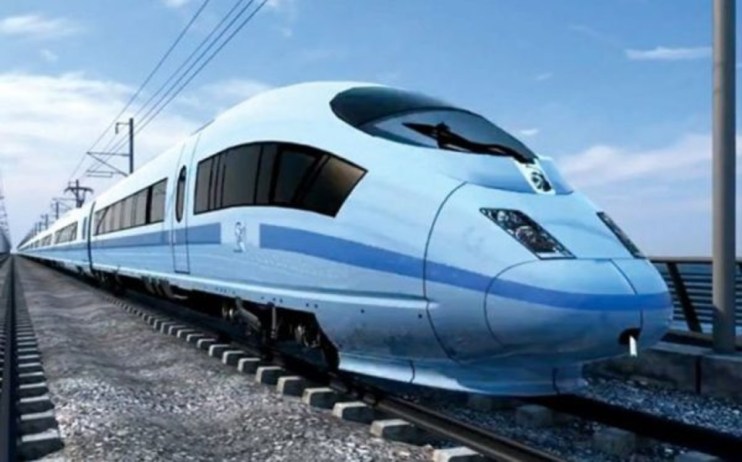
Former Prime Minister Rishi Sunak controversially scrapped HS2's northern leg in October.

The precise contents of the budget are still secret. But a widely trailed theme is that the Chancellor, Rachel Reeves, wants to create as much scope as possible for extra public sector investment. She appears to be willing to rewrite the existing fiscal rules in order to accommodate the increase.

In principle of course there is a strong case for treating investment in, say, a new road, differently from what is known as current spending. The latter can be thought of as the operational costs of running the public sector, such as the wages and salaries of public servants.

A pay rise for the junior doctors mainly translates into extra private consumption by them. A new road could open up new economic opportunities and help raise the growth rate of the economy. This not only increases living standards but generates a future stream of tax receipts for the government.

A crucial question is whether additional public investment does actually deliver positive net benefits to the economy.  

A major issue here is the estimation of costs. All too frequently, initial costs escalate, with a corresponding reduction in the net benefit of the scheme.

The most notorious example at present is of course HS2. The proposed cost of the full high-speed link connecting London to Manchester and Leeds more than tripled from £32bn in 2012 to £106bn in 2020, when first the Leeds and then the Manchester extensions were scrapped. The costs of the London to Birmingham section, under construction, have at least doubled.

In Scotland, an important project is the dualling of the A9, the main route connecting the Highlands to Glasgow and Edinburgh. The contract for a six-mile stretch near Inverness was awarded last year. The costs have risen by £111m. This is not the total cost of building a mere six miles of road, but just the estimated overspend. The actual costs are now estimated to be an incredible £308m.

One likely reason for this endemic problem is the increasing emphasis being placed on “value for money” at the tendering stage.   

Read more

The water industry needs investment, not confiscation

Thames Water infrastructure with pipes and maintenance workers, highlighting water management efforts in London

It is difficult, indeed impossible, to disagree with the concept itself. But its practical application leaves much to be desired. In essence, an incentive is created to underestimate costs in the tender in order to win the bid.

This seems to have been at the heart of the collapse of two major construction companies in recent years. In 2016 Carillion was valued at £2bn. By 2018 it was worthless. The company culture seems to have been to win government contracts at any price. So when there were genuine cost issues, the company lost money.

Last month, another major UK largest construction firm, ISG, went into administration. The company was involved with no fewer than 69 government contracts.

At the level of the economy as a whole, a Treasury document issued on 2 August this year is illuminating. Entitled Fixing the Foundations, it reports on the identification of the highly contentious “black hole” of £22bn in the nation’s finances.

A truly remarkable section is headed: Strengthening the fiscal framework to ensure this never happens again. A key recommendation to ensure it never happens again is to formalise the Office for Budget Responsibility’s power to forecast overspend. All economic forecasts are subject to wide margins of error. A forecast can be made of overspend, but this does not mean that it will be correct.

Within the public sector, an almost mystical but wholly misplaced belief seems to have arisen that by demanding enough documentation, risk can more or less be eliminated.

Solving the problem of cost overruns and getting value for money is a major task. But bureaucrats demanding yet more spreadsheets will certainly not do the trick.

Read more

Emergency government meeting held over high temperature amid ‘strain on public finances’

Aerial view of dry, brown farm fields affected by high temperatures, with a road and farm buildings.

Share this article

  • Facebook
  • X
  • LinkedIn
  • WhatsApp
  • Email

Similarly tagged content:

Sections

  • Opinion

Categories

  • Opinion

Related Topics

  • investment
  • UK investments

Trending Articles

  • Jobless Banquet: Youth unemployment surge ‘sends Neets to KFC’

  • Amanda Blanc has worked her magic at Aviva

  • City law firm sues prominent Emirati business family

  • As it happened: Miners fuel FTSE 100 recovery; oil jumps as Trump claims Strait of Hormuz

  • As it happened: FTSE 100 mixed; oil breaks $91 as Trump rules out new US-Iran ceasefire

More from Morning Wire

  • The water industry needs investment, not confiscation

    Opinion
    Thames Water infrastructure with pipes and maintenance workers, highlighting water management efforts in London
  • Emergency government meeting held over high temperature amid ‘strain on public finances’

    Economics
    Aerial view of dry, brown farm fields affected by high temperatures, with a road and farm buildings.
  • Government intervenes on foreign takeover bids for UK defence firms

    Industrials
    UK defence strategy meeting, officials discussing military advancements and security measures in a conference room setting
  • New Premier League rules could see £11bn invested into new stadiums

    Sport Business
    Architectural rendering of a vibrant, modern urban development surrounding a large football stadium
  • Public sector makes wage growth higher than expected

    Economics
    London has defied national trends as job postings in the capital rose.
  • UK debt ‘hits £3 trillion’ milestone

    Economics
    Houses of Parliament in Westminster showcasing historic architecture under a clear sky, central to UK government and politics
  • Andy Burnham will find there is a limit to tax rises

    Opinion
    At its core, an ISA is a "tax wrapper," a protective shell that shields your money from income tax and capital gains tax.
  • Thames Water creditors open door to public control under Burnham

    Politics
    Thames Water infrastructure with pipes and valves, highlighting water management in urban areas amidst ongoing utility dis...
MorningWire

Independent European business, markets and political news for decision-makers.

Morning Briefing

Europe

  • Germany
  • France
  • EU Institutions
  • Europe

Business

  • Markets
  • Business
  • Economy
  • Regulation
  • Competition
  • Public Affairs

Editorial

  • Opinion
  • Editorial Policy
  • Corrections
  • Contact

Company

  • About Morning Wire
  • Privacy Policy
  • Terms of Use
  • Cookie Policy
© 2026 Morning Wire Ltd · Published by Morning Wire Media, Bahnhofstrasse 65, 8001 Zürich, Switzerland
Privacy · Terms · Cookies · Facebook