Skip to content
Monday 10 August 2026London --:--Frankfurt --:--Zurich --:--
NewslettersSearchEN · DE
MorningWire

European business, markets and politics

FTSE 100
10,901.09
+0.31%
DAX
26,319.45
+0.69%
CAC 40
8,714.93
+0.17%
STOXX 50
6,523.86
+0.33%
  • Europe
  • Markets
  • Business
  • Economy
  • Technology
  • Politics
  • Opinion
More
GermanyFranceBankingAIEnergyFintechPropertyCapital Markets
  • Germany
  • France
  • Europe
  • Markets
  • Business
  • Economy
  • Technology
  • Politics
  • Opinion
  • DE
Wednesday 31 January 2024 5:31 pm

Brexit checks: What’s actually changing at the border?

By: Jessica Frank-Keyes

Political Reporter

Add as a preferred source on Google
The post Brexit changes are the most consequential since the UK exited the EU single market in 2020. Here’s everything you need to know.

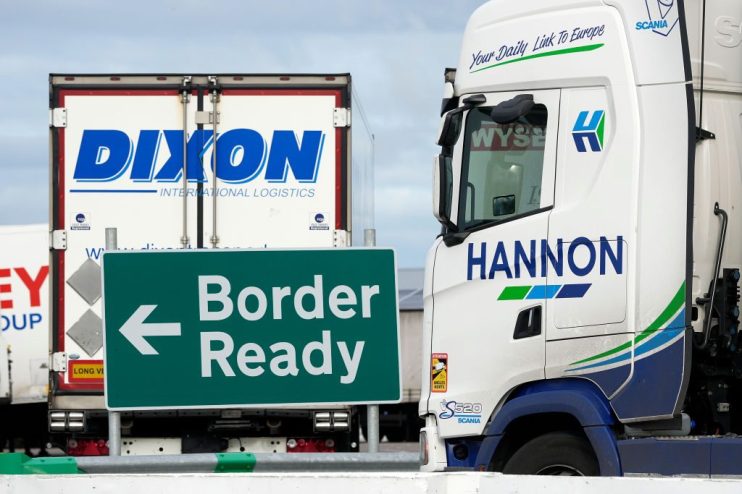
Fruit, vegetables, flowers, Meat, fish and even live animals. All these products coming from the European Union will now have to undergo fresh border checks when they get to the UK.

Dubbed the ‘Border Target Operating Model’ (BTOM), the government’s new customs arrangement came into effect from today.

This is to ensure customs duties – or tax – are correctly paid and to comply with health and safety, security and environmental regulations.

Baroness Lucy Neville-Rolfe, government minister in charge of borders, said the system would see “more efficient trading for businesses [and] protect against biosecurity threats”.

The changes are the most consequential for importers since the UK exited the EU single market on December 31, 2020. Here’s everything you need to know about the BTOM:

What does it mean?

The BTOM is the government’s new system for border control over the UK. Its aims, ministers say, are to introduce controls on EU goods, and simplify rules for non-EU goods.

From January, health certificates are now required for medium risk animal products, plants, and plant products, as well as high-risk food and feed of non-animal origin from the EU.

In April 2024, this will be expanded to full sanitary and phyto-sanitary (animal and plant) physical checks on EU imports.

Finally, in October this year, safety and security declarations must be made on medium- and high-risk imports. The government will also introduce the single trade window: a one-stop service for import and export paperwork, which it hopes will reduce the amount of forms.

When does it come into force? 

It came into effect from midnight on Tuesday, January 30, marking the four-year anniversary of the UK exiting the EU, and is the start of the final pieces of the post-Brexit jigsaw puzzle.

It was delayed several times, including during the cost of living crisis and energy price shock.

Read more

Brits wary of EU summer hols as officials refuse to ease new border checks

Airport delays in Spain

The EU brought in full customs checks on goods arriving from the UK in January 2021, and the UK government has been gradually phasing in the reverse border controls since then.

Who will be affected?

These changes will affect anyone importing goods from the EU to the UK, which could include farmers and food producers, wholesalers, supermarkets and retail and hospitality.

Physical checks are expected to begin from April 2024, and will be at border control posts.

These are mostly existing facilities, although a new £147m facility has been built near Dover, in Kent, which is the UK’s busiest port. The facility is around 22 miles inland.

Some low-risk, shelf stable products, such as canned meat, will be exempt from health certification. No BTOM checks will apply to EU imports into Northern Ireland.

Why is it altering prices?

Food prices are expected to increase, as the changes will increase red tape.

Importers must pay for legally mandated veterinary certificates on the health of animal imports, or plant health documentation for plant products, which could be very expensive.

The government acknowledges this impact on food and drink in its BTOM document, but says it will “not be significant, representing less than a 0.2 per cent increase in total over three years”.

Delays, including waiting for vets to sign off or hold-ups in long queues at the border, could also increase costs, and lead to the risk of empty supermarket shelves.

Karin Goodburn, from the Chilled Food Association, said she has warned ministers of the risk, and told the BBC: “It could stop those supply chains, or at least press the pause button.”

Read more

Singapore on Thames or the Sick Man of Europe?: The Economics of Brexit Ten Years from the Referendum 

UK-EU Brexit negotiations meeting with officials discussing trade agreements and policy impacts in a formal conference room

Share this article

  • Facebook
  • X
  • LinkedIn
  • WhatsApp
  • Email

Similarly tagged content:

Sections

  • News

Categories

  • Politics

Related Topics

  • Brexit
  • Cost of living crisis
  • Energy
  • EU
  • European Union
  • Health
  • UK Government
  • UK trade

Trending Articles

  • Burnham facing calls to cut employment red tape as job seekers grow for 41 months

  • Government to inject millions into electric vehicle firms despite mandate backlash

  • Silence Therapeutics to Host Conference Call and Webcast to Discuss Topline Results from Phase 2 SANRECO Trial of Divesiran in Polycythemia Vera

  • Stop burying us in swollen corporate reports, says audit watchdog boss

  • Hargreaves Lansdown orders staff back to office

More from Morning Wire

  • Brits wary of EU summer hols as officials refuse to ease new border checks

    Transport & Infrastructure
    Airport delays in Spain
  • Singapore on Thames or the Sick Man of Europe?: The Economics of Brexit Ten Years from the Referendum 

    Opinion
    UK-EU Brexit negotiations meeting with officials discussing trade agreements and policy impacts in a formal conference room
  • Ryanair warns of ‘passport queue chaos’ with new EU border system

    Aviation
    Elon Musk and Ryanair CEO Michael O’Leary face off amid acquisition rumors in a business meeting setting
  • Wise denied US banking licence in blow to expansion plans

    Banking
    Wise outlined plans to shift its primary listing to the US in June.
  • Tale of two cities: London leaps ahead in global finance but domestic growth stalls

    Economics
    Getty Images number 2154617464 depicts a relevant scene for the articles unidentified content, suitable for business context.
  • A £3bn reckoning that will reshape buy now, pay later

    Regulation
    Klarna IPO trading buzz with stock charts and investors analyzing market trends in a professional setting
  • Kids aren’t using VPNs to watch porn and skirt social media bans, VPN firms say

    Tech
    Work and Pensions Secretary Liz Kendall is in charge of reforming the state pension and benefits system
  • Vodafone shares jump as French telecoms tycoon becomes top shareholder

    Telecoms
    Vodafone Group has announced the appointment of Microsoft's Pilar López as its new chief financial officer.
MorningWire

Independent European business, markets and political news for decision-makers.

Morning Briefing

Europe

  • Germany
  • France
  • Europe
  • UK & Ireland

Business

  • Markets
  • Banking
  • Technology
  • Energy
  • Property
  • Fintech

Editorial

  • Opinion
  • Editorial Policy
  • Corrections
  • Contact

Company

  • About Morning Wire
  • Privacy Policy
  • Terms of Use
  • Cookie Policy
© 2026 Morning Wire Ltd · Published by Morning Wire Media, Bahnhofstrasse 65, 8001 Zürich, Switzerland
Privacy · Terms · Cookies · Facebook