Kids aren’t using VPNs to watch porn and skirt social media bans, VPN firms say

Only around one per cent of children use virtual private networks (VPNs) to access age-restricted content, research commissioned by VPN providers suggests, as the industry awaits a key announcement from government this week over how the under-16 social media ban will be enforced.
A YouGov survey commissioned by the VPN Trust Initiative, founded by NordVPN, ExpressVPN and other providers, found 14 per cent of children had used a VPN in the past year, but just five per cent reported using one for any form of circumvention, including bypassing parental controls or school internet restrictions.
The polling also found that most young VPN users were using the technology for privacy and online security rather than to avoid restrictions.
The findings come as ministers prepare to set out how platforms will be expected to implement age checks under plans to block under-16s from major social media services including TikTok, Instagram, Snapchat, Facebook and X.
The government has pledged to go further than Australia’s model by requiring “highly effective” age assurance, while Ofcom has been examining how platforms should deal with attempts to bypass those checks, including through VPNs.
“We now have several independent studies reaching broadly the same conclusion,” Mark Andrijanič, cybersecurity adviser at NordVPN, told Morning Wire. “Whether it’s YouGov, Ofcom or the Australian eSafety Commissioner’s own research, the figures consistently show only a very small proportion of children are using VPNs to access age-restricted content.”
He added that public debate had moved ahead of the evidence: “VPNs have become a major focus of the discussion, but the data simply doesn’t suggest they’re being used at any meaningful scale to circumvent age checks.”
The research also found that 61 per cent of children who had used a VPN did so to protect their privacy online, while almost one-third said they used one to improve their online security, including when using public Wi-Fi.
Among those using paid VPN services, 87 per cent said the subscription had been purchased by a parent or carer.
Many parents appear to view VPNs as an important cybersecurity tool rather than something children use to get around restrictions.
Enforcement rules to be laid out this week
The polling comes as ministers finalise one of the biggest overhauls of online safety rules since the Online Safety Act, with details expected this week on what will constitute “highly effective” age assurance.
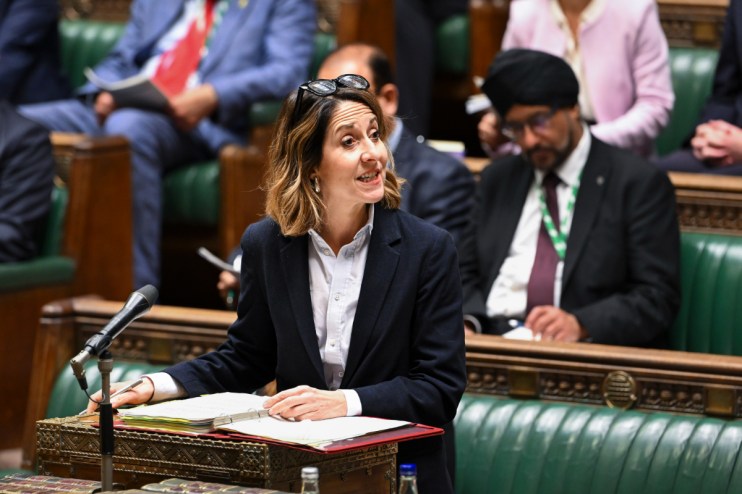
Appearing before MPs last week, tech secretary Liz Kendall acknowledged children would still attempt to circumvent the ban.
“We know from Australia when they brought a ban in that kids will try and get round it, and many will succeed,” she told the Science, Innovation and Technology Committee.
Kendall also described the eight-year journey from the Online Safety Act’s conception to implementation as “probably unacceptably slow”, saying Parliament needed to move more quickly as technology evolves.
But Andrijanič argued that focusing enforcement on VPN providers risked creating new problems while doing little to stop determined users.
“If regulated VPN providers are required to introduce additional checks, many users will simply switch to smaller providers outside UK jurisdiction,” he said. “Those services are often free because they rely on collecting user data rather than subscriptions, so you could end up pushing people towards less secure products.”
Instead, a person familiar with the matter said ministers should focus on app stores and device providers: “If Apple and Google verify users’ ages before they download apps, you’ve covered almost all young users without creating a complicated enforcement regime across hundreds of VPN providers.”
Chris Field, chief marketing officer at digital identity company Yoti, said regulators were likely to focus on whether platforms could demonstrate that their age assurance systems worked, rather than on any single technology.
“The focus shouldn’t be on a single tool but whether platforms have effective, proportionate anti-circumvention measures in place,” he told Morning Wire.
“We expect regulators to ask tougher questions. Rather than simply asking whether measures exist, they’ll increasingly want evidence that those measures are effective.”
The research broadly reflects recent studies by Ofcom, Internet Matters, Childnet and Australia’s eSafety Commissioner, all of which found only a small minority of children were using VPNs to access age-restricted content, as ministers prepare to publish the final details of the UK’s social media ban.