Skip to content
Sunday 6 September 2026London --:--Frankfurt --:--Zurich --:--
NewslettersSearchEN · DE · FR
MorningWire

European business, markets and politics

FTSE 100
10,831.09
0.00%
DAX
26,046.40
+0.17%
CAC 40
8,278.77
-0.09%
STOXX 50
6,392.93
+0.16%
  • Europe
  • Markets
  • Business
  • Economy
  • Regulation
  • Politics
  • Opinion
More
GermanyFranceEU InstitutionsCompetitionPublic AffairsBankingTechnologyEnergy
  • Germany
  • France
  • Europe
  • Markets
  • Business
  • Economy
  • Regulation
  • Politics
  • Opinion
  • DE
Wednesday 11 June 2014 4:52 pm  |  Updated:  Wednesday 29 May 2019 9:20 pm

On the brink: Iraq’s survival as a viable state is far from assured

By:

Add as a preferred source on Google

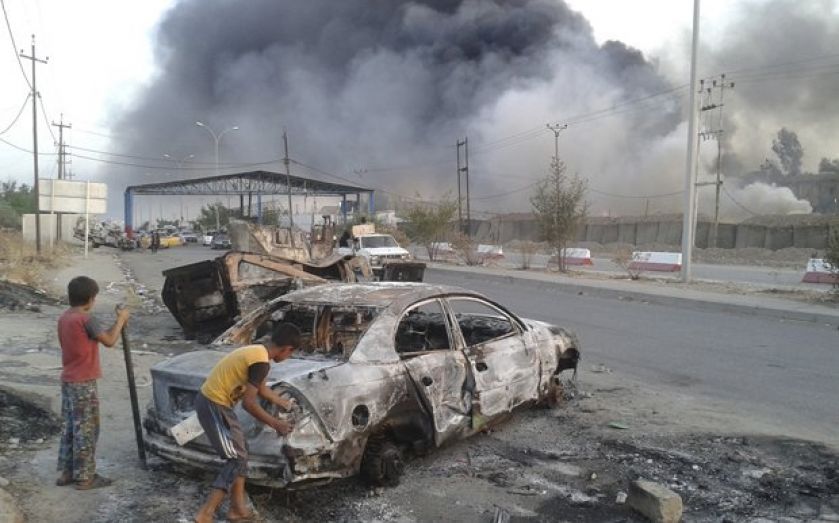
THE TAKEOVER of Mosul, Iraq’s second major city, and Tikrit by the forces of the Islamic State of Iraq and al Sham (ISIS) is a major event in the history of post-Saddam Iraq, and has repercussions for the entire region.

Iraq is creaking at the seams, and the war in Syria has given strength (both financial and in military experience) to extremist Sunni militias operating with impunity between the two countries. These militias aim to establish Islamic government from the Mediterranean to the borders of Iran, and appear prepared to stop at nothing to achieve this objective.

Even by Iraq’s standards this is bad. Two major Sunni-led and Al Qaeda-infiltrated insurgencies in Fallujah in 2003-2004 were met by the full force of Coalition military power. But fatigued by war and failure, the US and the UK show no signs of wanting to take on another fight. The ISIS takeover of Mosul, and attacks on Salahaddin and Kirkuk, have been met not by the advanced military of the Coalition, but by the armed forces of the Iraqi state.

With morale appallingly low, the US-trained Iraqi Army units in and around Mosul to all intents and purposes dissolved. Soldiers of the Ninawa Command, fleeing Mosul to the Kurdish regional capital of Erbil, told reporters that they simply stopped receiving orders. Other reports have circulated that Iraqi Army troops in Kirkuk to the south-east of Mosul handed their weapons over to Iraqi Kurdish Peshmerga forces and deserted, leaving the Kurds to fight alone.

While it would be foolish to cry that Iraq is over as a nation state, the last few days have been a massive blow to the perception of the country as a functioning political entity that can enforce security inside its own borders.

Prime Minister Nouri Al Maliki’s State of Law coalition comfortably won recent elections, and looked on course to form a government, with Maliki once again at its head. But the Prime Minister’s inability to enforce security will raise serious questions about his suitability to lead. And this is despite his announcement of a state of emergency, authorising him to use extraordinary powers to tackle the crisis.

What happens now? Maliki can either emerge from the scenario a hero, uniting the country to fight back against ISIS, or more likely a sectarian demagogue, urging Shia citizens and Iranian-backed militias to fight the Sunni insurgency. Sayyed Muqtada al Sadr, hardly a fan of Maliki, has talked of organising “peace militias” to defend Shia holy places.

Then there are the Kurds, currently absorbing thousands of refugees from Mosul and Kirkuk, and looking increasingly likely to use their forces to strike back at ISIS. Their relationship with Baghdad will surely change. The Kurds are angry with Baghdad over disagreements on oil exporting from their autonomous region, placing strain on an already fragile state. There is little doubt that the Kurds will seek to cash in their efforts against ISIS to gain concessions on future oil exports. Maliki will have little choice but to acquiesce to their demands.

Can Iraq hold together? It is possible, but recent events reveal the state to be far weaker than previously imagined. It remains to be seen whether Maliki, with Kurdish and Iranian help, is able to prevent the country from collapsing.

Michael Stephens is deputy director of RUSI Qatar.

Share this article

  • Facebook
  • X
  • LinkedIn
  • WhatsApp
  • Email

Similarly tagged content:

Sections

  • Opinion

Categories

  • Opinion

Trending Articles

  • Victoria Beckham owed £350,000 by Harvey Nichols

  • Iceland boss Richard Walker vows to set up shop on Falkland Islands

  • Don’t underestimate the free trade agreement Britain just joined

  • £74m for branded condoms? UK must stop spaffing cash on foreign aid

  • My stressful night at London’s ultra luxe £1k a night hotel where I found glass in my food

More from Morning Wire

  • As it happened: Stocks jittery as oil nears $90; Trump ‘semi-negotiating’ with Iran

    FTSE 100 Live
    Large oil tanker navigating a strait under a cloudy sky, impacting oil prices and global trade.
  • Donald Trump is creeping towards a shrewd sanctions policy

    Opinion
    Donald Trump holding a red TRUMP 2028 hat, wearing a tuxedo with an American flag in the background
  • As it happened: FTSE 100 falls as Iran and US clash over Strait of Hormuz; Oil stockpiles ‘rapidly depleting’

    FTSE 100 Live
    Bustling shipping activity in the Strait of Hormuz with tankers and cargo ships navigating Iranian waters.
  • On this day: Animal Farm is published

    Opinion
    Black and white image of pigs in wooden pens, facing each other across a narrow, muddy aisle on a farm.
  • As it happened: FTSE 100 drops; bonds sell-off cools but oil holds firm

    FTSE 100 Live
    North Sea oil terminal with storage tanks and docking facilities under a clear sky, highlighting energy infrastructure.
  • Labour backbencher adds to criticism of stamp duty on shares

    Politics
    Callum Anderson, a smiling business professional in a navy suit and striped tie against a gray background.
  • As it happened: FTSE 100 drops as oil prices rise after Trump makes Hormuz threat

    FTSE 100 Live
    Donald Trump speaking at a podium, microphone visible, discussing the Strait of Hormuz
  • Ex-UK minister Robertson rubbishes Ukrainian claims he aided Russia’s Olympic return

    Sport Business
    Sir Hugh Robertson, British Olympic Association, wearing a poppy and name tag, at an event
MorningWire

Independent European business, markets and political news for decision-makers.

Morning Briefing

Europe

  • Germany
  • France
  • EU Institutions
  • Europe

Business

  • Markets
  • Business
  • Economy
  • Regulation
  • Competition
  • Public Affairs

Editorial

  • Opinion
  • Editorial Policy
  • Corrections
  • Contact

Company

  • About Morning Wire
  • Privacy Policy
  • Terms of Use
  • Cookie Policy
© 2026 Morning Wire Ltd · Published by Morning Wire Media, Bahnhofstrasse 65, 8001 Zürich, Switzerland
Privacy · Terms · Cookies · Facebook