Britain’s education revolution is now bearing fruit but still has further to go

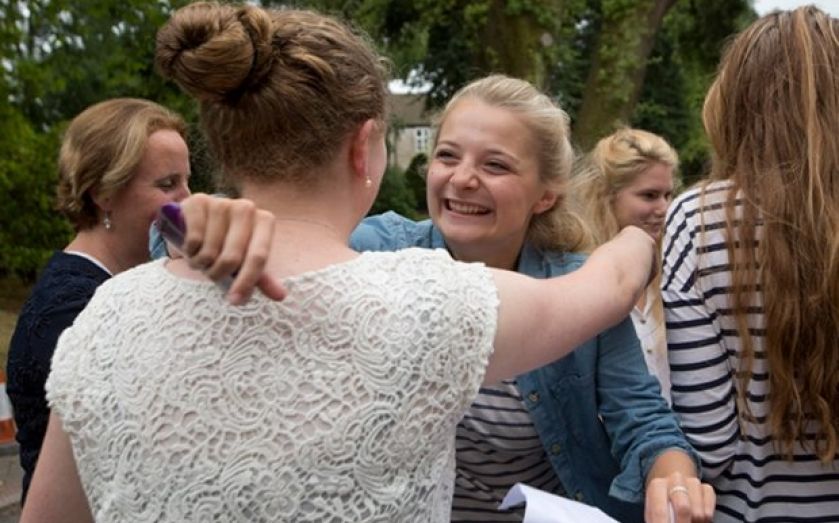
TEENAGERS across the country will today be suffering from a day of celebrations, following the release of A-level results yesterday. This time every year TV screens and newspapers are plastered with the joyful faces of students who have finally found out how they did, and whether they’ve got the place at university they were after. This year’s cohort can smile particularly brightly, having been among the first to enjoy the effect of the education revolution that has taken place over the last few years.
Before 2010, results day had stuck firmly to a script. The proportion of pupils achieving the top grade would rise, while ministers would bask in the reflected glory of pupils and teachers, whose undoubted hard work they took to TV to congratulate. Yet this annual show of success masked the difficult truth that, in international comparisons, Britain had fallen behind.
The clearest evidence of this comes from the Pisa scores, a standardised international test which gives rankings in maths, reading and science, and which lets us directly compare education systems across countries. The latest tests, carried out in 2009, made for uncomfortable reading. Not once did the UK feature in the top ten. The maths and reading tests – where we came twenty-eighth and twenty-fifth respectively – were particularly concerning.
This was already a long way back from where we’d been nine years earlier, when Britain had been above average in all areas, coming seventh in reading, eighth in maths and fourth in the science test. We’d been kidding ourselves that our students were getting brighter and brighter while other countries worked hard to improve their schools and teaching. The Germans realised this had happened to them after the first Pisa test in 2000. Having believed their education system was world-class, they were shocked when the tests revealed that they were below OECD-average in all areas, and in the bottom third of industrialised nations. This spurred them on to make deep reforms to their education system which have begun to bear fruit. In the latest Pisa test, Germany leapfrogged over Britain. Having previously been beaten by us, the boot is now firmly on the other foot.
Now it’s our turn, and over the last three years we’ve had the greatest revolution in education since GCSEs were introduced. One of the key reforms has been the academies and free schools programme, which has let schools innovate and has given parents the opportunity to better choose between them. The number of academies has risen more than ten-fold since 2010, from 203 to 3,086 today. Then there are the 81 free schools, with a further 102 due to open. The latest Ofsted inspections found 75 per cent of the free schools it visited were good or outstanding, compared to 64 per cent of maintained schools.
At the same time, radical action is being taken to improve the qualifications and curricula that schools teach. A-Levels and GCSEs are being made more rigorous, recognising that we need to have higher expectations of students. Yesterday’s results, which showed for the second year running a drop in the proportion of pupils achieving an A or A*, falling from 26.6 per cent to 26.3 per cent, clearly indicated that grade inflation is being tackled. Incredibly, before last year, that percentage had been rising year-on-year for over two decades.
The results also showed that that higher expectations are filtering down into subject choices. Yesterday, 11,059 more pupils received results in maths than in 2010, a 14 per cent rise; and there were similar rises in many of the other traditionally academic subjects, like the sciences, history, and geography. At the same time the proportion of students taking softer subjects like General Studies, Media Studies, and PE declined.
Excitingly, there’s more to come, with further reforms to A-Levels, which will cease to be a treadmill of modules and retakes, and GCSEs, where there will be fewer “controlled assessments” and less grade inflation, just around the corner. The pupil premium, helping students from the most deprived backgrounds is also due to rise, going up to £1,300 per child in 2014-15.
This is all good news for the economy, and businesses will doubtless be pleased by the news that more students are studying maths and the sciences. By determining long-term productivity a good education system lies at the heart of economic success, as Tiger economies like Korea, which has consistently remained at the top of Pisa rankings, have long recognised. There’s still a way to go. But ignore the headline figure about As and A*s; this year’s students will be some of the best prepared pupils in recent years, giving them every reason to smile, and paving the way for British economic success in the future.
Chris Skidmore is Conservative MP for Kingswood.