Skip to content
Wednesday 19 August 2026London --:--Frankfurt --:--Zurich --:--
NewslettersSearchEN · DE · FR
MorningWire

European business, markets and politics

FTSE 100
10,752.48
+0.23%
DAX
26,087.86
-0.16%
CAC 40
8,521.25
+0.14%
STOXX 50
6,457.43
-0.17%
  • Europe
  • Markets
  • Business
  • Economy
  • Regulation
  • Politics
  • Opinion
More
GermanyFranceEU InstitutionsCompetitionPublic AffairsBankingTechnologyEnergy
  • Germany
  • France
  • Europe
  • Markets
  • Business
  • Economy
  • Regulation
  • Politics
  • Opinion
  • DE
Friday 13 January 2023 5:30 am  |  Updated:  Thursday 12 January 2023 5:16 pm

Business can’t buy itself green, but it can change the game

By: Tommy Ricketts

Add as a preferred source on Google
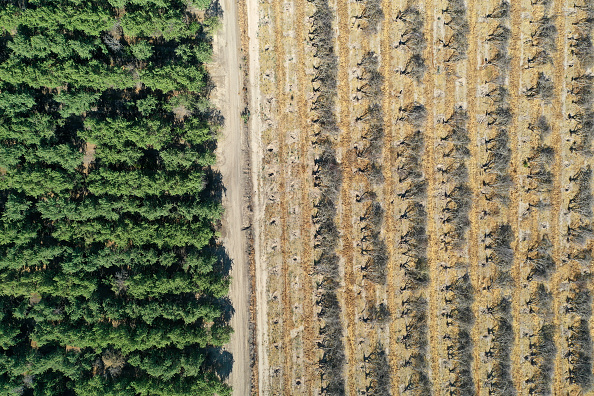
As Drought Intensifies, California Farmers Replace Almond Trees With Less Water-Dependent Crops
The majority of FTSE 350 companies have upped their spending on carbon offset projects. (Photo by Justin Sullivan/Getty Images)

As the FTSE 350 pump cash into carbon credits, Tommy Ricketts argues that offsetting projects can change the game – if we know what they’re buying.

The heavy lifting on climate change needs to come from the corporate world. Carbon credits should form part of the business’s Net Zero transition, and a flurry of market innovations are transforming the way we understand their effectiveness. 

According to a report from the Carbon Disclosure Project, just 100 companies worldwide have been responsible for 71 per cent of the world’s industrial greenhouse gas emissions since 1988. 

This realisation has sparked an impressive response from businesses. Since the UK Government’s Net Zero Commitment in 2019, 82 per cent of FTSE 100 companies have set a 2050 target for net zero emissions. 

The lion’s share of this reduction to 2050 must come from emissions reductions, such as switching to renewable energy sources and low carbon supply chains. But, with the current rate of technological progress, we will not reach net zero through emissions reductions alone. 

Carbon offsets – both avoidance and removal – will be necessary to address the large residual emissions not readily reducible if we are to hit the Paris Agreement, and stay Net Zero. 

These schemes have come under criticism or been seen as a “licence to pollute”. But it is a mechanism the market understands. Over the last two years, the vast majority (96 per cent) of Britain’s FTSE 350 companies have already upped expenditure on carbon credits over the past 24 months, while almost half (47 per cent) intend to increase spending dramatically over the next two years.

Read more

State-backed pension scheme plans to pump £1bn into start-ups

City economists have warned that the triple lock pension is unsustainable and unaffordable given the state of the UK's public finances.

For this market to grow sustainably and rid itself of the “wild west” label, it needs to be able to appropriately understand the quality of these credits and manage and price their riskiness. In the same way when consumers take on debt, there are different levels of exposure, the same is true of carbon offsets. 

Understanding this and building transparency into the system will enable it to grow and form a core part of businesses’ climate plans, just as some firms consider ditching their green strategies as a recession takes hold. 

This is where carbon ratings come in. By providing an independent assessment of the quality of carbon offset projects – as bond ratings do in financial markets – carbon ratings can help buyers evaluate the risk that a credit will return a tonne of carbon removed or avoided. In turn, carbon ratings can help with price discovery in the market, as buyers will be more willing to pay a premium for high-quality, independently verified carbon credits.

In time, ratings can provide a tonic for a key market failure: the lack of correlation between price and quality, i.e. price is not necessarily an indicator of a carbon credit’s climate credentials. Restoring confidence in that connection is vital to addressing so many of the doubts surrounding their use by businesses. 

It will also mean more money funnelling into highest quality projects in terms of climate outcomes, such as nature-based solutions that protect and restore ecosystems, and high-tech carbon removal innovations, such as direct air capture. 

If successful, McKinsey predicts the voluntary carbon market could grow into a meaningful new type of ecosystem asset class worth $100bn – $200bn by 2030. 

Everyone agrees reducing emissions must be at the top of the priority list for corporate actions. But for those emissions that can’t readily be reduced, effective carbon credits are critical.

Read more

Want to be as rich as retirees? Buy shares in them

Two joyful senior women holding Euro banknotes, celebrating financial freedom and successful retirement planning

Share this article

  • Facebook
  • X
  • LinkedIn
  • WhatsApp
  • Email

Similarly tagged content:

Sections

  • Opinion

Categories

  • Opinion

Trending Articles

  • Jobless Banquet: Youth unemployment surge ‘sends Neets to KFC’

  • As it happened: FTSE 100 drops as oil prices rise after Trump makes Hormuz threat

  • US bond market jitters spark UK economy recession warning

  • Amanda Blanc has worked her magic at Aviva

  • City law firm sues prominent Emirati business family

More from Morning Wire

  • State-backed pension scheme plans to pump £1bn into start-ups

    Investing
    City economists have warned that the triple lock pension is unsustainable and unaffordable given the state of the UK's public finances.
  • Want to be as rich as retirees? Buy shares in them

    Analysis
    Two joyful senior women holding Euro banknotes, celebrating financial freedom and successful retirement planning
  • Tritax Big Box taps investors for £350m London data centre splurge

    Tech
    AI data center with rows of servers and cooling systems, showcasing advanced technology and infrastructure innovation
  • ‘We are going to run out’: Mitie marks eleventh mega takeover of 2026

    Markets
    The FTSE 100 enjoyed a 3-year record rally in the third quarter.
  • bet365 Over Under Offer 2026 – Win bet365 Bet Credits

    betting
    Bet365 over-under betting chart displaying odds and statistics for sports events, highlighting betting trends and probabil...
  • Engineering group picked off London Stock Exchange in £4.1bn deal

    Markets
    Rotork industrial machinery in manufacturing plant showcasing advanced automation technology and engineering excellence
  • Britain should back the North Sea if it wants energy security and net zero

    Opinion
    Oil prices have risen as Israel and Iran tensions escalated.
  • FTSE 250 facilities manager swept off London Stock Exchange in £3.1bn deal

    Markets
    Mitie logo, a prominent facilities management and professional services company
MorningWire

Independent European business, markets and political news for decision-makers.

Morning Briefing

Europe

  • Germany
  • France
  • EU Institutions
  • Europe

Business

  • Markets
  • Business
  • Economy
  • Regulation
  • Competition
  • Public Affairs

Editorial

  • Opinion
  • Editorial Policy
  • Corrections
  • Contact

Company

  • About Morning Wire
  • Privacy Policy
  • Terms of Use
  • Cookie Policy
© 2026 Morning Wire Ltd · Published by Morning Wire Media, Bahnhofstrasse 65, 8001 Zürich, Switzerland
Privacy · Terms · Cookies · Facebook