Businesses can lead the digital upskilling revolution from their own backyards

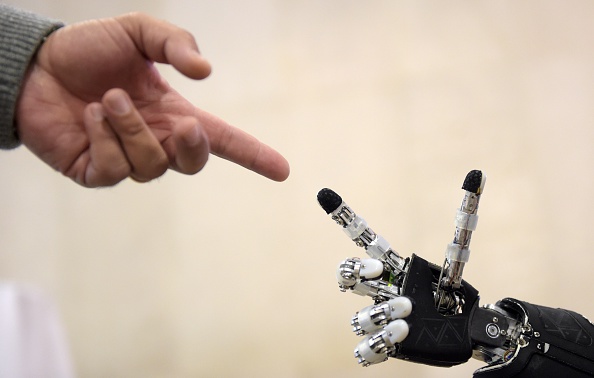
There is much that business is uncertain about at present, but not the accelerating pace of automation, disruption, and the need to improve digital skills.
Barely a week goes by without the publication of new research on the rise of the robots. Recent PwC analysis, for example, predicts that 30 per cent of jobs are at risk from automation by the mid-2030s.
While we expect an equal number of brand new roles to be created, clearly some people will be much better equipped to transition and adapt to them than others.
Follow-up research we’ve published this week highlights that, despite UK workers having a huge appetite to learn new skills, many are just not getting the opportunity – over half of those workers surveyed said that they had had no chance to understand and use new technologies.
Moreover, the opportunities that do exist are not evenly spread. Age and gender are both factors, but education appears the bigger determinant of training in new technologies.
Almost 60 per cent of people without further education say that they have received no opportunity from their employer to learn new digital skills, compared with 44 per cent of degree-educated workers.
Figures like these make uncomfortable reading. Without wishing to excuse such disparities, it is easy to see how they might happen, with businesses targeting relevant training at those with particular experience or who have expressed a clear interest in technology. These people then get more support, and become the obvious choice for further development and opportunities, leaving others behind and creating a self-perpetuating cycle.
The pattern needs to change. No matter what job someone does now – or even whether they’re in work or not – we are all going to have to improve our digital skills.
While not everyone needs to know how to code, we must better understand and embrace the use of technologies around us. We also have to get better at adapting to different types of roles and tasks. A one-off training course isn’t going to cut it – so-called “upskilling” needs to be life-long and universal.
If organisations simply focus their attention on the most tech-savvy people, the workforce will be split into those that can and those that can’t.
That divide is only going to get more extreme, and it comes with serious consequences for society.
Our research indicates that those who get less opportunity to upskill are likely to be more negative about automation. Conversely, in markets such as China and India, workers say that they are receiving more digital training, and are more optimistic.
That’s a worrying prospect for policymakers trying to prepare society for technological changes. But they shouldn’t be left to tackle this problem on their own – businesses need to help too. And this isn’t just a societal issue – it makes no economic sense to limit the pool of talent.
Widening access to training is a core part of ensuring that businesses have a workforce fit for the future.
At PwC, we are digitally upskilling all 20,000 of our people. We’ve also invited all employees to apply to become “digital accelerators”, a group who will spend around 50 per cent of their time over the next year on intensive training in areas such as data analytics, and then share this learning with their teams. The response has been tremendous, with a tenth of our workforce applying.
Over time, we hope to be able to show the return that this investment can make, which will help us expand our upskilling programmes further.
Helping existing employees to upskill is only part of the challenge. Businesses can also do more to support a much wider group, such as by joining forces and working with schools and policymakers to share knowledge and experience.
Broadening recruitment to attract a more diverse mix of people will also help to ensure that skills are shared across society.
But we shouldn’t underestimate the need or impact of upskilling people right across our own organisations. Businesses can lead the charge from our own backyards.
Main image credit: Getty