Skip to content
Tuesday 25 August 2026London --:--Frankfurt --:--Zurich --:--
NewslettersSearchEN · DE · FR
MorningWire

European business, markets and politics

FTSE 100
10,854.32
+0.35%
DAX
26,106.60
0.00%
CAC 40
8,453.01
0.00%
STOXX 50
6,447.98
0.00%
  • Europe
  • Markets
  • Business
  • Economy
  • Regulation
  • Politics
  • Opinion
More
GermanyFranceEU InstitutionsCompetitionPublic AffairsBankingTechnologyEnergy
  • Germany
  • France
  • Europe
  • Markets
  • Business
  • Economy
  • Regulation
  • Politics
  • Opinion
  • DE
Monday 04 September 2023 7:21 pm  |  Updated:  Monday 04 September 2023 10:14 pm

Carbon capture’s reliance on dirty shipping fuels threatens its green ambitions

By: Nicholas Earl

Add as a preferred source on Google
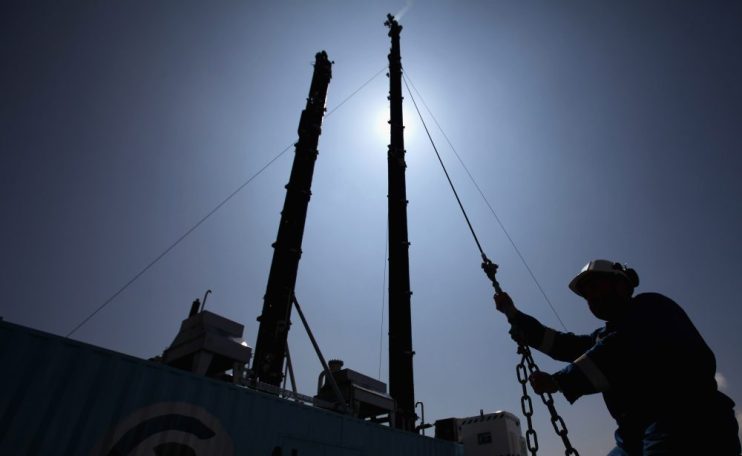
New Carbon Capture Technology Is To Be Tested In Scotland
Carbon capture technology being tested in Scotland earlier this year

The green credentials of the carbon capture industry have been called into question after new analysis revealed the huge amount of high-polluting fuel needed to power ships transporting captured carbon dioxide around the world.

Currently, the shipping industry relies on emissions-heavy conventional fuels such as maritime diesel or low-sulphur fuel oil.

Rystad Energy predicts that than 90m tonnes per year of carbon dioxide will be shipped by the end of the decade, requiring a fleet of roughly 55 ships, as an increasing number of oil and gas firms look to capture more carbon emissions to limit the environmental impacts at their projects.

By the end of the decade, the carbon capture industry could emit as much as five per cent of the total CO2 shipped worldwide, Rystad forecast.

As it stands, onshore pipelines are the most common mode for carbon transportation currently, with 330 expected to be operational by 2030, while offshore pipelines will transport captured carbon to underwater storage sites and are expected to play a vital role in the supply chain in the coming years.

However, CO2 shipping is the third piece of the puzzle and the most viable solution for carrying carbon emissions over long distances at a relatively low cost.

Most of the proposed shipping routes, including those in Europe and around Australia, are no more than 2,500km, a relatively short journey.

Read more

Britain should back the North Sea if it wants energy security and net zero

Oil prices have risen as Israel and Iran tensions escalated.

But planned routes between Japan, Malaysia and Australia would involve sailing more than 5,000 km.

The longest journey announced to date would be between South Korea and Saudi Arabia, a one-way trip of at least 12,000km, as reported by Bloomberg.

Lein Mann Bergsmark, vice president of supply chain research at Rystad Energy, said: “Carbon dioxide shipping is a nascent market now, but it’s set to play a significant role in the global climate solution in the coming years.”

She favoured green solutions for the ramp up in carbon capture, but recognised the cost implications involved.

“Questions remain about the environmental impact of the process. In an ideal world, CO2 tankers would use renewable fuels with no associated emissions. However, these fuels are too expensive now to be economically viable,” she said.

The UK government has committed up to £20bn for carbon capture projects and recently fast-tracked two major projects for approval.

Read more

Tories say households could save £540 a year by scrapping net zero

Kemi Badenoch speaks, gesturing with hands, while Claire Coutinho listens intently at a table with coffee cups.

Share this article

  • Facebook
  • X
  • LinkedIn
  • WhatsApp
  • Email

Similarly tagged content:

Sections

  • News

Categories

  • Business
  • Energy

Related Topics

  • Energy

Trending Articles

  • Can debt-ridden Morrisons become a Big Four supermarket again?

  • As it happened: Stocks rally; US to unveil ‘economic D-Day’ Iran sanctions

  • HMRC mansion tax inspectors to target homes for property valuations

  • Poundland loss doubles as discount retailer nears sale

  • Ratcliffe’s Ineos saves Runcorn plant

More from Morning Wire

  • Britain should back the North Sea if it wants energy security and net zero

    Opinion
    Oil prices have risen as Israel and Iran tensions escalated.
  • Tories say households could save £540 a year by scrapping net zero

    Energy
    Kemi Badenoch speaks, gesturing with hands, while Claire Coutinho listens intently at a table with coffee cups.
  • What Burnham could learn from BP’s pragmatism

    Energy
    BP logo and green lettering on a light background.
  • FGE NexantECA Acquires Square Commodities, Accelerating Its Green Molecules Strategy

    Business Wire
  • ReNew Reports 25.6% Reduction in Scope 1 & 2 Emissions and 24.7 Billion Units of Clean Power Generated in FY 2025-26

    Business Wire
  • Pugdundee Safaris Redefines Indian Wildlife Tourism with a 2028 Carbon-Neutral Vision

    Business Wire
  • North Sea is not competitive, says BP boss days after exit

    Markets
    British Petroleum BP forecourt with fuel pumps and company signage visible in a business setting, highlighting energy serv...
  • Ratcliffe’s Ineos saves Runcorn plant

    Industrials
    Manchester United minority owner Sir Jim Ratcliffe’s Ineos has announced a “significant strategic investment” into premium apparel brand Castore.
MorningWire

Independent European business, markets and political news for decision-makers.

Morning Briefing

Europe

  • Germany
  • France
  • EU Institutions
  • Europe

Business

  • Markets
  • Business
  • Economy
  • Regulation
  • Competition
  • Public Affairs

Editorial

  • Opinion
  • Editorial Policy
  • Corrections
  • Contact

Company

  • About Morning Wire
  • Privacy Policy
  • Terms of Use
  • Cookie Policy
© 2026 Morning Wire Ltd · Published by Morning Wire Media, Bahnhofstrasse 65, 8001 Zürich, Switzerland
Privacy · Terms · Cookies · Facebook