Carbon trading could create a green mask for companies to hide behind

When the Integrity Council – an independent governance body – announced they were drawing up a set of global values for voluntary carbon markets in March, it seemed like an answer to many prayers.
Compulsory carbon markets, where regulated companies must use carbon allowances to justify their annual emissions, have been accepted as an effective tool for both governments and business in their fight against emissions and climate change. They enable companies who have invested in reducing their ecological footprint to recoup some of that cost, whilst incentivising others to make greater progress meeting their responsibilities – and rewarding those who innovate. So expanding this concept beyond compulsory sectors seems obvious. What is not so obvious is how this would operate as a voluntary scheme, and whether it can work or only make things worse.
Compliance cap-and-trade markets have existed in sectors with a large environmental impact – such as power generation or steel manufacture – for almost 20 years. The idea is that every company has an annual emissions allowance, which reduces each year in order to meet overarching climate goals. However, companies that exceed their annual reduction target may trade their excess allowance to others who can’t. Overall, this means industry targets are met, whilst companies taking the initiative, or otherwise reducing emissions, can use revenues from allowances sales to repay the affiliated costs.
Therefore, with ever more companies keen to demonstrate ESG credentials – either as evidence of their values, part of their obligations to shareholders or in order to attract funding – creating voluntary versions of those carbon markets seems a no-brainer. But there are challenges in sight.
The most obvious option is for those firms to purchase carbon credits from the mandatory markets. But those allowances are a vital part of operations for businesses in those sectors, so they are highly-valued and consequently very expensive. Since voluntary offsetting would, by definition, be a choice, it has to make business sense. Which means creating new markets.
And this is where standards come in. Without globally-accepted, comparable standards, such markets would be unbalanced and there would be a genuine risk of a race to the bottom. How could you tell who was serious about emissions reduction and who was just engaged in a smoke-and-mirrors PR exercise? Worse, you could effectively create a cottage industry of greenwashing, enabling the unscrupulous to make money rubber-stamping specious offsets.
There are already some very credible science-based international standards in place. One example is the VERRA Standard: it has been operating for 15 years and has become a reliable source for verified carbon offsets. However, as market demand is growing, the work of the Integrity Council is becoming increasingly important.
But these are not the only issues at play here. There is also a risk of perverse incentives. Currently, companies that can reduce their carbon footprint usually will, in order to reap the reputational and business rewards. Equally, there are many industries or sectors which have a naturally low impact on the environment. But without careful planning and legislation, voluntary carbon markets would effectively allow – even incentivise – those companies to sell on their right to pollute.
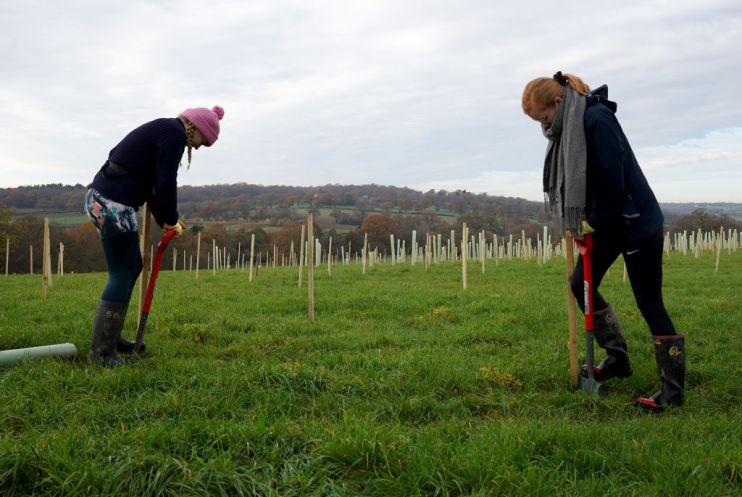
Then there is the problem of offsetting. At the moment, companies can purchase voluntary carbon offsets, many of which are forestry-based – planting trees or paying timber owners not to cut them down, since these are among the best ways to capture carbon. Most of this forestry is in the developing world.
Yet there is a clear moral issue with a system that allows some regions to continue emitting if they just pay others to plant trees. Go too far down that road and you end up with wealthier nations retaining their right to pollute by turning others into carbon-sink gardens – with no incentives to develop their own clean industries.
Voluntary carbon markets are part of the solution to meet our climate targets. And they are already taking off, with carbon finance being an asset class in its own right. It is important to recognise that this is a market-led solution to an immediate and pressing problem – one which would otherwise demand onerous legislation that might well provoke resistance. But it will require careful design and intelligent regulation. Otherwise we risk this turning into nothing more than a way to maintain the status quo.