
Citroën 2CV returns as a £13,000 electric car, and the timing is no accident
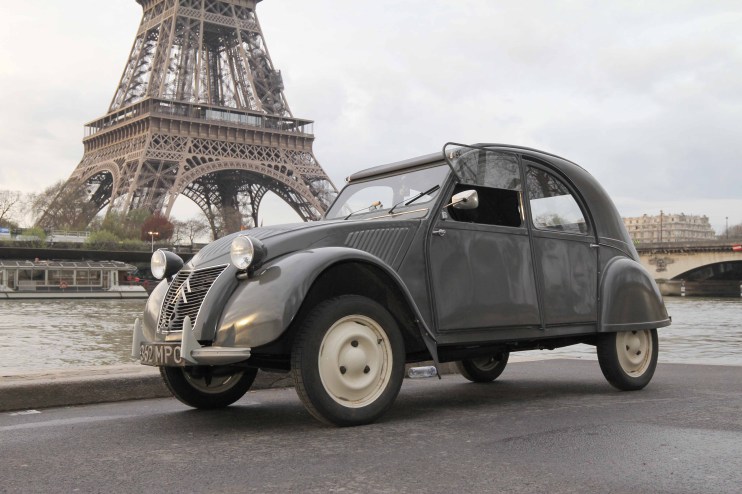
Citroën is reviving one of its most famous cars as a sub-£15,000 electric city car. It looks like a nostalgia play, but it is really a response to a gap Europe’s carmakers left at the cheap end of the market, one that Chinese rivals are now moving quickly to fill.
Citroën’s decision to bring back the 2CV as a cheap electric car is not really about nostalgia. It is a response to a gap that Europe’s carmakers left at the bottom of the market, and that a wave of low-cost Chinese rivals is now moving quickly to fill.
For years, Europe’s manufacturers congratulated themselves on building ever more sophisticated vehicles, with bigger screens, bigger batteries and bigger profit margins, and somewhere along the way they stopped building cars that ordinary people could actually afford. That is what makes the return of the 2CV so interesting.
Officially it is another heritage revival. The original “Tin Snail” will return as a compact electric hatchback priced below €15,000, or around £13,000, with a projected range of about 160 miles. Citroën will show it first as a concept at the Paris motor show this October, with production beginning in 2028. Those are respectable numbers, but they are not really the story. The more telling question is why one of Europe’s biggest manufacturers suddenly believes there is demand for a basic, inexpensive electric car, and the answer says a good deal about the state of today’s market.
The affordable car has quietly disappeared
Buying a new car used to be an attainable ambition for millions of households. Today it increasingly feels like a luxury purchase. Over the past decade manufacturers have steadily moved upmarket, SUVs have grown larger, technology has become more elaborate and prices have climbed to match. Even the small hatchbacks that once served as sensible first cars now carry price tags that would have seemed extraordinary a few years ago.
Electric cars accelerated the trend. Battery technology has improved dramatically, but affordability has not kept pace, and too many entry-level EVs still cost well over £30,000, putting them beyond the reach of many families before interest rates and higher living costs are even factored in. Citroën has been unusually honest about this. Chardon has openly acknowledged that soaring prices have pushed millions of customers out of the new car market, and the revived 2CV is the company’s attempt to bring them back. That alone makes it one of the more important electric cars announced this year.
Nostalgia only gets you through the showroom door
Reviving an iconic badge is rarely difficult. Making it relevant nearly half a century later is much harder. Citroën appears to understand that people did not love the original 2CV simply for how it looked. It became one of the great automotive success stories because it was brilliantly practical, cheap to buy, simple to maintain and built around the needs of ordinary drivers rather than executive boardrooms. Farmers, students and families all found a use for it because it solved a problem.
The new version seems determined to follow that philosophy rather than just recreate the styling. The familiar rounded profile and tall roofline will almost certainly return, but beneath the retro-inspired bodywork sits Stellantis’ new low-cost E-Car architecture, designed specifically to make affordable EVs commercially viable. It will be built in Italy alongside a reborn Fiat Panda, and it replaces the old petrol C1 as Citroën’s entry model. The Lithium Iron Phosphate battery keeps costs down, and the modest range reflects how people actually use small cars rather than chasing brochure figures. That is a smarter approach than fitting ever larger batteries to cars that spend most of their lives covering fewer than 30 miles a day.
Europe is relearning how to build affordable electric cars
Citroën is not alone in changing direction. Renault is preparing a new generation of cheap electric models, including the reborn Twingo, and Kia has made no secret of its plan to sell smaller, cheaper EVs below the EV3. Chinese manufacturers, meanwhile, keep piling pressure on European brands with capable electric cars at increasingly competitive prices.
The market has shifted. For years manufacturers could justify premium pricing because there were few alternatives, and that comfort is disappearing. Buyers now have more choice than ever, and many are starting to ask whether they really need a car loaded with technology that adds cost more readily than value. The next phase of electrification is unlikely to be won by whoever builds the fastest car or fits the biggest touchscreen. It will be won by whoever makes electric motoring genuinely accessible. If Citroën can deliver a well-built EV for around £13,000, the achievement will be less the bargain itself than what it reveals about how expensive the rest of the market has quietly become.
Less really might be more
There is a further lesson in the 2CV’s return. For most of the past decade, progress in the car world has meant adding more, whether more software, more driver assistance, more connected services or more complexity, with each generation promising a richer experience than the last. Yet a good number of buyers appear to want the opposite. The original 2CV became an icon precisely because it embraced simplicity and did its job without fuss.
That philosophy looks surprisingly modern now. Smaller batteries use fewer raw materials, lighter cars use less energy, and simpler engineering tends to cut manufacturing costs while improving efficiency. None of it makes for glamorous headlines, but all of it matters if electric cars are ever to become truly mainstream.
Whether Citroën hits its price target is another matter. Four years is a long time in this industry, and economic conditions could shift before the car reaches British showrooms. Even so, the thinking behind it already feels significant. The original 2CV changed motoring because it understood that freedom did not have to be expensive, and 80 years on, Europe finds itself facing much the same challenge. The most interesting electric car of the moment might turn out to be the cheapest, a small, sensible hatchback built on the idea that the smartest innovation is sometimes making something more people can afford.