Claudia Winkleman’s new chat show is here… So what happened to the great British talk show?

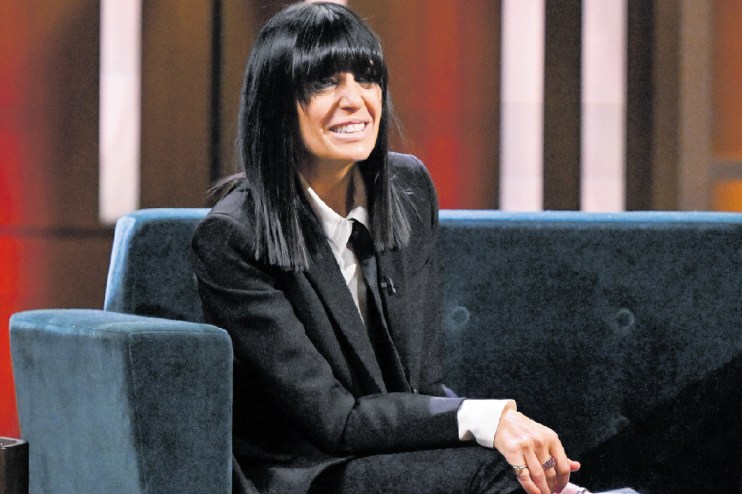
When Claudia Winkleman announced last October that she would be leaving her hosting duties on Strictly Come Dancing at the end of the series, it was no surprise that the BBC was keen to hold on to her. Strictly… might not be the ratings behemoth of 10 years ago but it still pulls in more than seven million viewers.
A bankable star looking for a platform is hardly a new conundrum for television producers. In December, the BBC took the easy way out, revealing that Winkleman would host a new celebrity chat show, and last Friday, the first episode of The Claudia Winkleman Show hit our screens.
The BBC already has a blue-riband salon des arts: The Graham Norton Show is now in its 20th year – the most recent series included Taylor Swift and Jacob Elordi – and attracts a respectable three million viewers. But it only runs from September to March. Winkleman’s first guests were Jeff Goldblum, Jennifer Saunders, Vanessa Williams and Tom Allen, an amiable mix. The host was winningly nervous in her usual likeable, down-to-earth manner. And it was… fine.
The chat show is hard: an unquantifiable alchemy of the host’s personality, the quality and character of the guests, their interaction and an elusive extra element – atmosphere.
A cautionary tale
The industry’s cautionary tale is 1993’s The Chevy Chase Show. Fox paid the comedian $3m just as his popularity was waning, and the project was cancelled after five weeks. One critic savaged “whatever pitiful chatter Chase is attempting to wring out of a luckless guest”.
The challenge is greater than that, however, and some of it is self-inflicted. For many – me among them – the acme is the late Michael Parkinson, whose eponymous show was broadcast in 1971-82 and 1987-2007. He benefited from a less content-saturated world in which celebrities did not always bare every inch of their souls: James Cagney, Bette Davis, Fred Astaire, James Stewart.
It was also, paradoxically, a freer age. In 1973, Orson Welles told Parkinson to discard his prepared questions, reassuring him, “We’ll talk instead, much better”.
Muhammad Ali barely allowed the host a moment’s interjection during a 1974 encounter: his words thundered out like a cataract as he dismissed the reputations of his fellow boxers, explained his Muslim faith and foresaw a “spiritual war” between black and white people.
Parkinson was a deceptively skilful inquisitor. He could guide his guests with the gentlest of nudges, his approach seemingly straightforward and sympathetic. He prepared meticulously and was an exceptional and attentive listener.
The balance of power in talk shows has shifted
The balance of power seems to be different now, in ways which can be difficult to reconcile. Today’s interviewers seem more transactional, more biddable.
Different hosts have different styles, and always have done: no-one would mistake a Terry Wogan encounter for John Freeman’s Face to Face. But that style now seems to be each show’s dominant motif. Goldblum et al were expected to fit into Winkleman’s admittedly charming shtick of larky self-deprecation, the friendly head girl who keeps the show on the road but winks at harmless rule-breaking.
The modern host is the sales pitch. It’s no longer enough to be a conduit for the guests to talk to the audience, and I think this speaks to something deeper: contemporary TV is terrified of its audience, or rather, terrified of losing it. Thou shalt not challenge, or contradict, or surprise, and above all thou shalt not outstay thy welcome. If TV executives know one thing, it’s that attention spans are short and frangible.
HL Mencken famously declared that “no one… has ever lost money by underestimating the intelligence of the great masses of the plain people,” and like all good quips it contains some truth. But it is not wholly true. Ogilvy’s behavioural science guru Rory Sutherland has argued that our attention spans have not diminished but polarised:
“We see Youtube shorts and… people paying extraordinary attention for quite a long time to subjects that really interest them.”
This feels instinctively right: the rise of Tiktok is weighed against The Joe Rogan Experience, the world’s most popular podcast of which the average episode is two hours 39 minutes long. But mainstream broadcasters like the BBC are reluctant to abandon a decades-old model based on creating a comfortable experience for the average viewer and displeasing no-one. They fail to grasp that the “average viewer”, like many averages, does not exist.
The Claudia Winkleman Show does nothing new
The chat show is not a platform at all so much as a genre: famous or interesting people talking about subjects which will hold an audience – but how that is delivered should be entirely up for discussion. There is nothing wrong with The Claudia Winkleman Show, but it does nothing new or distinctive, and it may find one hand tied behind its back by the BBC’s fussy social media guidelines. Clipping is king now.
There are now virtually no technological restraints on broadcasters, content limited only by the imagination; if you can think it, you can probably do it. Audience demands are more diverse too. Podcasts began as intimate, shared connections, a voice often literally in the listener’s ear. They remain primarily an audio experience but the market for watching video podcasts is growing. At what point does that constitute a talk show?
This is all innovative and exciting, but it also means that “fine” simply isn’t “fine” any more. In the 2020s, there are no excuses for average.