
Climate Comms: How Activists Have Framed Liquid Natural Gas
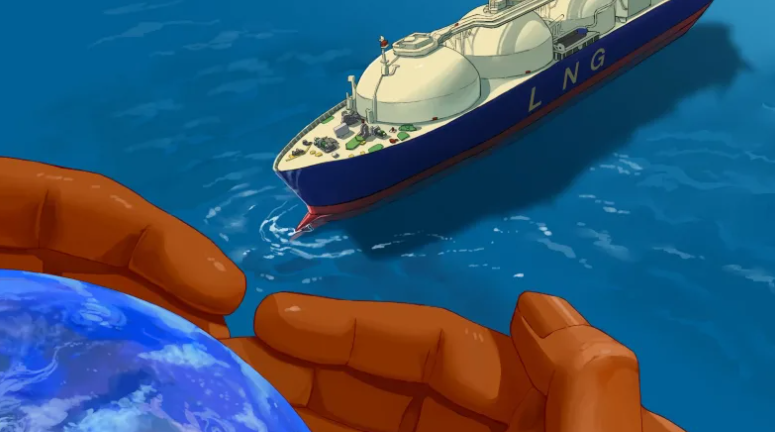
Activist groups are, at their core, communications outfits. No matter how strong the moral conviction, if the message isn’t communicated effectively, it won’t lead to change.
For some campaigning issues, the comms are less complex than others. Take PETA’s long-running campaign against Canada Goose, for example. The firm is accused of “cruelly” using coyote fur in its jackets, and PETA spins this accusation as a simple animal rights issue.
Suffering animals = bad.
Throw in a few pictures of coyotes caught in traps, link to Canada Goose, and you have yourself a nice piece of external comms.
Other issues, however, are much more difficult to communicate, particularly to the general public. Let’s look at Liquid Natural Gas.
Activist campaigns targeting LNG have grown significantly in recent years, with activists calling out potential risks of transporting LNG, and associated environmental justice and climate harms. As far as targeting of the energy industry goes, it’s one of the most salient topics right now.

But ask a layperson about LNG expansion, and it’s likely you’ll get vague recognition at best.
So how do activists communicate around a topic of which many people have no awareness?
Click here to get in touch and understand how SIGWATCH can help your business
Discursive Linkage
When faced with the challenge of swaying public & political opinion on a complex and little-understood topic, many activist groups will utilise links to broader issues which are more recognisable.
In the case of LNG campaigning, groups have relied on discourse around neocolonialism and resource extraction from poorer countries to highlight potential social impacts. Slogans such as “End Energy Colonialism” do little to communicate on the technicalities of LNG, but they do evoke an image of energy companies as greedy and malevolent. While this kind of narrative can be polarising, it may be effective amongst younger generations who are arguably more exposed to the ills of colonialism and the resultant global power imbalances.

On the climate impacts of LNG, activists have long relied on the term “fossil gas” as an alternative to natural gas, in an attempt to link the fuel to the negative sentiment around fossil fuels. Accusations of greenwashing, a term familiar to most, have also been targeted towards energy companies who claim that LNG is a cleaner alternative to oil.
Choosing their target
Most of the time, the majority of activist campaigning resources are focused on corporations, financial institutions, and other industry bodies, as opposed to governments. There are many theories as to why that is, but suffice to say that, when groups are looking to effect rapid change, it is easier to do that by leveraging reputational pressure than it is to force regulatory change.
However, an analysis of LNG campaigning shows that many groups have focused their campaigning and lobbying efforts on governments and regulators rather than industry. This is likely because they sense more of an opportunity for movement in the political space than within industry – an energy firm rowing back LNG investment would be a drastic U-turn at this point.
Groups have targeted a range of governments on the LNG issue, including:
- Lobbying the U.S. Department of Energy to incorporate rigorous environmental and climate justice criteria when evaluating LNG export authorisations.
- Suing the Alaskan government over an LNG pipeline.
- Alleging that Nigeria’s plan to expand LNG production and exports to replace lost oil revenue poses a risk of stranded assets.
- Calling Canada’s plans to expand LNG a ‘threat to the climate and the economy’.
And, so far, campaigners have had some success in their lobbying of governments. In January, US President Biden implemented a “pause” on LNG exports permits which was widely celebrated amongst US environmental groups.
Key Takeaways
Campaigning groups, like businesses, must effectively communicate around the issues that matter to them. Often, these issues are highly complex and unfamiliar to laypeople. In order to strike a chord and effect the change that they want to see, activists will carefully frame the complex issues as something which is more readily understood – such as colonialism or greenwashing. Reference points like these play on a tendency of consumers to distrust business.
Additionally, campaigners will choose their audience in accordance with political opportunities and the possibility of effecting change. Where companies clearly will not move on an issue – most likely because to do so would be an existential threat to their business model – activists will turn their attention to politicians and regulators to impose change on and for them.
(Hero image courtesy: Say No to LNG)