The greatest comms challenge facing business leaders today

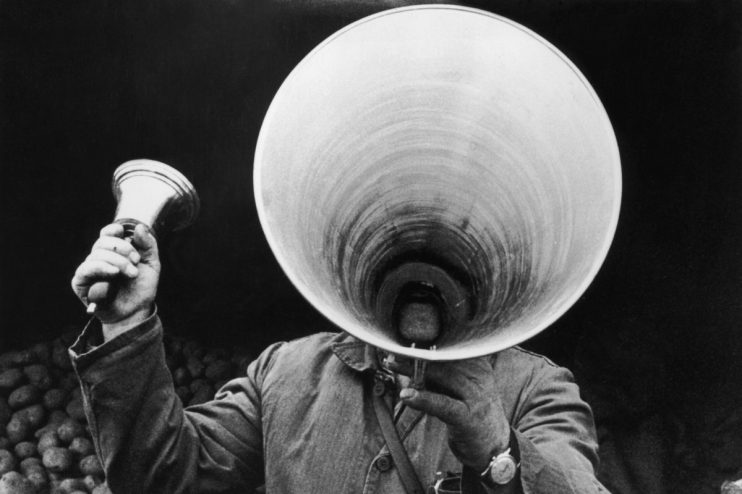
To regain public trust, businesses must ditch the glossy, say-nothing comms and be honest with consumers about the messy reality, writes Craig Oliver
Nearly nine in 10 people want artificial intelligence regulated, yet in boardrooms and capitals the conviction runs close to the opposite with a sense that unleashing AI is the only way the West wins its race with China. That gap, on one of the defining questions of our time, is just the latest example of the chasm that has opened up between public opinion and an elite consensus.
On tax, on immigration, on AI, on the future itself, the thinking of many established business leaders is, increasingly, diametrically opposed to where the public are, and the gap is widening into a gulf. It is the greatest communications challenge of our age.
If business is to prosper, it has to find ways to communicate across that divide, rather than retreat into the kind of ultra-processed comms we see far too much of now: glossy, safe and inauthentic.
We’re used to a story of volatility and unpredictability, and that hasn’t gone away, but the fog is now lifting on a new order, and it isn’t one business is comfortable with. The old settlement is being wound down, with the web of post-war institutions built to support liberal democracy growing weaker by the month, and in its place are leaders who are more nationalistic and far less willing to cooperate or compromise.
Public pessimism is abnormally high
The evidence is everywhere. America acted over Venezuela and Iran with little reference to the UN, the G20 or the G7, while Article 5, the bedrock of NATO and the promise that an attack on one member is an attack on all, is now openly in question. The “middle powers”, in Mark Carney’s phrase, are left navigating between a United States and a China that are locked in direct competition and far ahead of everyone else. And beneath this ruthless reality runs constant technological disruption.
Across the 27 countries we polled at FGS Global, 73 per cent say life will be harder for the next generation, 76 per cent feel their country is divided, and 68 per cent believe their political system is failing and needs fundamental reform. Pessimism on that scale, replicated across democracies, is not normal.
We have grown used to the K-shaped economy, with its winners and losers pulling ever further apart, but our research points to something just as important: K-shaped opinion, in which, on almost every big question, established business leaders sit at one end and the public at the other.
The establishment instinct is broadly to let AI race forward, cut spending, cut taxes, back entrepreneurs and treat immigration as manageable, but on all of it the public is opposed.
The numbers are stark. On tax, 64 per cent want higher levies on wealth, and large majorities want more of the burden shifted onto business and the best-off. On AI, approaching 90 per cent want it heavily regulated, and 70 per cent believe it will destroy more jobs than it creates. On immigration, support for stronger borders runs at 70 to 80 per cent across Europe, and 62 per cent feel their national identity is slipping away. This is the gap that matters – between those who want to lead, and those who are no longer sure that they want to be led.
Businesses must ditch the gloss
The task that follows is daunting. Politicians listen more to the public who elect them than to the businesses who lobby them. The case for the conditions business needs to thrive has to be made bravely and patiently, in terms people recognise, and without pretending the trade-offs aren’t real.
The trust gap makes it harder still. Business is trusted by around two in five people, and big tech by fewer, while doctors are trusted by 85 per cent.
A few years ago many organisations invested heavily in Purpose with a capital P, certain they could not prosper without publicly championing a certain set of values, but the culture wars punished them for it, and the instinct since has been to keep their heads down. That instinct is understandable, though I think it is also a mistake.
What we found, across all 27 countries, is that most people still want business to have purpose – but what they reject is purpose that feels performative. They want something more grounded – evidence that powerful institutions understand the value of community, jobs and investment in the places where they operate; purpose tied directly to what a business does and where it does it, and steered away from polarising cultural fights. It’s clear purpose doesn’t need abandoning: it needs redefining and rearticulating in a language people understand.
This goes to the heart of how business communicates, because too much of it has become ultra-processed: glossy content that radiates competence while saying nothing solid. It is the corporate equivalent of food engineered to look nourishing and deliver nothing, and in a world where 74 per cent believe institutions serve elites rather than ordinary people, communication that feels managed and hollow undermines trust rather than builds it.
The answer is not more polish, but less. People yearn for more honesty, and a willingness to engage on the threats people face and the practical good an organisation does to mitigate them. Trust is not built by sounding impressive; it is built by being believable, honest and relevant.
None of this is easy, and all of it takes bravery. It is far more comfortable to stay quiet, smooth everything into the glossy and inoffensive, and wait for the weather to change, but the divide will not close on its own, and the businesses that prosper will be the ones brave enough to step into it and make their case honestly while reflecting on why they’ve lost the trust of the public.
That is the greatest communications challenge of our age.
Craig Oliver is global co-head of strategy and reputation at FGS Global, and former director of politics and communications at 10 Downing Street