Will fracking lead to a UK energy renaissance?

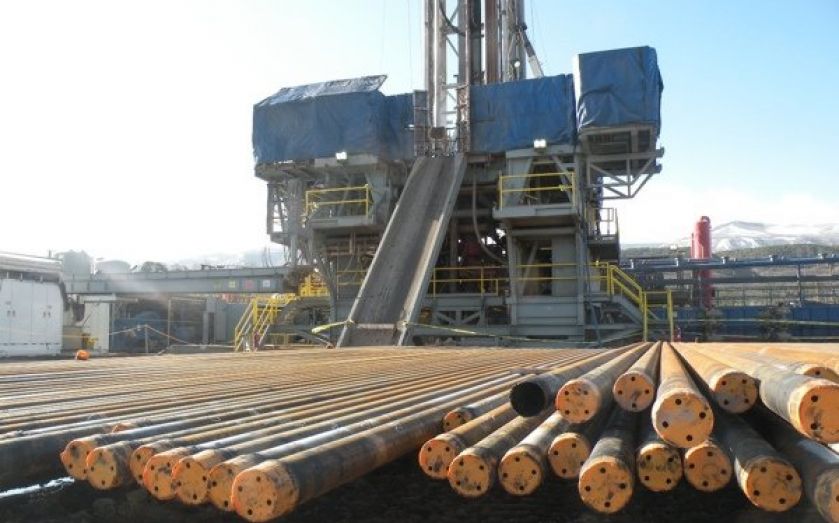
For the first time in six years companies are able to bid for natural gas exploration licenses in the United Kingdom. The UK became a net importer of petroleum and natural gas last year and domestically-produced natural gas now accounts for only a third of consumption. Prime Minister Cameron’s decision to go “all out for shale” is a welcome sign and will aid in reversing the trend away from energy independence. If done correctly, increased energy exploration will also help the economic recovery gain strength.
Three problems still inhibit the UK from taking full advantage of potential gains from fracking. First, the energy exploration permitting process is far too time-consuming. Second, private landowners do not own the mineral rights beneath their lands, leaving them with little incentive to support energy exploration in their backyards. Addressing both these issues will help overcome strong environmentalist opposition, the third obstacle.
The British Geological Society estimates that the country’s natural gas deposits could hold at least 1,300 trillion cubic feet of gas, primarily found in the economically-depressed North.
Some have suggested building a high-speed rail line to enable residents of the North to travel to London to work. However, as my Manhattan Institute colleague Diana Furchtgott-Roth has argued, it makes little sense to spend £43bn on the proposed HS2 high-speed rail line so that residents can commute to London when rail services are already in debt. Instead, developing the North’s energy resources could lead to a flourishing local jobs climate, similar to North Dakota in the United States.
Tapping just 10 per cent of Britain’s natural gas supply could meet her needs for 25 years, according to Keele University Professor Peter Styles. However, as fracking technology continues to advance, there is no reason to stop at 10 per cent. With increasing tensions between Russia and Europe, developing additional natural gas for export would increase Britain’s geopolitical influence and economic gains.
Matthew Hancock, the new energy minister, wants to create a system that allows companies to start exploring these reserves within six months of submitting an application. While this is an improvement compared to waiting for years, it is not fast enough to create employment in distressed areas.
The Department of Energy & Climate Change issues licenses for energy exploration. In addition to these licenses, companies must also gain permits from the Environment Agency and approval from the Health and Security Executive before drilling can begin.
When gaining approval for energy exploration requires navigating a maze of multiple, distant central government agencies, efficiency often suffers. The influence of well-organized environmentalist groups over the process is strong. In the United States, the time it takes the central government to process a completed application to drill on federal lands has risen from 39 days in 2005 to 95 days.
This regulatory red tape discourages energy exploration, similar to a potential six month wait in the UK. Still, US shale gas production has increased over 400 per cent from 2007 to 2012 (the latest data available), thanks to large increases on regional and private lands.
This is because the approval process for drilling on American private or state-owned land is faster than on central government-owned land. In North Dakota, the permitting process only takes 10 days. Is it any wonder the state’s GDP grew by 9.7 per cent in 2013, while the average U.S. rate increased by only 2.2 per cent?
Drilling on American private and state-owned land has proven to be faster than on federal lands because, under American law, people own the minerals below their property. They are free to sell exploration rights for a fee or percent of the sales. In contrast, the Crown owns Britain’s valuable underground resources, including oil, gas, and coal. Even in areas with high unemployment that have yet to feel the effects of the improving economy, such as the North, there are few incentives for residents to embrace energy development or exploration.
Without changing the laws to allow people to share the value of the hidden resources on their property, it will be difficult to realise potential gains from natural gas. Granting people the rights to the fuel under their homes and farms would be fairer and more efficient than Prime Minister Cameron’s plan to let local councils keep all of the revenues raised from fracking sites. Doing so would also ease concerns of those who do not approve of fracking. People who do not want energy companies in their back gardens can refuse to sell their mineral rights.
Resuming permitting for energy exploration is a sensible first step, but this alone is insufficient for higher economic growth. By taking steps to speed up the permitting process and to ensure private landowners have a stake in energy development, the UK could be poised to overcome the environmental faction and experience an energy and economic renaissance.