Congratulations Brussels for capturing EU states’ financial sovereignty

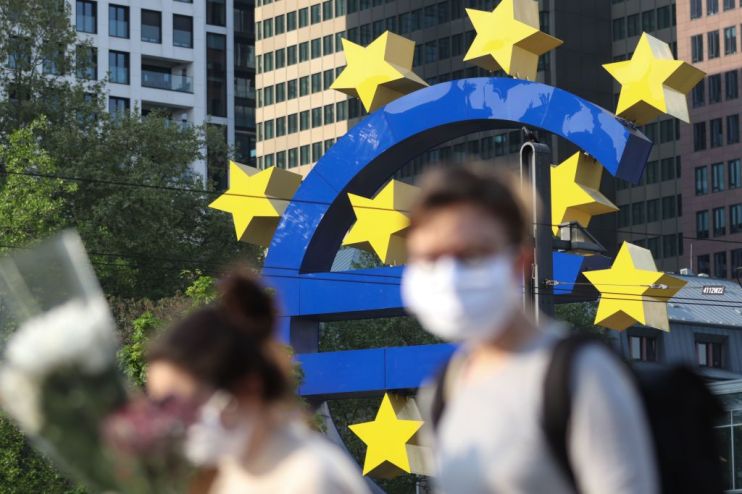
The European Union achieved spectacular market success this month when it launched its new “Support to mitigate Unemployment Risks in an Emergency” bond programme (SURE).
The €100bn programme will be used by the EU to support member nations addressing pandemic job security and social welfare weakness over the next year.
The first €17bn bond issue off the SURE programme achieved perhaps the largest order book for a financial asset in history: €233bn in demand from investors.
That could mean a number of things — that investors just love the EU, or most obviously that the deal was mispriced too cheaply. And the 10-year bond tranche was sold at a negative yield.
But credit where credit is due, the deal’s success is truly remarkable. No doubt it will win every Debt Capital Award there is (yes, there are such things). It represents a real turnaround for the EU, which actually managed to agree an initiative to finance jobs and growth, and got the plan underway.
The staggering demand for the bond also highlights just how easily nations are financing the emergency costs of the pandemic in today’s ultra-low interest rate environment via increased borrowing — something the US and UK should be watching carefully.
The truth is investors value the European Central Bank Put: the ECB can buy up to 50 per cent of the deal via its quantitative easing programmes, therefore guaranteeing liquidity in the bond.
However, like all things involving Brussels, it’s really not just a simple success story.
For a start, the ECB is now tied into guaranteeing liquidity in perpetuity. The merest hint that the QE programme is not perpetual will cause the price of all its bonds to crash. Should the ECB ever try to raise European rates, the price of all bonds will demonstrate the effects of financial gravity — and destroy the reputation of the EU as an issuer.
The real story that the EU doesn’t want to talk about is how the SURE Bond Issue represents a massive step forward in the creation of the European Superstate — bypassing any meaningful discussion of what that entails for European democracy. What the EU bond achieves is the transfer of fiscal sovereignty from member nations to Brussels. And no one got to vote on it.
Back in Frankfurt (the not-quite-the-centre of European finance the Germans imagine it to be), that solo EU critic, Bundesbanker Jens Weidemann, has been desperately warning against EU joint-borrowing initiatives. If it happens, he argues, it should be strictly one-off, and should not become a common budgetary tool.
Sadly, no one is listening to Weidemann. He is a lone voice in the Frankfurt financial wilderness..
Pre-euro, the Germans had the curious notion that countries joining the Eurozone would meet the strict membership rules of the single currency by exercising sound fiscal responsibility, reforming their economies, and ensuring solid accountable finances. Silly Germans.
There are no doubts as to the credit quality of the EU bond. Moody’s, the credit rating agency, rates the EU as Aaa (the same level it rated a lot of stuff before 2008). Although Brussels is out raising new EU debt, the EU has still not agreed on banking union, common fiscal policy, or closer political tie-up. All that is agreed are the rules of the monetary union restricting how much states can borrow and the size of deficits — rules that are completely unenforceable in the current pandemic economy.
The new SURE Bond was sold as near-equivalent to the German Bund, but yielding 40 basis points more. Its equivalency to German state debt is “implicitly” true. Note the subtle difference: it’s true, but not “explicitly” true. (That’s what being a debt capital markets banker teaches you.) Although there is no joint and several liability requiring EU members to repay the bond, it’s hardly imaginable that the Germans would ever walk away if Brussels found itself unable to repay… or is it?
What all this essentially shows is that the implicit guarantee promises of the bond are yet another Brussels fudge, hoping the wobbly construct never gets tested. Every single investor who bought the bond understands this was a cheap Bund — just don’t tell the German political classes they are on the hook for it.
Funding Europe directly from Brussels very much suits the agenda of the autocracy of EU bureaucrats whose objective is oversight over member states’ budgets (and everything else), and also of the ECB (for the same reason). ECB president Christine Lagarde is not a banker or economist, but a very smooth French political operative. She sees common issuance of “Eurobonds” to finance Europe as a convenient policy tool to quell dissent between members over the impossibly troublesome monetary rules, and to centralise control of European debt.
After next year’s Recovery EU bond binge, the next stage will be an initiative to coordinate and align the joint issuance of European debt. It already looks inevitable. It will be argued that a larger, more liquid single European sovereign bond market will improve funding and the economic relevance of the EU. The fact it further diminishes national sovereignty will be a small price to pay.
Lagarde wants joint issuance to be part of her armoury. That plaintive wail you heard in the wind was Weidemann’s warning that “closer political integration would be needed and for the EU to develop into a democratic state” before common bond issuance is even contemplated — but the reality is it has already happened. The fantastically successful SURE bond was the first step in Brussel’s state-capture of European states financial sovereignty.
European states will no longer need to go to the market to raise euros to bulwark unemployment or stem job losses — now they apply to Brussel for handouts. No longer will they need to finance much-needed projects via markets in their own name.The new EU funding programmes fit perfectly with the rules of single currency membership: independent nations can’t run up large state deficits under the terms of the euro, but client states beholden to Brussels just need to ask nicely.
Main image credit: Getty