Skip to content
Monday 14 September 2026London --:--Frankfurt --:--Zurich --:--
NewslettersSearchEN · DE · FR
MorningWire

European business, markets and politics

FTSE 100
10,697.57
+0.44%
DAX
25,440.81
-0.50%
CAC 40
8,117.78
-0.76%
STOXX 50
6,260.38
-1.02%
  • Europe
  • Markets
  • Business
  • Economy
  • Regulation
  • Politics
  • Opinion
More
GermanyFranceEU InstitutionsCompetitionPublic AffairsBankingTechnologyEnergy
  • Germany
  • France
  • Europe
  • Markets
  • Business
  • Economy
  • Regulation
  • Politics
  • Opinion
  • DE
Monday 14 September 2026 2:02 pm  |  Updated:  Monday 14 September 2026 2:04 pm

Bank of England poised to slow bond sale programme

By: Ali Lyon

chief reporter

Add as a preferred source on Google
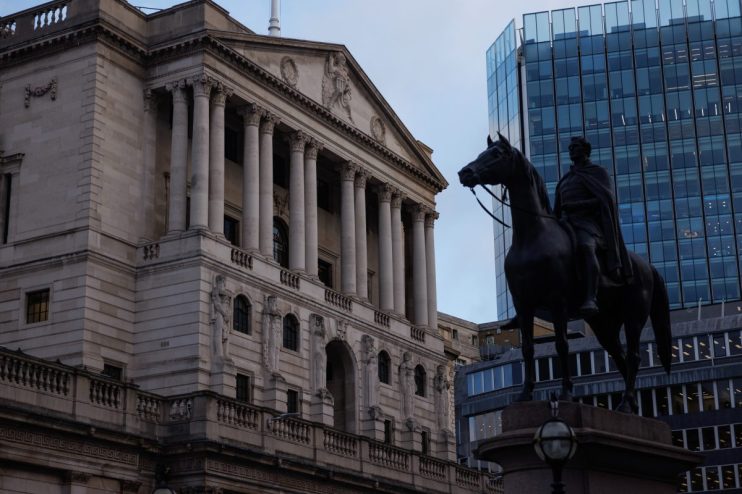
Bank of England facade with classical columns, intricate carvings, and a statue on horseback against a modern glass building.
Mortgage rates are soaring ahead of the Bank's next meeting.

The Bank of England is likely to slow its unusual approach to offloading gilts after conceding it had pushed up borrowing costs at a time when government bond yields have hit near-record highs, economists have predicted.

The Bank’s Monetary Policy Committee will vote to reduce the pace of its ‘quantitative tightening’ programme from £70bn to £50bn and could halt sales of long-dated bonds when it it meets on Thursday, several economists said.

The move would follow calls for the Bank to pause active sales of its vast bond portfolio, which has made it an outlier relative to its international peers. Critics have argued the stance, in which the Bank actively sells its stockpile of bonds into the market rather than letting them mature organically, has pushed up borrowing costs and piled unnecessary pressure on the country’s creaking public finances.

“A reduction in the annual QT envelope to £50bn remains our base case,” Deutsche Bank economists Maui Brennan and Sanjay Raja wrote in a note, adding: “We continue to think the Bank could scrap long gilt sales altogether.”

Thomas Pugh, chief economist at RSM UK, agreed the MPC would choose to reduce or pause the Bank of England’s longer-dated gilt sales.

Any decision to halt sales of long-dated bonds would come as the UK long-term government debt continues to find itself at the sharp end of a historic sell-off. Yields on 10-year and 30-year gilts have climbed to multi-decade highs as investors price in greater inflation expectations and concerns over western governments’ ballooning debts. At an auction of 30-year debt last week, the government was forced to pay an interest rate of 5.82 per cent – the highest rate on any gilt since 1998.

The Bank of England raised its estimate on the extent to which its quantitative tightening stance has stoked government borrowing costs, conceding it had added 30 basis points – or a third of a per cent – to 10-year gilt yields.

Read more

Economists urge Bank of England to halt bond sales as borrowing costs climb

Bank of England headquarters with financial charts overlay, illustrating private credit stress test analysis

Bank officials have long argued that the central bank’s active approach to offloading its gilts is necessary given its outlier status on the types of bonds it holds on its balance sheet.

Bank of England defends bond sales

During the era of quantitative easing – when central banks across the world hoovered up government bonds to insulate their economies from the 2008 financial crisis – the UK’s monetary authority bought debt with a longer maturity compared to its peers. As a result, mirroring other monetary authorities’ ‘passive’ approach to unwinding that buying spree would not be as effective in the UK as it is at the Federal Reserve and European Central Bank.

Governor Andrew Bailey argued in May the institution’s stance would grant the Bank the firepower to launch another round of QE “if needed”.

Alexander Harvey, UK economist at Oxford Economics, said “the quantity of active gilt sales [was likely to] stay at around £20bn” to avoid upsetting jittery bond markets.

“Given the stressed nature of the gilt market, we think the Bank will be keen to avoid market surprises,” he added. “This makes a fairly steady continuation of QT… the most likely outcome at the next meeting.”

The decision on Thursday will set the course for the Bank of England’s quantitative tightening for the next 12 months. Unlike its central interest rate that the Monetary Policy Committee votes on eight times every year, officials only vote on the pace and nature of its bond sales once a year in a bid to provide certainty to market participants.

“At its Thursday MPC announcement, the Bank has a chance to change course,” Damian Pudner, senior research fellow at the Great British Think Tank, told Morning Wire. “Pausing QT – and holding rates – would buy breathing room for households, businesses and markets. The rumoured cut from £70bn to £50bn is not sufficient.”

Read more

UK poised to pay highest borrowing costs since 1998

Treasury Department building with government bonds signage, representing financial management and bond issuance responsibi...

Share this article

  • Facebook
  • X
  • LinkedIn
  • WhatsApp
  • Email

Similarly tagged content:

Sections

  • News

Categories

  • Business

People & Organisations

  • Andrew Bailey
  • Bank of England
  • bond sales
  • Deutsche Bank
  • European Central Bank
  • Federal Reserve
  • great british think tank
  • monetary policy
  • Monetary policy committee
  • QT
  • quantitative easing
  • quantitative tightening

Trending Articles

  • Wetherspoon boss: ‘Not up to Burnham’ to choose who is on the high street 

  • Revolut facing ransom request after hackers obtain customers’ data

  • Reform hits back at Tory plan to ‘abolish inheritance tax’

  • Former Formula 1 champion loses £1.4m HMRC tax bill appeal

  • Four interest rate hikes loom despite surprise economic growth

More from Morning Wire

  • Economists urge Bank of England to halt bond sales as borrowing costs climb

    Economics
    Bank of England headquarters with financial charts overlay, illustrating private credit stress test analysis
  • UK poised to pay highest borrowing costs since 1998

    Economics
    Treasury Department building with government bonds signage, representing financial management and bond issuance responsibi...
  • Healey facing £6bn hit as UK borrowing costs reach highest point since financial crisis 

    Markets
    A smiling man in a dark suit and red tie looking slightly upwards, against a plain background.
  • IMF sounds alarm on borrowing costs surge as bond rout deepens

    Economics
    Chancellor John Healey smiling, wearing a navy suit, white shirt, and red tie.
  • Mortgage nightmare as investors price in three interest rate hikes 

    Economics
    Bank of England building on Threadneedle Street, London, showcasing its historic architecture and financial significance
  • Surge in borrowing costs could force Healey to deliver ‘emergency Budget’

    Economics
    Patrick Healey in a suit with a red tie, looking contemplatively to the left, with an American flag behind him.
  • Bailey warns on inflation risks as Iran war roils UK economy

    Economics
    Bank of England Governor Andrew Bailey addressing financial stability concerns at a press conference
  • Burnham warned against using ‘accounting trick’ to ramp up borrowing

    Economics
    Andy Burnham speaking at a press conference, addressing current events and regional developments, wearing a suit and tie.
MorningWire

Independent European business, markets and political news for decision-makers.

Morning Briefing

Europe

  • Germany
  • France
  • EU Institutions
  • Europe

Business

  • Markets
  • Business
  • Economy
  • Regulation
  • Competition
  • Public Affairs

Editorial

  • Opinion
  • Editorial Policy
  • Corrections
  • Contact

Company

  • About Morning Wire
  • Privacy Policy
  • Terms of Use
  • Cookie Policy
© 2026 Morning Wire Ltd · Published by Morning Wire Media, Bahnhofstrasse 65, 8001 Zürich, Switzerland
Privacy · Terms · Cookies · Facebook