Gilt rout sparks calls for Bank of England to slow ‘unusual’ bond sale programme

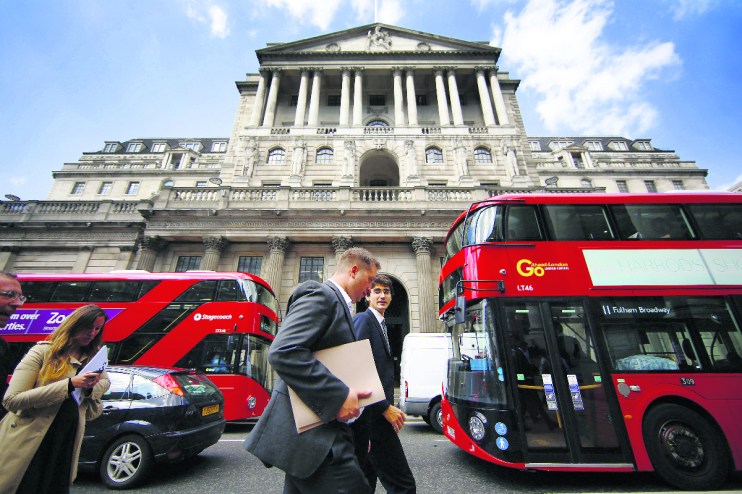
The Bank of England should slow the pace of its costly approach to unwinding quantitative easing, which is pushing up government borrowing costs and weakening the public finances at a time when both are under significant pressure, several top economists have said.
The calls follow the UK’s sovereign debt being swept up in a dramatic sell-off that carried the government’s long-term borrowing costs to their highest level this century. Simultaneously, Bank of England officials published a fresh paper in which they raised their estimate for the total cost to the taxpayer of reversing the Bank’s QE programme to £125bn.
The twin events reignited scrutiny on the central bank’s unusual approach to offloading the government debt it acquired in the wake of the 2008 financial crisis, which has seen it actively sell much of the £875bn of government bonds back onto the market.
Under terms agreed by the Bank of England and then Chancellor George Osborne, the taxpayer is also responsible for covering the vast losses incurred by the process, which is known as quantitative tightening (QT), piling pressure on the public finances.
“I would advocate for ending active QT,” Simon French, chief economist at Panmure Liberum, told Morning Wire.
“If you’re looking at why UK gilt yields moved as an outlier, part of that story – albeit by no means all of it – is that we have chosen an approach to QT which… has made us an international outlier,” he added.
Henry Cook, chief UK economist at MUFG, said that Bank of England officials should look to slow its pace of their bond sales when it next meets to discuss the programme in September.
“There is a strong case for further reducing the pace of QT at the next annual decision in September, irrespective of current market conditions,” he said.
Bank of England an outlier relative to peers
The pair’s remarks echo an earlier demand from Carsten Jung, a director at the IPPR think tank, who called on the Bank to pause QT entirely. He told Morning Wire on Tuesday: “Actively selling government bonds is adding unnecessary pressure to the gilt market. It should stop — just as every other major central bank has.”
Since emerging from the coronavirus pandemic, almost every major central bank has sought to shrink its respective stockpile of bonds via QT. But both the fact that the British taxpayer is on the hook for programme’s losses and the Bank’s decision actively to sell gilts onto the bond market have made the UK an international outlier relative to peers. Both the European Central Bank (ECB) and Federal Reserve opted to let their bonds mature without replacing them. They have also kept any losses from the programme on their own balance sheets for longer, spreading the impact out in the expectation they will earn plug the hole gradually through with money generated from operations like money printing.
In October, the Fed paused its QT efforts altogether, and is now rolling over all its portfolio of US Treasury holdings.
Both Cook and French warned against the Bank of England announcing any kneejerk change, which they said would give the impression the central bank was bailing the Treasury out just because interest rates were at historic highs.
Yields on the 30-year gilt rose 11 basis points on Tuesday to hit 5.76 per cent, while the 10-year note’s interest rate surged 12 basis points, as the UK bond market was rocked by a wave of political uncertainty and inflation fears.
“Policymakers will… be wary of any perception that QT decisions are shaped by political considerations,” Cook told Morning Wire, “which further strengthens the case for steady tapering rather than tinkering or abrupt changes in direction.”
But higher borrowing costs will aggravate the overall cost of the programme, as bonds – whose prices moves inversely to their yields – will be sold onto the market at a greater loss.
“The higher yields go, obviously in very simplistic terms, the more selling assets off before they mature incurs a loss which is indemnified by the Treasury,” French said. “So there’s a fiscal implication to all this.”
The Bank’s Monetary Policy voted to slow the pace of bond disposals from £100bn a year to £70bn when it met in September 2025. But officials also opted to raise the amount of active sales – as opposed to passive maturities – from £13bn to £21bn.
Rate-setters, including governor Andrew Bailey and deputy governor Dave Ramsden, have previously played down concerns that their active QT programme was pushing up on the cost of government borrowing in any discernible way.
Meanwhile officials have pointed to the fact that over the course of its bond buying spree, the Bank transferred £124bn to the Treasury between 2009 to 2022. They have also said the gilts the Bank of England bought up during its 13-year spell of QE tended to be longer dated than those acquired by other banks. This means any effort from the Bank to reduce its holdings passively would take longer to have an effect than the equivalent programmes that have been overseen by the Federal Reserve and ECB.