Burnham warned against using ‘accounting trick’ to ramp up borrowing

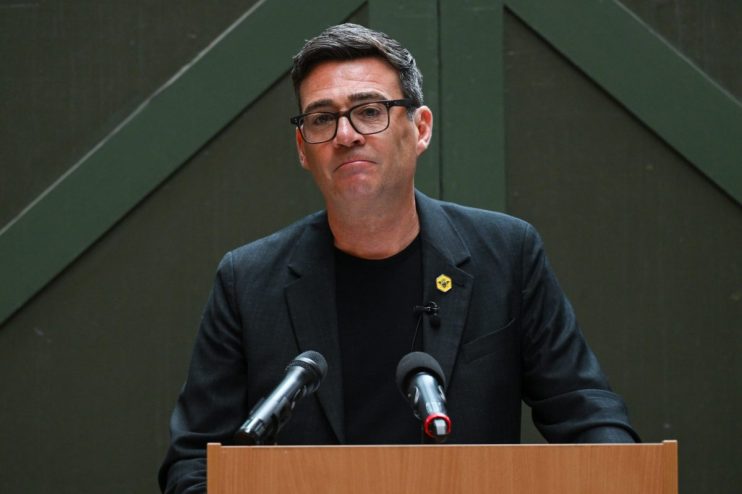
Andy Burnham and John Healey have been warned against using an “accounting trick” to ramp up borrowing given the volatility shaking bond markets and traders’ vigilance to extra gilt issuance.
Analysts at Oxford Economics said that it looked likely the government would use extra borrowing across bodies like the British Business Bank and the National Wealth Fund to fund a boost in infrastructure and housing investment.
This would come via the use of so-called ‘Pufins’, which is short for public financial institutions, and allow additional borrowing to fall outside of the government’s strict fiscal rules on debt and the budget balance.
The use of Pufins would mean that assets held by the state offset the costs of what is owed to investors on the government’s balance sheet.
Economists at the consultancy said this workaround could be dangerous for public finances as higher long-term gilt yields due to a global bond market rout could cost the government up to £9bn more than previously expected.
“Using an accounting trick to loosen policy in a significant way would be risky given the current febrile bond market backdrop,” Oxford Economics researcher Andrew Goodwin said.
“Any extra borrowing must still be financed via higher gilt issuance.”
Voters fear impact of surge in borrowing costs
Goodwin also warned that Pufins could “threaten the credibility” of Healey’s commitment to fiscal prudence amid a difficult economic backdrop. He also said the government’s plan to reduce borrowing was “relatively weak” given much of the tax hikes announced by Rachel Reeves last year would only kick in later in Labour’s term.
Oxford Economics said higher UK energy policies, forced up by international oil prices skimming $100 per barrel due to the continuance of the Iran war, could add to economic troubles looming over Healey’s first Budget.
An ongoing freeze on tax thresholds will also squeeze real household incomes, researchers said. The government has said it was prepared to announce further measures to ease cost of living pressure faced by families.
He predicted that the Prime Minister would have to keep measures supporting households as “low-cost” and “low-impact”.
“So far, markets have largely given the new administration the benefit of the doubt. But its first fiscal set-piece will send an important signal and a material loosening of policy would likely cause markets to react badly.”
The government is currently projected to spend about £137bn on debt interest payments in 2030, more than double what it spends on defence and higher than expenditure on education across the country.
News of traders’ concerns over returns made from holding government bonds has filtered through to voters. Morning Wire/Freshwater Strategy polling showed that about 73 per cent of people were concerned about the impact of rising interest rates for long-term government borrowing.
About a fifth, or 22 per cent, said they were not very concerned or not at all concerned while five per cent said they were unsure.
A majority of the people asked in the survey also said the government should reduce borrowing. About 40 per cent said it should reduce borrowing by cutting public expenditure while 22 per cent said borrowing should be reduced by raising taxes.
While 62 per cent said borrowing should be reduced, 23 per cent believed the government “should accept higher borrowing rather than cut spending or raise taxes”.
Method note: Freshwater Strategy interviewed n=1,249 eligible voters in the UK, aged 18+ online, between 4 – 6 September 2026. Margin of Error +/- 2.8%. Data are weighted to be representative of UK voters. Freshwater Strategy are members of the British Polling Council and abide by their rules.