Conservative Party Conference: What can we expect?

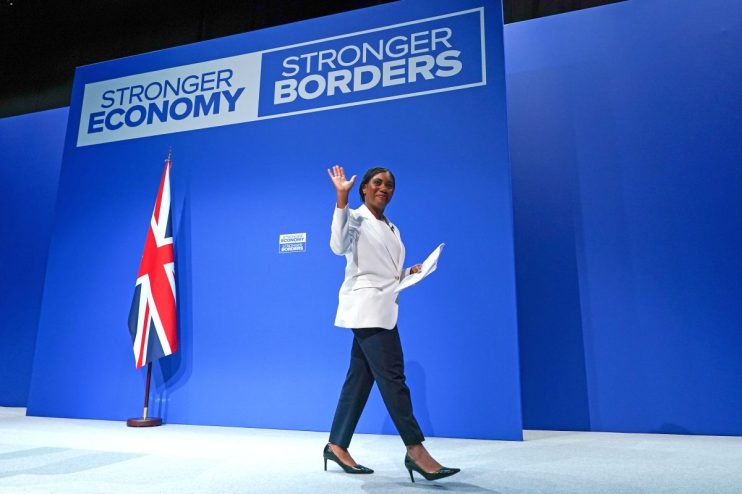
Despite the naysayers, party conferences are not meaningless, so what can we expect from the Tories at Conservative Party Conference 2025? Eliot Wilson gives us the lay of the land
The Conservative Party’s annual conference began in Manchester yesterday. As usual, it is the last of the three – should we now start to think of four? – major parties to hold its annual gathering, rounding out the party conference season before Parliament returns next Monday. It has not been a vintage year so far, especially with Andy Burnham’s nascent leadership bid fizzling out at the Labour conference last week, so what can we expect from the Tories?
Party conferences are now intricately planned media events, but, unlike those of Labour and the Liberal Democrats, the Tories’ annual meeting has never had a role in policy-making. Arthur Balfour, their languid, intellectually brilliant but detached leader from 1902 to 1911, said with feeling, “I would as soon be guided by the views of my valet as by the Conservative Party conference”.
But conferences are not meaningless: they offer the parties’ leading lights great opportunities and dangerous pitfalls in equal measure, and the simple act of gathering so many party members together in close quarters has a strange alchemical effect, producing a collective mood which can be measured.
Kemi Badenoch’s party has assembled in circumstances more grim and forbidding than it has ever known. The most recent YouGov survey put the Conservatives a distant third behind Reform UK (which has led every poll since April) and Labour, and a single point ahead of the Liberal Democrats; they have only risen above 25 per cent on a handful of occasions this year, which suggests at best stasis from the worst electoral defeat in their 191-year history last July.
While Sir Keir Starmer may be the most unpopular Prime Minister on record, polls still show the public tends to favour him over Badenoch, who has found it difficult to make headway. Rationally, it makes sense that she has not rushed to commit the party to detailed policies, aware that the next general election is still three or four years away, but the effect has been almost to exclude the Conservative Party from current discourse, as if it has nothing to say.
The worst case scenario this week would be a fractious and chaotic conference dominated by leadership speculation. Badenoch took the Tory crown 11 months ago with the backing of 57 per cent of members, enough but not overwhelming, and many doubters have not been won over. Meanwhile her defeated rival, shadow justice secretary Robert Jenrick, might as well have his Linkedin profile set to “Open to work”; without being publicly disloyal, he has left no doubt that an alternative exists.
How will the Conservatives confront Reform?
The Tories are also in unknown territory in having a powerful challenge from the right, with Nigel Farage and Reform UK enjoying a poll lead which seems so far impossible to dent. Reform is a strange pushmi-pullyu of a party, avowedly nationalist and anti-immigration but open to considerable state intervention in the economy, allowing it to take angry and disenchanted voters from Labour and the Conservatives.
Last week the Prime Minister showed how he intends to tackle Reform, calling its stance on immigration “racist” and “immoral”. His new deputy, David Lammy, reminded us all of his career-long potential for crass stupidity by condemning Farage as a man who “once flirted with the Hitler Youth”.
Badenoch will not take the same approach. Her best hope, on immigration and on many other issues, is to persuade Reform voters that she understands their frustration but that Farage’s party lacks practical solutions. The Conservatives, she will have to demonstrate, are the only realistic centre-right show in town.
Perhaps the Tories’ most promising avenue, mirabile dictu, is the economy. With Rachel Reeves rapidly becoming a byword for passive-aggressive haplessness, some polling evidence suggests the Conservatives lead Labour and Reform when it comes to managing the economy, although it is admittedly a tight scrap in the mid-teens. It is also one of the areas in which Reform is weakest, as it cannot engage the electorate’s visceral feelings as it can on migration, crime and identity. Voters can see taxes soaring while public services decline, they can see the government pumping money into vanity projects and protecting sectors of industry from the reality of the market. Badenoch has to persuade them that she and her colleagues have a better alternative.
Two facts are simultaneously true. It is not inevitable that the Conservative Party will recover from its current slump; but we are also a long way from the next election. It is less than a year since Reform first topped an opinion poll, and only four years since Boris Johnson was talking seriously of a decade in power.
There is time for change, though not infinite time, but Badenoch and the Conservatives need to conclude this conference with a much clearer sense of the way ahead and a plan to communicate their principles, values and priorities to an electorate more mercurial than it has ever been. The world’s oldest political party cannot go on being a void.
Eliot Wilson is a writer, commentator and contributing editor at Defence On The Brink