COP26: Is the City ready for its leading role in the fight against climate change?

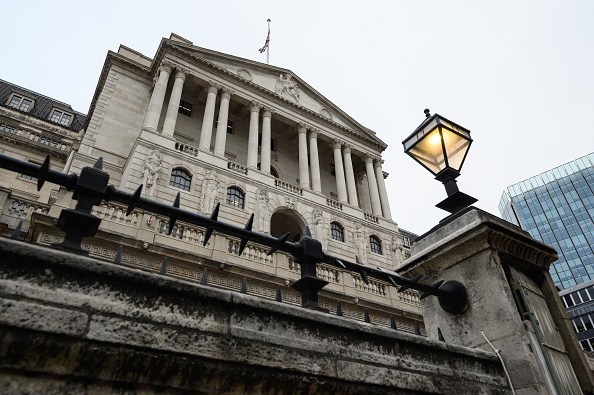
Windows were smashed at Barclays headquarters this week by climate activists who urged the bank to cut its climate destructive investments. Last week campaigners painted the Bank of England (BoE) black in a bid to raise the alarm on the institution’s funding of Big Oil.
Where money goes within the City is under more scrutiny than ever before, with politicians and campaigners alike insisting that green investment is central to the road to net zero.
The UK, set to host the UN’s flagship climate change summit – COP26 – in November, has so far announced emissions reduction targets fit to lead the international meeting, but whether these plans will be realised is a question of funding, analysts told Morning Wire
Thus far, Barclay’s has pledged a 2050 net zero target, and the BoE has confirmed that it is working to “embed climate change into financial decisions”. A host of other City stalwarts, including Lloyds, HSBC and Deloitte, have also made similar pledges – with some moving their net zero target to 2030.
Such institutions have a major role to play in the fight against climate change, particularly in their choice of investments, analysts said.
Environmental, Social and Governance (ESG) standards have crept higher on the agenda for investors in recent months, despite them weighing on IPO valuations like Deliveroo’s.
“The City will be absolutely crucial,” co-chair of law firm Norton Rose Fulbright’s renewable energy group, Rob Marsh, explained. “From a global perspective, Canada will be an absolute driving force in the context of finance. The wall of capital that people refer to that is required to deliver on the decarbonisation targets around the world will inherently involve all of the active financial institutions in the City.”
“Canada is the beating heart of our economy and the impact that corporate finance can have on both domestic and international decarbonisation is considerable. The impetus of change needs to come from the top of those organisations and I think you already see that,” senior researcher at think tank UK Onward, and leader of its Getting to Zero research team, Ted Christie-Miller, added.
However, some institutions have been preoccupied with the double blow of the pandemic and Brexit, which has seemingly stalled supply chains.
“It’s clear their eye isn’t really on the ball of climate change at the moment because it’s still on the ball of trying to stop car parks being built up across Kent,” senior investment and markets analyst at brokerage Hargreaves Lansdown, Susannah Streeter, observed.
The City has finally started to take important steps towards green financing but requires an extra push to release the grip that fossil fuel giants still hold over financial institutions.
“We need the private sector to invest and come on board. And for that to happen, the private sector industry needs certainty. They need to understand the terms around which they’re going to operate in relation to which large investment will be made,” Marsh added.
Christie-Miller argued that “it’s the smart investment decision. It’s not a PR stunt and I think that’ll become more and more clear.”
Big Oil
Oil giants have been edging towards sustainability, albeit cautiously.
“To be fair, the likes of BP and Shell are already trying to make this big pivot and it’s a costly one for them to undertake – particularly given the pandemic and the plunge in the oil price,” Streeter explained. “Now that the oil price is recovering, you would certainly expect them to step up their efforts even more because it does give them more buoyancy to enact that pivot.”
However, Streeter added: “There’s lip service paid to the fact that they have these targets but there isn’t so much being done on the ground really to make sure that we’re making those switches to green forms of energy.”
Companies that make the switch towards conscious ESG standards, make investments that pay for themselves, Christie-Miller said.
“What you want to do is really put forward the case for sustainable investment and show that they are fiscally responsible choices rather than just the ones that you’re being told to do,” Christie-Miller continued. “If you look at how different funds have performed over the last year, especially during Covid, you’ve seen the funds with a strong access on ESG far outperforming their brown of rivals and I think that speaks for itself.”
Decarbonisation
In March, the government confirmed its new decarbonisation strategy which built on last year’s 10 Point Plan and outlined the pathway to a “low carbon UK industrial sector in 2050”.
The strategy aims to get investors and consumers to choose low carbon options, which will fuel infrastructure and innovation, however, more work is required for its successful delivery.
‘’In unveiling this strategy, the UK is showing more leadership, with incentives for industry over the next decade to decarbonise and spur on the growth of new greener operations,” Streeter explained. “It does show a ramping up of ambition in meeting the net zero targets by 2050, and the £1bn in funding pledge gives the drive added thrust.”
The government has so far announced £4bn of the £9.2bn committed to energy efficiency measures in its 2019 manifesto, according to the Environmental Audit Committee (EAC).
However, the EAC warned that the government has underestimated the cost to decarbonise homes by 2050, by around £35bn to £65bn.
Now that at least part of the funding has arrived, EMEA head of environment at Norton Rose Fulbright, Caroline May called for a delivery authority board to ensure the government sticks to its commitments.
“The decarbonisation strategy is a real statement of intent by the government, building on its 10 Point Plan for the green industrial revolution last year and following on the climate change committee’s Sixth Carbon Budget report as well, which made clear we may have set the policy framework but there’s a long way to go in delivery,” May explained.
“For this government, it’s part of levelling up, creating jobs and green jobs in the north of England and in some of our coastal regions which have been helped by the renewable sector.”
Marsh agreed, adding that “the policy is all there, and the direction of travel is clear, but the challenge now is turning that policy into actual strategy and delivery.”
There has also been a “lack of direction”, Streeter argued, which has been “stalling” the delivery of green projects. “The Environmental Audit Committee has warned that the 2050 target will be missed unless urgent action is taken to improve the energy efficiency of homes this decade, criticising poorly designed grant schemes for failing to make a big impact.”
Britain rebranded
COP26 and the UK’s green industrial revolution is a way the country can rebrand itself as ‘global Britain’ post-Brexit, May continued. “The very clear message that we’re getting from the Cabinet Office is that this is a massive opportunity for UK plc to rebrand itself at the heart of this whole agenda and as a world leader.”
With the government offering fiscal backing ahead of its seat at the helm of COP26, the UK has an opportunity to show world leaders what it can offer without EU strings attached.
May added: “It’s got to be the right way for the UK to remerge from Brexit, rebrand itself to the world as open for business, and open for technology.”
“In normal circumstances the amount of money that’s being pledged for the fight against climate change is huge,” Christie-Miller noted. “Some of the ambitions around the national infrastructure bank are really promising and actually show that there’s a real appetite in government to try and mobilise that private sector finance for public dividends in terms of investing in green infrastructure.”