Skip to content
Friday 14 August 2026London --:--Frankfurt --:--Zurich --:--
NewslettersSearchEN · DE
MorningWire

European business, markets and politics

FTSE 100
10,774.33
+0.02%
DAX
26,507.42
+0.79%
CAC 40
8,655.87
+0.06%
STOXX 50
6,564.34
+0.29%
  • Europe
  • Markets
  • Business
  • Economy
  • Technology
  • Politics
  • Opinion
More
GermanyFranceBankingAIEnergyFintechPropertyCapital Markets
  • Germany
  • France
  • Europe
  • Markets
  • Business
  • Economy
  • Technology
  • Politics
  • Opinion
  • DE
Wednesday 11 March 2020 4:52 am  |  Updated:  Tuesday 10 March 2020 5:27 pm

The coronavirus could cause flexible working to go viral

By: Kulveer Ranger

Add as a preferred source on Google
How to keep your team happy when remote working
Remote working is holding back younger workers from developing the skills they need in the office

With each day that passes, it becomes clearer that the world is facing a once-in-a-generation crisis of public health. 

With Italy now locked down and governments around the world scrambling to contain Covid-19, there is no doubt that the impact on daily life across the globe will exceed anything seen before in most of our lifetimes.

The most urgent priority for governments, businesses and individuals is containment. Short-term disruption to life and work will be both significant and inevitable. Longer term, most of us will expect life to return to normal — but by the time it does, could we have reappraised what “normal” means?  

An unintended consequence of change during a crisis is that what feels like a temporary response can become permanent. Research suggests that it takes an average of 66 days for a new behaviour to become a habit.

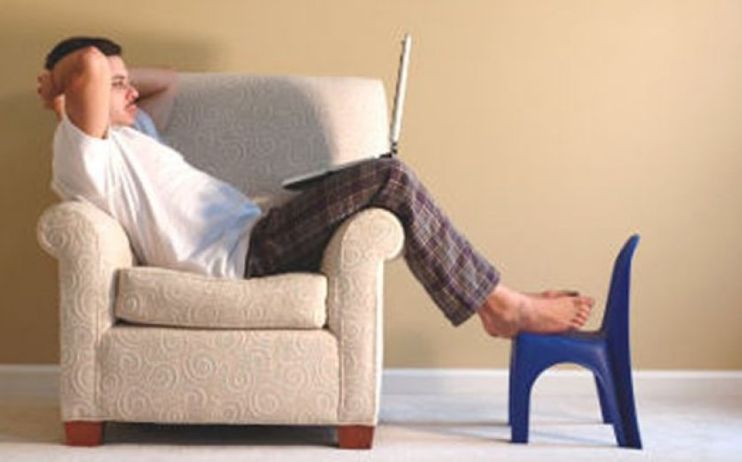
One change that millions of us are likely to experience in the near future is working from home. With large numbers of people now not just being asked to self-isolate but having isolation enforced by their government, the momentum for us to change our usual routine and mindset is growing fast.

In the past few years, the experience of flexible working has changed dramatically thanks to the development of new platforms and collaboration tools, new networks and bandwidth. 

We now understand that we can in fact be very productive in an environment that’s not a traditional workplace. ONS statistics show that the number of people working from home rose from 884,000 to 1.54m between 2008 and 2018, while the number who work across various sites but use their home as a base increased from 200,000 to 2.66m — both significant shifts, but still fractions of the overall office-based workforce.

That shift is set to accelerate rapidly, with a large proportion of the workforce potentially being forced into what was previously a flexible benefit. The residual effect is that, by the time Covid-19 is a distant and unfortunate memory, we will have fundamentally changed the way we live and work.

Read more

How Britain can stay clear of rivals as home of overseas sport club owners

Football fans protest holding Love United Hate Glazer and Glazers Out Ratcliffe Out banners.

This wholesale transformation will be enabled by the essential backbone of new technology, capabilities and digital services, aided by the government’s priority of getting broadband and 5G to every server in the country. 

As an industry, we have been talking about tech-driven transformation for some years. Now is the time to make this a reality. 

The shift to home-working must inform the chancellor’s plans for Britain’s digital future, including investment in addressing regional inequalities, increasing levels of knowledge, and providing financial relief to help businesses grow. With a new Budget to be announced today, this health crisis could help turbocharge us into the “Digital 2020s”. 

Of course, the traditional workplace won’t disappear. In our own experience, as flexible working and working from home have increased at Atos, so too has the importance that people attach to opportunities to get together in person — that’s why we have introduced more conference-style events for our employees across the country.

In the future, people will still hold meetings, gather at conferences, and even shake hands as we have always done. However, even if the House of Commons is run via Skype, politics will still happen via those conversations in the corridors of power, and having a coffee and chat with a work colleague will remain integral to building trusting relationships. 

We will still crave that essential human quality of meeting, greeting and face-to-face talking. But we will have much more virtual collaboration, as well as visible data about the world, the places, and the people around us.

Main image credit: Getty

Read more

Britain needs a Marshall Plan for civic life

Harry Truman, smiling in a fedora, and Winston Churchill in a bowler hat, seated together in a car.

Share this article

  • Facebook
  • X
  • LinkedIn
  • WhatsApp
  • Email

Similarly tagged content:

Sections

  • Jobs and Money
  • News
  • Opinion

Categories

  • Business
  • Opinion
  • Personal Development

Related Topics

  • Coronavirus

Trending Articles

  • Revolut takes flight with launch of new airport lounges

  • Grandparents fund university degrees to avoid inheritance tax net

  • It’s not just Jason Arday, most of sociology is a scam

  • IT consultant ordered to pay £50,000 after being accused of stealing Soho House members’ personal details

  • Brompton Bicycle sues former adviser for ‘professional negligence’

More from Morning Wire

  • How Britain can stay clear of rivals as home of overseas sport club owners

    Sport Business
    Football fans protest holding Love United Hate Glazer and Glazers Out Ratcliffe Out banners.
  • Britain needs a Marshall Plan for civic life

    Opinion
    Harry Truman, smiling in a fedora, and Winston Churchill in a bowler hat, seated together in a car.
  • Andy Burnham’s technical education reforms are doomed to fail

    Opinion
    Andy Burnham, Mayor of Greater Manchester, in a high-vis vest at a technical education event.
  • Government ‘mis-sold student loans’ to teenagers, MPs say

    Politics
    UK university graduate in cap and gown holding diploma at a campus ceremony, celebrating academic achievement and success
  • PwC thought leadership reports ‘100 per cent AI generated’

    Big Four
    Teneo and PwC New Zealand executives shaking hands to finalize business restructuring unit acquisition deal
  • The Leeds Reforms fixed the plumbing – now we’re turning up the tap for retail investors

    Opinion
    Rachel Reeves delivering a speech at a press event, wearing a navy blazer and standing in front of a backdrop with logos.
  • AM Best Upgrades Fortegra Insurance Subsidiaries to A (Excellent)

    Business Wire
  • Burnham has a chance to build trust in AI

    Opinion
    Andy Burnham discussing AI advancements at a business conference podium with delegates in the background
MorningWire

Independent European business, markets and political news for decision-makers.

Morning Briefing

Europe

  • Germany
  • France
  • Europe
  • UK & Ireland

Business

  • Markets
  • Banking
  • Technology
  • Energy
  • Property
  • Fintech

Editorial

  • Opinion
  • Editorial Policy
  • Corrections
  • Contact

Company

  • About Morning Wire
  • Privacy Policy
  • Terms of Use
  • Cookie Policy
© 2026 Morning Wire Ltd · Published by Morning Wire Media, Bahnhofstrasse 65, 8001 Zürich, Switzerland
Privacy · Terms · Cookies · Facebook