Could the Bank of England push the UK into recession?

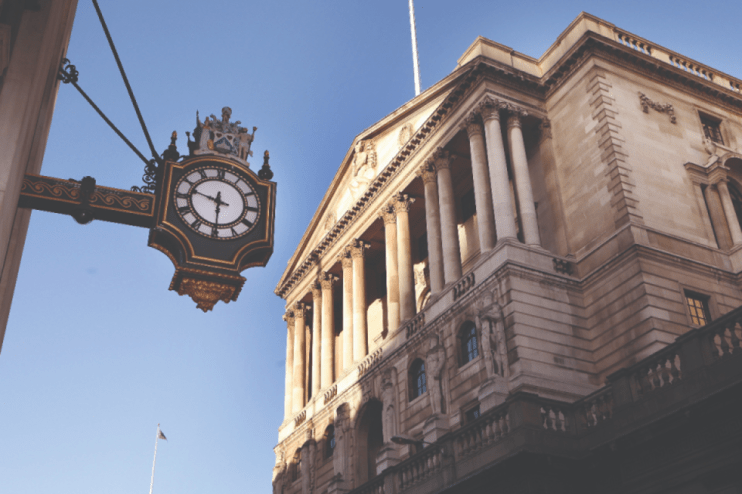
As the Bank of England scrambles to unwind the disastrous effects of quantitative easing, the hidden costs of this policy are becoming clear, says Damian Pudner
Quantitative easing (QE) has long been the Bank of England’s monetary policy nuclear option. Launched in 2009 to save a collapsing financial system, it was supercharged during the pandemic, pumping £895bn into the economy. But now, as the Bank scrambles to unwind QE with quantitative tightening (QT), the hidden costs of this policy are coming into sharp focus – and at the worst possible time.
QE was a massive asset swap. The government replaced medium-to-long-term fixed-rate debt liabilities with short-term variable-rate liabilities tied to Bank Rate. This was fine when interest rates were near zero, but now, with rates at multi-decade highs, it’s become an expensive reminder of what was supposed to be a temporary emergency measure.
Under QE, the Bank ‘printed’ money to buy government bonds from the private sector, flooding the economy with liquidity. Borrowing costs dropped, and an era of “cheap money” began. Stocks and property prices soared, lining the pockets of asset owners while leaving younger generations locked out of the housing market. Far from reducing inequality, QE merely widened the gap between the “haves” and “have-nots.”
In 2009, QE was hailed as a saviour, staving off deflation and stabilising a broken banking system. During the pandemic, it injected £450bn into a Covid-stricken economy as lockdowns paralysed global commerce and money supply growth collapsed. But while QE propped up markets, it also sowed the seeds of today’s inflation crisis. By flooding the economy with cash while output was constrained, the Bank created a perfect storm. Inflation peaked at 11.1 per cent in October 2022, vindicating monetarists who warned that excessive money printing would eventually lead to spiralling prices.
Today, inflation has cooled to 2.5 per cent, but it’s still above the Bank’s 2 per cent target. This has given the Monetary Policy Committee (MPC) the excuse to keep interest rates high. But pairing these restrictive rates with QT – which pushes up longer-term borrowing costs – is piling more pressure on households, businesses, and government borrowing in an already fragile economy.
Awkward questions about Bank of England independence
QE has also raised awkward questions about the Bank’s independence. Critics argue it blurred the line between monetary and fiscal policy, fuelling suspicions of backroom coordination with the Treasury. In March 2020, the Bank announced £200bn of QE. Shortly after, the Treasury revised its borrowing plans to raise £180bn for pandemic spending. Coincidence? Perhaps. But for many, it looked uncomfortably like the Bank was monetising government debt – something it’s prohibited from doing.
Andy Haldane, the Bank’s former chief economist, called QE an “uncharted experiment”, while Mervyn King, the former governor, felt compelled to publicly deny that the Bank was acting “at the behest of the government”. But these reassurances have done little to shake the perception that the Bank may have overstepped its remit.
Now, the Bank is offloading its QE portfolio at a rate of £100bn a year, selling bonds purchased at record-low interest rates back into the market. With rates now much higher, the Bank is booking steep losses on those sales – losses that taxpayers are ultimately paying for. Thanks to Treasury indemnity, QE losses are covered by the government, funded with new borrowing, adding to national debt – already at 97 per cent of GDP. Between 2009 and 2022 the Treasury received £124bn from the Bank in QE ‘profits’, gains that are now being quickly reversed – £40bn in 2024 alone. QE’s lifetime losses are projected to reach between £50bn and £150bn, depending on future interest rates.
The Bank is offloading its QE portfolio at a rate of £100bn a year, selling bonds purchased at record-low interest rates back into the market. With rates now much higher, the Bank is booking steep losses on those sales – losses that taxpayers are ultimately paying for
So, should the Bank pause QT? Since the budget, gilt yields have spiked, debt sustainability is unsettling markets and recent growth and retail sales figures hinted that the UK is teetering on the edge of recession. Mortgage holders are being crushed by soaring repayments, businesses are shelving investment plans, and for many households, the recession already feels real. Continuing QT in this environment looks more like economic self-harm than sound policymaking.
History provides a stark warning. In 2006, the Bank of Japan unwound QE too fast, destabilising its economy and forcing an embarrassing U-turn. The Bank of England risks making the same mistake. A more sensible approach would be to pause QT, let bonds mature naturally, and gradually shrink the balance sheet without locking in unnecessary losses.
So why the rush? One possible explanation is that the Bank wants to rebuild capacity for future QE when the next crisis inevitably strikes. But the political fallout could be severe. Taxpayers – already stretched by rising costs and a controversial, tax-raising budget – are being burdened with additional avoidable losses. This isn’t just bad economics; it’s politically tone-deaf.
The Bank must tread carefully, especially as its independence comes under growing scrutiny. The 1998 Bank of England Act gives the Treasury “reserve power” to direct the Bank on monetary policy in the “public interest” during “extreme economic circumstances”. Powers never invoked as doing so would risk financial market chaos. However, a Chancellor, bereft of ideas for growth, and desperate to avoid austerity, more borrowing, or further tax hikes might be tempted to take such a ‘nuclear option’ herself. Remember, “growth is the number one mission” that “trumps other things.” What was once unthinkable could soon become reality.
The costs of QE will need to be addressed eventually. But the current rush to settle the bill is strangling growth and choking off investment. At its February MPC meeting, the Bank has a chance to change course. Pausing QT (and cutting rates) would buy breathing room for households, businesses, and markets. Time is running out, but it’s not too late for the Bank of England to show pragmatism and avoid tipping the UK into recession.
Damian Pudner is an independent economist