Could you have lost out on a job because of your politics? Almost definitely
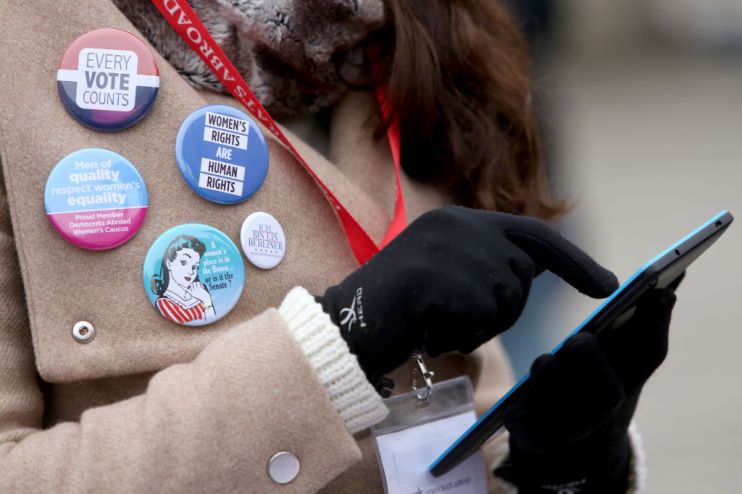
Being part of a group is central to how humans survive, and once we have found ours, it fundamentally shapes how we behave.
Under pressure, this tendency to group – for all its benefits – can lead us to double down on who we see as “us” and who becomes a disliked “them”. Feelings become more important than facts. Political labels become proxies for differences in beliefs, values and behaviour that go far beyond politics or individual issues. This is called “affective polarisation”.
From the storming of the Capitol building in Washington DC and stark splits in the UK on Brexit to debates over climate change dividing Australians, the recourse to “us and them” is visible across the globe. These divides are aggravated by tough socio-economic circumstances, rapid technological changes, and a rising sense of uncertainty, not helped by the pandemic. Things are likely to get worse before they get better.
Affective polarisation impacts us beyond politics. At work. At home. In our leisure time. From who we are happy to spend our lives with through to who gets hired. In the 1960s, only five percent of Republicans and four percent of Democrats said they would be displeased if their son or daughter married someone from across the political divide. Contemporary UK figures were 12 percent for Conservatives and three percent for Labour. By 2008, the US percentages had shot up to 27 per cent for Democrats and 20 per cent for Republicans, while the figure for UK Conservatives had stayed roughly the same at 12 per cent but for Labour it had risen to 19 percent.
And it doesn’t just influence spouse choice; these divides shape business decisions. Studies from the US show that if you’re a manager, partisanship influences hiring decisions. Sometimes cues from candidates that reveal their politics can be subtle but can also count them out of a job. Research showed a desire to hire in the political mould exerted a significant bias on who was offered a job. Polarisation influences fund managers’ investment decisions, our perception of who the experts are, who we are prepared to ask for advice – the list goes on, and so do the consequences. As the damage flows into our everyday lives, it makes understanding and bridging those divides more important than ever.
There are implications for business at every level, from the day-to-day to strategic direction. This ranges from questions about Board diversity, or the lack thereof, through to the risk of groupthink that can stifle innovation. It can also make it hard to judge when business leaders should take a stand on issues that split both customers and employees. Of course, not all divisions harnessed by brands are this serious – think Marmite and its lovers and haters. But when brands are weighing in on major social issues – #metoo or immigration – it is essential to acknowledge that how they intervene can either worsen divisions or help to address them.
Polarisation also creates the challenge of how to appeal to a divided customer base, one that is as interested in values as it is in value for money. If businesses are not partisan, they may lose out, failing to resonate with their target markets. If they’re too partisan – or pick the “wrong” side of the divide – they may alienate previously loyal customers.
Leaders need to tread carefully and start to factor awareness of these divisions into how they act. They can start by thinking about how their own decisions are made, and whether there really is a plurality of views and open discussion at all levels of their organisation. While there is no simple silver bullet for polarisation, its impacts cannot be brushed aside; we must take steps as individuals, groups, businesses and society to tackle it. We are all part of the problem, but at least that means we can all be part of the solution.
Poles Apart will be released by Penguin Random House on 9th September 2021