Covid-19, a year on: A breakdown of trust between the police and the public

In March last year, police were given extraordinary powers. Hastily drawn up regulations granted them the ability to ensure people stay at home, except for essential reasons.
People across the country accepted an incredible curtailing of their liberties, and, in doing so, accepted the police force’s role to enforce the lockdown. Time and time again, we have heard Priti Patel stand up and reiterate Britain’s rich tradition of policing by consent. But a smorgasbord of confusing legislation, accompanied by an array of well-publicised bungled efforts to enforce “the rules” has sown a deeper distrust which could undermine the foundations of British policing.
The consent model is underpinned and governed by the Peelian principles of Policing, written by Sir Robert Peel, the founder of the Metropolitan Police in 1829. At the time, there was a pervasive fear the police force could become a weapon of Government oppression.
According to the Peelian principles, the polices’ power to fulfill their function as law enforcement is dependent on “public approval of their existence, actions and behaviour, and on their ability to secure and maintain public respect.”
Enforcement of coronavirus rules has caused ruptured trust between the police and several, very different parts of society. This poses a serious problem not just to how the law is enforced, but for people following the law in the first place. People tend to obey the law regardless of their own moral judgment of a specific law but rather because of their belief in law enforcement and legal authorities as a legitimate power. In other words, trust in the police is indispensable.
Over the last year, an insidious culture of mismanagement within Britain’s police has corroded what should be a cherished relationship. Distrust which already existed between the police and minority communities, has become mainstream. Tensions between black Britons and the police are long standing. A number of botched stop and search exercises, including on Labour MP Dawn Butler, did little to quell this anger during the pandemic.
Pippa Woodrow, a criminal justice barrister at Doughty Street Chambers, says the coronavirus regulations have exposed a much wider section of society to intrusion on their lives from the police. Suddenly, people who are white and middle class, with limited experience of stop and search powers, have had a “tiny window” into what it is like to be questioned about why they are outside during lockdown, Woodrow tells Morning Wire
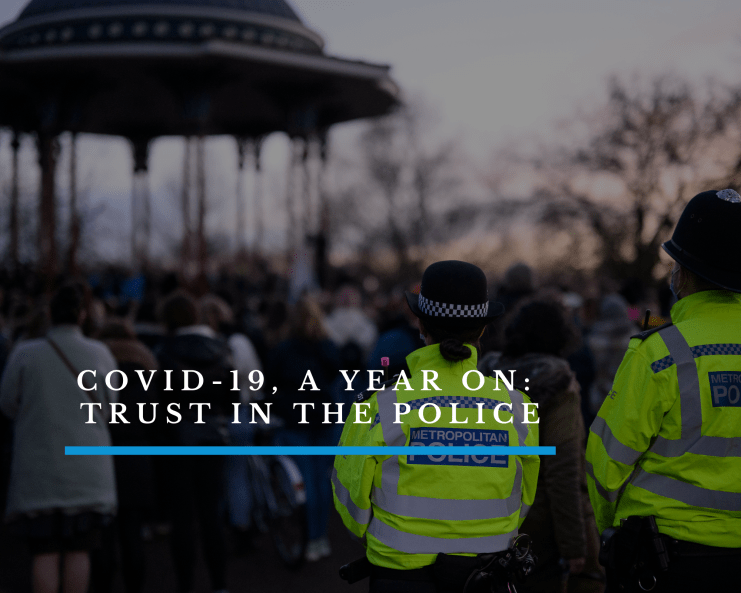
For some, this erupted on 13 March this year, when a vigil for Sarah Everard, a 33-year-old who went missing in South London, descended into scenes of chaos as police shoved their way through a group of women holding candles. The sixth Peelian principle tells police only to use physical force when “persuasion, advice and warning is found to be insufficient” and to only use the “minimum degree of physical force” necessary.
One of the enduring images of the bedlam was of 28-year-old Patsy Stevenson being pushed to the ground and held down by two police officers. In Patsy’s own words, she is 5”2’ and “weighs nothing”. Two male police officers forced her to the ground.
In the weeks since the vigil, there was a tide of outrage towards the police, with many questioning the inherent and largely subconscious trust they previously held for law enforcement. The events at the vigil were an inflection point for distrust in the police, but they were not the beginning.
Early last year, there was fury after police officers in Derbyshire poured black dye into the Blue Lagoon in the Peak District to stop people travelling to beauty spots for a walk. When this failed to yield the desired result, the local police force deployed drones to spy on people exercising outside of their local area. In the latest lockdown, two women sipping on coffee while walking were swarmed on by police for “having a picnic” rather than “taking exercise”.
Some within the Police Federation began moaning to newspapers about not having the power to enter private property to enforce the rules. And, in April 2020, one police leader even suggested overturning the principle of innocent until proven guilty. To stop people driving long distances to go for a walk, the burden should “be on the individual, not the state to prove reasonableness,” they said. The Home Secretary rightly rebuked police chiefs who called for more powers.
The breakdown in trust between the police and the public has been fostered by badly-drafted laws, abundant with exceptions. Enforcing these in a clear and consistent manner which builds trust has proved challenging for the police.
While the symptom is over-policing, the cause of the problem goes all the way up the chain of command. During the pandemic, there has been a breach of one of the most basic principles of the rule of law: that as far as possible, the law must be intelligible, clear and predictable.
The bizarre boundaries between what is “guidance” and what is “the law” led to confusion from police officers. For example, it has never been illegal to travel in order to exercise. Yet official guidance tells people to stay local. Even Boris Johnson was accused of falling foul of the guidance following a cycle ride seven miles from Downing Street.
Elements of the Police Bill which seek to hand over the power to crack down on protests which cause “significant disruption” shows the problem is deep within Government as well. The desire to bolster police powers ignores this tradition of policing by consent. Assault and battery is already illegal, damage to public and private property is already illegal. Enforcing these laws should not rest on making them stronger but nurturing trust which has been broken by heavy-handedness.
Apportioning blame to Derbyshire Police, Cressida Dick or the Home Office, while satisfying for those who have been wronged, will not solve the problem. As we unfurl ourselves from the interferences into our lives, there must be a concerted effort from the Home Secretary right down to the police doling out speeding fines to ensure that trust is rebuilt across all parts of society.