Skip to content
Tuesday 1 September 2026London --:--Frankfurt --:--Zurich --:--
NewslettersSearchEN · DE · FR
MorningWire

European business, markets and politics

FTSE 100
10,824.26
+0.29%
DAX
26,258.11
0.00%
CAC 40
8,334.50
0.00%
STOXX 50
6,420.16
0.00%
  • Europe
  • Markets
  • Business
  • Economy
  • Regulation
  • Politics
  • Opinion
More
GermanyFranceEU InstitutionsCompetitionPublic AffairsBankingTechnologyEnergy
  • Germany
  • France
  • Europe
  • Markets
  • Business
  • Economy
  • Regulation
  • Politics
  • Opinion
  • DE
Friday 04 March 2016 9:42 am

Dallas Fed warns oil market won’t stabilise this year

By: Jessica Morris

Add as a preferred source on Google

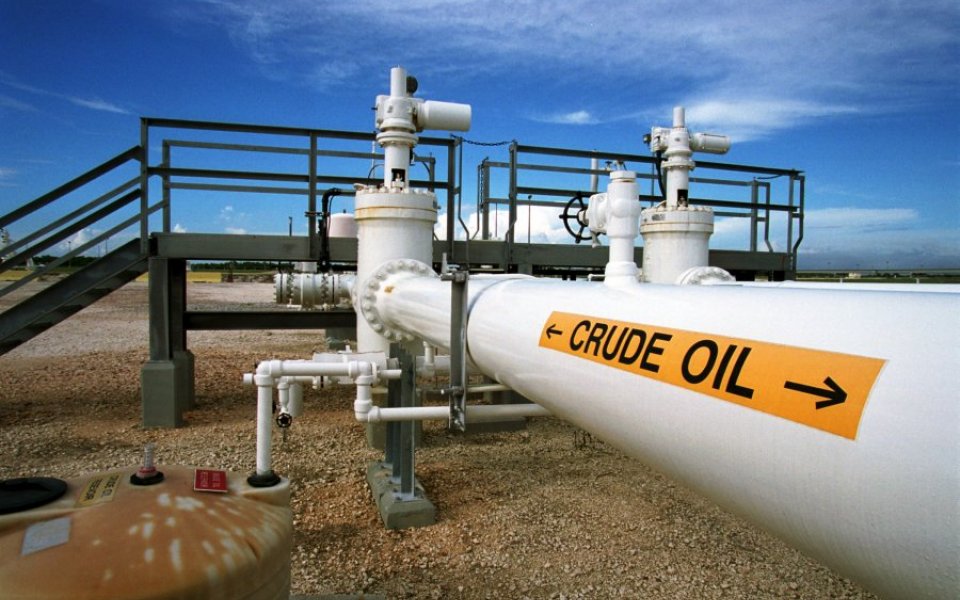
The Dallas Fed chief said the oil market won't rebalance this year, as he warned persistent weakness in the energy sector could send "negative ripples effects" through financial markets.

Robert Kaplan, Dallas Fed president, said demand and supply won't balance until mid-2017, however this could change if the Organization of the Petroleum Exporting Countries (Opec) alters its production strategy. 

"This forecast has been influenced over the past several months by the official return of Iran to the world oil markets, increased supply from Opec nations, slower-than-expected supply declines from US producers despite substantial cuts in drilling and capital spending, and slower-than-expected demand from emerging-market countries," Kaplan told an audience at the University of Texas yesterday.

"This outlook would be meaningfully impacted by a change in OPEC production strategy," he said.

In February, Opec members Saudi Arabia, Qatar and Venezuela and non-Opec Russia agreed they would cap production at January levels if other oil producing countries followed suit.

Some investors have taken the preliminary agreement as a sign that the countries could later reduce output to clear the global supply glut that has forced down prices.

Kaplan also warned there's a risk of energy sector turmoil spreading to the wider financial market if investors pull their money out of funds which are heavily exposed to bad loans.

"One by-product of lower oil prices is wider credit spreads in the high-yield market," he said.

"Because corporate energy issuers comprise a material portion of high-yield issuance, and because highyield debt is heavily held in mutual-fund (with daily liquidity obligations) and exchange-traded fund form, weakness in the energy sector has the potential to create increased levels of fund redemptions."

"This, in turn, can put pressure on funds to sell holdings more broadly in order to meet liquidity needs. This is a good example of the potential negative ripple effects that can come from persistent weakness in the energy sector."

Share this article

  • Facebook
  • X
  • LinkedIn
  • WhatsApp
  • Email

Similarly tagged content:

Sections

  • Markets & Economics
  • News

Categories

  • Business
  • Economics

Trending Articles

  • Jaguar reveals the Type 01’s screen-free interior

  • Treasury ‘tells Healey’ to consider tax on banks and oil

  • Pensioners to hand over bank statements in government benefits crackdown

  • City firms mandate phone and face-to-face comms bootcamps for Gen Z lawyers

  • Jamie Carragher: HMRC petitions for Sky Sports star to be declared bankrupt

More from Morning Wire

  • As it happened: Stocks slide despite tech and data boost; Oil falls after OPEC+ ups output

    Markets
    Samsung has missed earnings expectations
  • London Gatwick hotel owner plans swanky 18,000-capacity sport arena

    Sport Business
    Aerial night rendering of a glowing Dallas Stars NHL arena surrounded by mixed-use buildings, roads, and homes.
  • Ladbrokes-owner and Aston Martin on chopping block in FTSE reshuffle

    Markets
    Aston Martin headquarters with company logo, highlighting job cuts and financial struggles amid tariff impacts
  • FGE NexantECA Acquires Square Commodities, Accelerating Its Green Molecules Strategy

    Business Wire
  • Europe has made a ‘major mistake’ on slow electrification, IEA chief warns 

    Energy
    UK industrial electricity prices are the highest in the G7 and 46 per cent above the average of the International Energy Agency.
  • Britain should back the North Sea if it wants energy security and net zero

    Opinion
    Oil prices have risen as Israel and Iran tensions escalated.
  • Oil prices return to crisis levels

    Markets
    Close-up of a petrol pump nozzle dispensing fuel at a gas station, highlighting rising fuel costs and economic impact.
  • As it happened: FTSE 100 falls but Nasdaq soars after Nvidia sales boom

    FTSE 100 Live
    Smiling man with gray hair and glasses in a dark suit and blue tie, speaking at an event.
MorningWire

Independent European business, markets and political news for decision-makers.

Morning Briefing

Europe

  • Germany
  • France
  • EU Institutions
  • Europe

Business

  • Markets
  • Business
  • Economy
  • Regulation
  • Competition
  • Public Affairs

Editorial

  • Opinion
  • Editorial Policy
  • Corrections
  • Contact

Company

  • About Morning Wire
  • Privacy Policy
  • Terms of Use
  • Cookie Policy
© 2026 Morning Wire Ltd · Published by Morning Wire Media, Bahnhofstrasse 65, 8001 Zürich, Switzerland
Privacy · Terms · Cookies · Facebook