Democracy is full of powerful symbolism, but is it still functional in modern Britain?

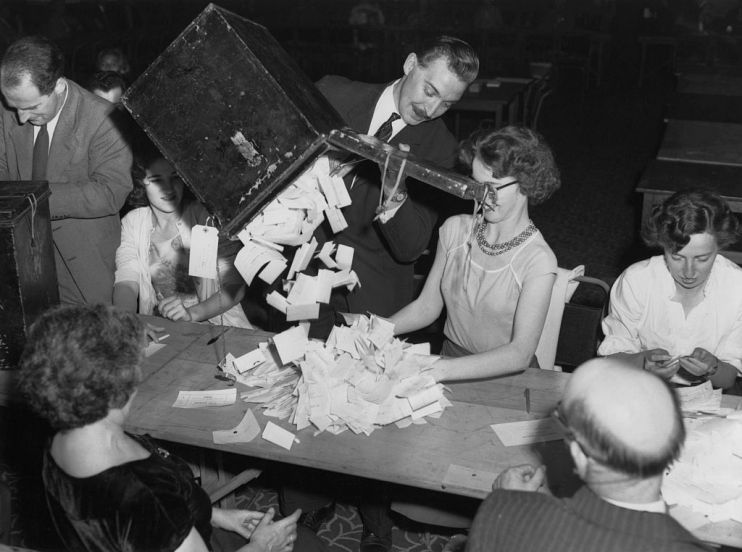
“Democracy is the worst form of government except for all those other forms that have been tried,” Winston Churchill famously said. While any reasonable democrat is willing to concede democracy is imperfect, few are willing to accept change is necessary.
The idea of democracy is often lost in bold, symbolic rhetoric. It is, after all, the foundation of our society. Its ultimate purpose is functional – for governments to represent the people they serve.
Effective democratic engagement is vital to good governance. The public, however, is not homogenous. Citizens have myriad individual needs and characteristics and each should have the opportunity to engage in the democratic process. Yet, the 20th century model of periodic general elections forces political parties to treat the public as a collective instead of really listening to and involving individuals.
In other words, democracy needs an upgrade.
Various tools and methods now exist to strengthen democracy that didn’t exist before. “More public engagement” no longer boils down to more referenda or unrepresentative focus groups. There are now new techniques to engage the public in-between elections, not just to win elections. They are highly sophisticated and the evidence to back up their effectiveness is compelling.
By contrast, it might be optimistic to think that elections provide a genuinely useful and constructive feedback mechanism for potentially life changing areas of public policy. Even if every voter carefully poured over each party manifesto, their ability to exert any influence is binary: you either vote once every few years for a hundred policies in one go, or you don’t vote at all.
This has long been the way democracy works, but now, technology – social media, direct digital engagement, behavioural insights, real time polling – has forced a paradigm shift in the environment that governments operate in. If how we consume information and engage with government has altered, government should adapt, and many across the globe are starting to experiment. In particular, using technology as a tool for democratic engagement is becoming increasingly appealing to democratic innovators.
In France, Parlement et Citoyens is an online consultation platform that collated feedback from over 21,000 participants on a Digital Republic Bill, culminating in 90 contributions to the text of the bill, with 11 new articles. In Taiwan, Pol.is, an online survey tool, was instrumental to the development of regulations for ride-sharing apps and online alcohol sales. By asking thousands of participants to react to a range of statements, it can generate a handy visual representation of the opinions that achieve a rough consensus versus the most divisive ones.
Technology might seem counterintuitive as a solution, like fighting fire with fire, when it also is the root of recent democratic problems. But we now know that the immense benefits technology brings to many other areas – its ability to break through barriers of geography and scale, its vast ability to process, analyse and retrieve information – can be a massive boon to democratic engagement, too.
Using such tools and techniques to move away from a world where the most effective way to change policy was for a famous footballer to speak up on Twitter or a bold interviewer to embarrass a minister live on air, would be transformative. Take Covid passes: the policy is often portrayed as controversial, but the reality is that 71 per cent of the public support the idea of requiring proof of vaccination or a recent negative test to attend large events. Social media can be hugely empowering for citizens, but it can also exaggerate apparent disagreements between policymakers and citizens that could easily be resolved through better engagement.
Technology and social media has the potential to pull apart our democratic institutions, but it also has the transformative power to build them up. The tools available to us are wide-ranging, but where they exist, we should be using them. If governments did more to engage and understand the public, our democratic systems would be better for it.