London is failing to make itself more accessible for those with disabilities

Children with special education needs and disabilities were given a slice of Rishi Sunak’s spending spree last week, with £2.6bn set to be spent on things like more accessible classrooms.
The current disability pay gap is 19.6 per cent. So focusing our energies where the cracks begin to emerge is a no brainer. But for decades, the issue of physical accessibility to our workplaces has been papered over with a light-touch approach.
For some, the words “you’ll have to take the stairs” are a nuisance. For others, it means “go home”.
As many of us navigate a way to both work remotely and in the office, there is a risk disabled people will stay home, not because they want to, but because it’s just easier than traversing a minefield of too-narrow doors, broken elevators and thoughtlessness.
A specialist architect in inclusive design, Amy Francis-Smith, says we need to “adapt our environments to help as many people as possible”. This means making sure there’s enough room in entrances for people in wheelchairs but also much more all-encompassing changes to our spaces and how we use them.
According to Francis-Smith, London is doing better than cities like Paris or Prague in terms of accessible architecture. The British capital, however, has as many historic buildings as other European metropolises, especially in the City. Banks are traditionally situated in historic buildings that were built at a time when accessibility wasn’t even a metric in the equation of architecture.
This tension between protecting historical buildings and making them accessible to all is difficult, but not impossible to divide.
St Paul’s Cathedral, for example, is one of the most protected buildings in the world. Yet, it has managed to ensure accessible provisions are integrated throughout it. The south churchyard entrance is completely step-free, and all public areas in the Crypt and on the Cathedral Floor are accessible via ramps or lifts. A team is currently working on a permanent accessible entrance to the northern side of the building. To keep it consistent with the rest of the cathedral, the entry is being built using granite and aluminium bronze.
Of course, the most obvious feature of the City is the high-rise, high-density office buildings. On the surface, that makes accessibility look like an odyssey. But a design that inverts the old upstairs-downstairs trope has the potential to solve this.
Matt McCann is one of the loudest voices advocating for fairly simple solutions, by helping create an app – AccessEarth – which draws on his own experiences of navigating a world that fails to cater to people with cerebral palsy. He says there’s no need to tear anything down: “It’s just about making simple adjustments like having an interview room on the ground floor in case the lift is out of order or having accessible bathrooms”.
This all sounds so common sense, it’s easy to wonder how on earth it is possible that these things are not already implemented everywhere.
Technically, employers are legally required to support all employees evenly under the Equality Act. “The law requires systemic change to come from businesses, as they already have a legal duty in this respect”, says Amy Hextal, employment lawyer.
Companies, however, are keen to secure political (and financial) backing from the government.
This nudge should have come from the National Disability Strategy published this summer. That didn’t quite work out, with many within the disabled community baffled by the lack of disabled voices included in the run up to the draft document.
Fazilet Hadi, who campaigns for blind and partially sighted people as head of Policy at Disability Rights UK said the strategy read “like a compilation of departmental action plans” rather than a plan “rooted in the experiences of disabled people”.
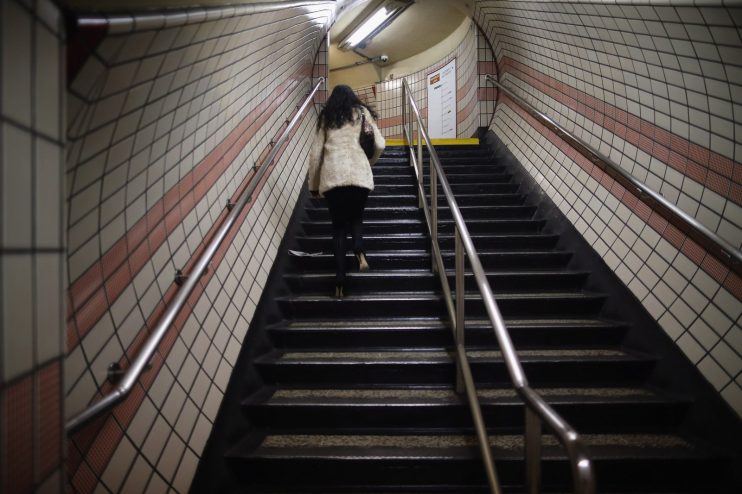
For example, in the housing section of the document, ministers neglected to raise the minimum accessibility requirements. In London, around a quarter of Tube stations have step-free access. For people with disabilities, they need a different tube map altogether.
For activists, the list of problems not solved by ministers goes on.
In 2012, the Olympic and Paralympic games were a turning point for London to become accessible.
Boris Johnson oversaw the effort to make the DLR network completely accessible for wheelchairs and to introduce manual boarding ramps to 16 key tube stations from his office in City Hall.
Now, from his perch in Downing Street, he should be at the helm of even more systemic change.