Discovering the real China, with amazing food, incredible scenery and authentic culture

From Morning Wire The magazine, Autumn edition, with photos by Nicolas Quiniou
I love China. There, I said it. Nowhere else I have visited has caused such a ruckus among my friends and family. My departure was marked by a stream of messages warning me to ‘be careful’ and ‘make sure you behave’. At first, I couldn’t understand it. Was it because I was a journalist? Latent xenophobia linked to Covid? Or was it because of western anti-China rhetoric? The truth is it took me 12 days of prancing around Yunnan province to find out, and I left a convert.
From touch down in Shanghai to my domestic flights hopping around the country, I encountered a world of complete order. Nothing was broken, timings were precise, facilities were spotless and there was a sense of calm and nuanced structure that quite literally left my travel companion Nicolas and I speechless. The only thing that raised our heartbeats was the bumpy landing into Dali, over 1,500 miles from modern civilization and the gateway for our 12-night sprint around this part of wild China.
The trip began with somewhat of an eye-opener. While visions of desolate lands and forests blooming with native flowers had swamped my fantasies prior to hopping on the plane, they turned out to be just that: pure Disney. This was not the rural escape the magazines and guidebooks raved about. Did we see lonely landscapes, remote hilltop villages untouched by Western hands and locals draped in their traditional dress? Not at all. It was, as with everything nowadays, excellent yet deceptive marketing.
While driving around the city’s mammoth Erhai Lake, in place of all the nomadic nostalgia we were promised, we were greeted by a patchwork of villages dwarfed by towering skyscrapers and duplexes. We felt almost cheated as we quizzed our chaperone and tour guide Stephen about Yunnan, a place that looked frankly nothing like the guide books. Our impressions changed by the time we hit Xianglong Village in Xizhou Town. Set 30 minutes or so outside of the hustle and bustle of downtown Dali, this side of town still feels remote and exciting.
The Yunnan province has always stood apart from the rest of China
Yunnan province has always stood apart from the rest of China. Shielded by mammoth mountains and barren plateaus that stretch as far as the Himalayas, it is the only place in the country where you can see border markets, jungles, temples and the remnants of vanished kingdoms in one place. It’s distinctive, not just in its natural splendour, but also in its diversity of cultures. There are 25 officially recognised ethnic groups that lay claim to the land here, from shamanic tribes to ostracised Muslims. Dai and Bai, Wa, Lahu, Hani, Jingpo, Nu, Naxi and Lisu people all speak their own languages, have their own cuisines, belief systems and forms of dress separate from the rest of China.
Xianglong itself is a melting pot for them all. Set under the shadow of Cang Mountain, this part of greater Dali has historically been an important trading post along the Tea Horse Road, an ancient trade route linking south eastern China to the rest of Asia.
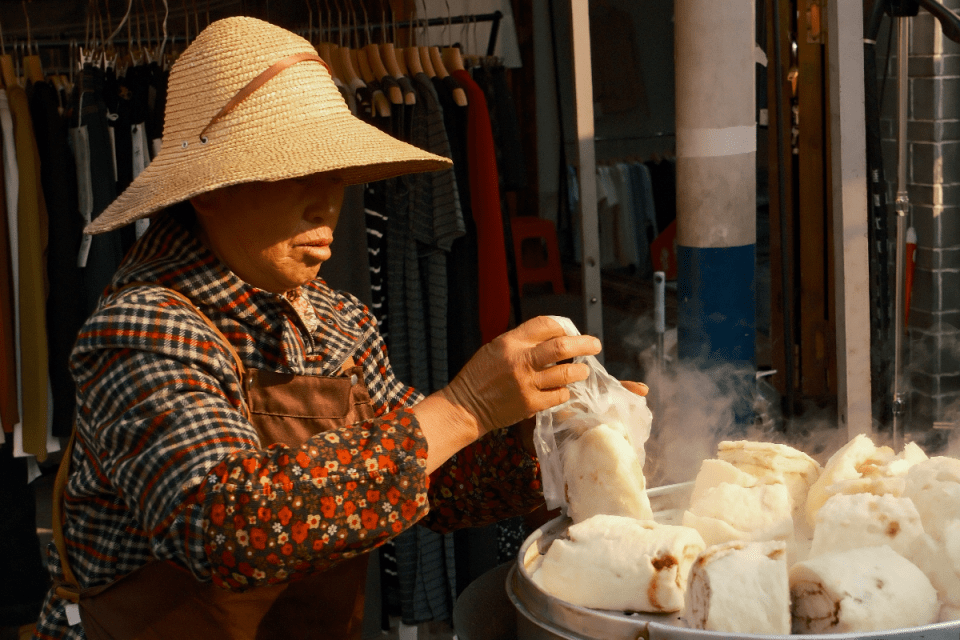
Xizhou’s daily morning market is a flurry of colour sound, with locals from all over descending on its streets – many aboard tuk-tuks – to buy their groceries, from rice noodles to live carp and vegetables of all varieties. Our base here is the storied Sky Valley Heritage boutique hotel, set in a former Bai style palace and decorated in calligraphy, paintings and ceramics. It gives the impression of a town still very much in touch with its roots. Nearby tea houses attract travellers from as far afield as Beijing, lured by Yunnan’s infinite selection of brews, while pottery shops crammed with art pieces fashioned from indigenous clays tempt western tourists with their designs.
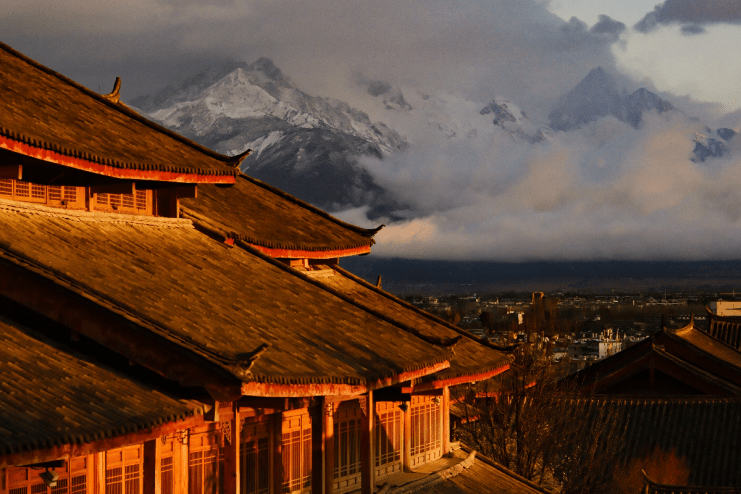
After two days immersing ourselves in it all – fried noodles and insects included – we jump ship and head south. Urban sprawls eventually morphed into desolate landscapes as we drove up snaking roads that meander through pine forests and valleys. Eventually we hit the city of Liljang. Travelling through China you will often hear stories of the Jade Dragon Snow Mountain range; the entire length of its famously beautiful jagged peaks serve as the backdrop to the city. In the middle of it all is our refuge for the next two nights: Amandayan, a collection of old houses set in Liljang’s ancient citadel.
Architecturally, the 35-suite hotel is an ode to the city’s hey-day, when it was an important stop along the Silk Road. It is laid out in the classic, understated Aman style (think bare minimal lines and stripped back aesthetics) but pays tribute to the land’s cultural roots as the ancestral home of the Naxi Kingdom. This ethnic group is widely known for its Dongba shamanic, literary, and farming practices, all influenced by Confucian Han Chinese history. Nods to their customs are in evidence throughout: you will find pale Yunnan pine and typical Naxi embroidery – silk threads and intricate patterns of landscapes – on the bed heads and latticed shutters.
After a morning exploring the commodified old town on foot – there’s a McDonald’s and KFC for western folk tired of noodles – we headed for Wenfeng temple and its spectacular camellia- and pine-scattered grounds. Set on the foot of Mount Wenbi, 8km outside of the main city, the golden monastery was founded under Mu Tian Wang, the 17th-century Naxi king.
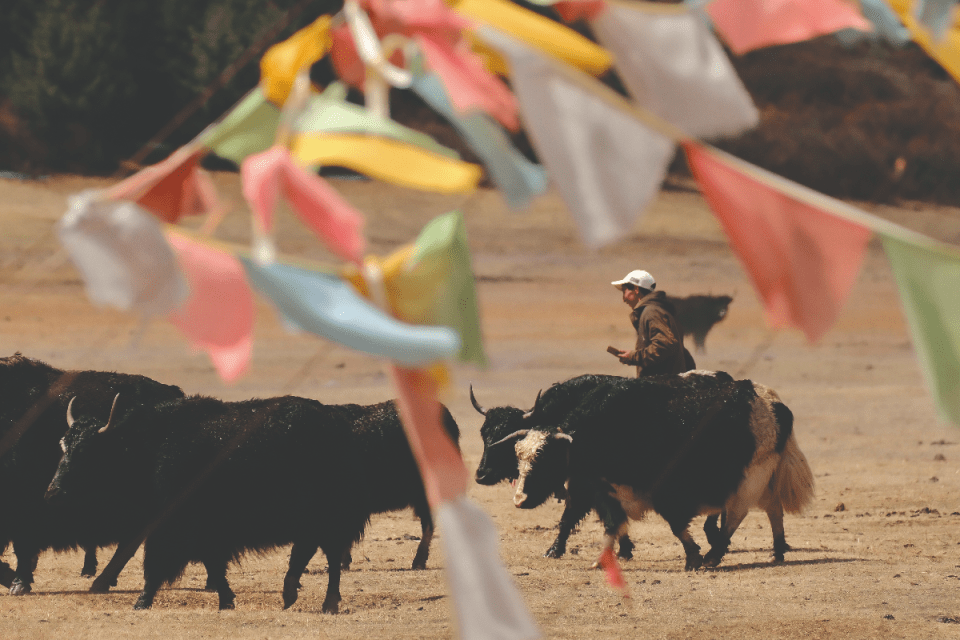
It was once used to welcome the supreme academy of the Gagyu sect of Tibetan Buddhists. Now it’s a place of meditation where monks chant among the rows of cherry blossoms and swirling plumes of incense. After a short prayer, we scurry past Tibetan flags and gongs to the ancient Naxi village of Ciman. Here we spend time learning about cultural traditions, from shamanic religions to dress and the art of Dongba (an ancient Naxi script predating Chinese), courtesy of a writing class. In between a banquet lunch of hotpot, whose ingredients included chickpea jelly and local mushrooms stuffed with meat, we make our own drums bound with yak skin that we later bash while being treated to a dance.
The next morning, we followed the electric-green Yangtze river downstream to the rural village of Daju. This was the first time we felt as though we were really in the sticks. There is one shop on the main high street and overlooking it all is a swathe of local women scurrying to harvest everything from loquats to oranges and huge blueberries from the farms that snake around our hotel, the LUX Daju village. Here, nobody speaks English, and all forms of communication come in the form of a smile or a polite nod of thanks.
The Ganden Sumtseling Monastery serves as a reminder of what Yunnan once was: the frontier of Himalayan adventure
While the slow life reigned supreme, we were really here to explore this small town’s headline act: the mighty Tiger Leaping Gorge. Framed by the Jade Dragon Snow Mountain and the Haba Snow Mountain, it is named after a legendary tiger that escaped hunters by leaping across the narrowest point of the gorge to safety. The largest and deepest of its kind in the world, the canyon stretches 10 miles. It’s exhilarating to navigate this dramatic craggy landscape with nothing but the roar of the Yangtze below and the cackle of the heavens above. Aside from a swathe of tour buses traversing its perilous roads (often littered with rocks from overnight landslides), the only company we had during our short walking tour of its “upper section” were the few weary and nervous hikers tackling its razor-sharp peaks.
The road from the gorge twists and turns across snowy tundras that stand 3,200m above sea level. Our journey eventually ended in Shangri-La, named after the mythical paradise described in James Hilton’s Lost Horizon. Naxi dwellings slowly morphed into Tibetan farmhouses, their rammed-earth walls filling the hilltops, surrounded by primeval forests and farmlands dotted with yaks. Ethnic Tibetans make up 80 per cent of Shangri-La’s population, but like in Dali, the streets of the new town were a riot of Han Chinese tourists strolling around in Tibetan garbs and glittering headpieces in the name of social media likes.
The Ganden Sumtseling Monastery lies behind all this commodity culture and is perhaps the only slither of authenticity worth exploring outside of the heavily congested and touristy Old Town. The largest Tibetan monastery of its kind in Yunnan, its gilded roofs are adorned with dragons and giant chimneys billowing smoke. If you go early, you’ll spy Tibetan pilgrims fingering prayer beads under giant statues of Buddha. These days it serves as a reminder of what Yunnan once was: the final frontier of Himalayan adventure.
While the politics of progression in China might be blurred by the repression of its own cultures in larger cities, this is a civilisation more advanced than its adversaries would have you believe. Yunnan is the best of both worlds, where the past and the present live in unwavering unison. It might have suffered from a degree of western-style commercialisation, but underneath it all, this unique province is a place where modernisation works in unison with ancient customs. China, I am sold.
Visit China yourself
Luke Abrahams was a guest of cazenove+loyd (cazloyd.com), which offers a 10-night trip to the Yunnan region of China from £8,500 pp (two sharing) including B&B stays at Sky Valley Heritage Boutique Hotel, Dali; Amandayan, Lijiang; and LUX Tea Horse Road, Daju. Includes international and domestic flights, tours and transfers. Fly into Shanghai from London direct with xx.