Skip to content
Sunday 13 September 2026London --:--Frankfurt --:--Zurich --:--
NewslettersSearchEN · DE · FR
MorningWire

European business, markets and politics

FTSE 100
10,650.44
+0.39%
DAX
25,568.56
+0.82%
CAC 40
8,179.77
+0.78%
STOXX 50
6,325.13
+0.90%
  • Europe
  • Markets
  • Business
  • Economy
  • Regulation
  • Politics
  • Opinion
More
GermanyFranceEU InstitutionsCompetitionPublic AffairsBankingTechnologyEnergy
  • Germany
  • France
  • Europe
  • Markets
  • Business
  • Economy
  • Regulation
  • Politics
  • Opinion
  • DE
Wednesday 02 December 2020 3:25 am  |  Updated:  Tuesday 01 December 2020 11:39 pm

Economics lessons from history: Don’t expect a post-Covid boom

By: Paul Ormerod

Add as a preferred source on Google
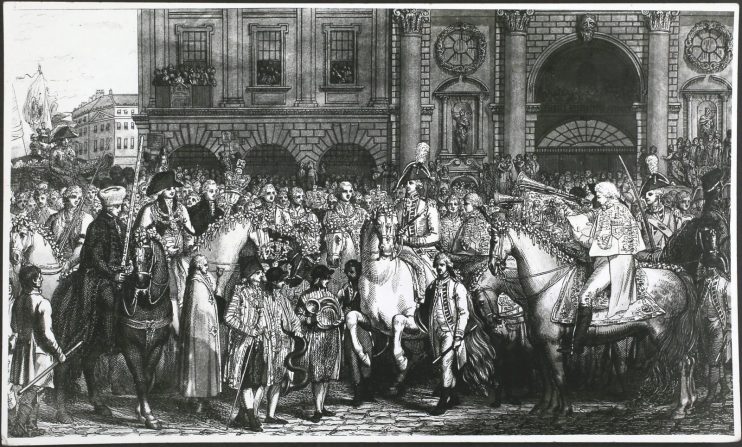
The Proclamation of the Peace of Amiens In London
The Proclamation of the Peace Treaty of Amiens at the Royal Exchange, London, during the French Revolutionary Wars, April 1802. (Photo by Hulton Archive/Getty Images)

Just over 200 years ago, the finances of the British government looked even more parlous than they do today.  

Since the mid-1790s, the country had been engaged in a titanic struggle with Napoleon’s France.  

To pay for the conflict, the government had borrowed on a massive scale. The cumulative financial deficit — the difference between income from taxes and what the government spends — in the 20 years from 1795 amounted to over 2 trillion pounds in the prices of 2020.   

Between 1812 and 1814 alone the state ran up a deficit of almost £500bn at today’s prices.  

The current projection by the Office of Budget Responsibility for the year of the pandemic, 2020, is some £370bn, after years of much lower deficits. So we find ourselves in a similar position. 

David Ricardo, at the time a multi-millionaire MP and a titan of economic thought, tried to answer the question: how should the war be paid for?

Obviously, one way to pay off the cumulative deficits would have been to raise taxes, exactly as Rishi Sunak is contemplating today. The other was to borrow by issuing government bonds, again what is happening now.

Ricardo argued that whichever of the two were used, in whatever combination, the impact on the economy would be the same.

When the government runs a deficit, spending power is injected into the economy. But an increase in taxes cancels this out.

But what if the government simply finances the debt by issuing bonds?  

Read more

Lord O’Neill declines job in Burnham government

Jim ONeill, economist and former Goldman Sachs chairman, sitting on a yellow sofa in front of large windows.

Ricardo believed the private sector would act rationally. People would anticipate that in the future, taxes would have to go up anyway to pay off the debt. As a result, they would save more and spend less now to be able to pay these taxes in the future.

This is a key idea in modern macroeconomics, known as “Ricardian equivalence”. The two methods of financing a deficit — taxes and issuing bonds — are equivalent in their impact on total spending in an economy. They cancel out the effect of any government spending in excess of its receipts from taxation.

It sounds a bizarre concept. But the experience of the financial crisis of the late 2000s provides support for the idea.

In America, net private saving in the years prior to the crisis was some $700–800bn. In 2009, following a massive increase in the federal deficit, it rose to over $1,200bn, and has been even higher ever since.

The esoteric concept of Ricardian equivalence is of great practical importance in the current pandemic-induced economic recession.

This year has seen what is effectively forced savings. People have not been able to get out and spend in the usual way. Once the vaccines are in place, we might expect a spending splurge.

But if Ricardo’s idea holds true, people will simply keep their savings squirrelled away to meet the anticipated increase in taxes. The economy will not boom.

The next couple of years will prove to be an interesting natural experiment to test Ricardo’s proposition. Much more tangibly and practically, if it holds, rises in unemployment will prove difficult to reverse.

Main image credit: Getty

Read more

Burnham warned against using ‘accounting trick’ to ramp up borrowing

Andy Burnham speaking at a press conference, addressing current events and regional developments, wearing a suit and tie.

Share this article

  • Facebook
  • X
  • LinkedIn
  • WhatsApp
  • Email

Similarly tagged content:

Sections

  • Markets & Economics
  • Opinion

Categories

  • Economics
  • Opinion

Trending Articles

  • Wetherspoon boss: ‘Not up to Burnham’ to choose who is on the high street 

  • Badger Beer maker Hall & Woodhouse doubles profit ahead of tie-up with James May

  • Four interest rate hikes loom despite surprise economic growth

  • Primark sales slip as owner dresses up retailer for demerger

  • As it happened: FTSE 100 rallies as economy beats forecasts; oil falls back

More from Morning Wire

  • Lord O’Neill declines job in Burnham government

    Economics
    Jim ONeill, economist and former Goldman Sachs chairman, sitting on a yellow sofa in front of large windows.
  • Burnham warned against using ‘accounting trick’ to ramp up borrowing

    Economics
    Andy Burnham speaking at a press conference, addressing current events and regional developments, wearing a suit and tie.
  • Burnham predicted to raise taxes for ‘fundamental’ cost of living support

    Economics
    Andy Burnham, Mayor of Greater Manchester, in a dark jacket and glasses, standing before a large pile of waste.
  • Hospitality sector blasts Burnham’s uncapped tourist tax

    Economics
    Andy Burnham and Angela Rayner laughing, looking at a document in a casual meeting setting
  • UK poised to pay highest borrowing costs since 1998

    Economics
    Treasury Department building with government bonds signage, representing financial management and bond issuance responsibi...
  • Number of parents at edge of £100k tax trap to ‘grow dramatically’ 

    Personal Finance
    Andy Burnham and Tracy Brabin interacting with children at an outdoor event
  • Industry chief warns ‘resilience not enough’ for growth

    Economics
    Shevaun Haviland, British Chambers of Commerce boss, speaking at a business event, emphasizing economic growth strategies
  • JP Morgan boss issues bank tax warning to John Healey

    Banking
    JPMorgan Chase CEO Jamie Dimon
MorningWire

Independent European business, markets and political news for decision-makers.

Morning Briefing

Europe

  • Germany
  • France
  • EU Institutions
  • Europe

Business

  • Markets
  • Business
  • Economy
  • Regulation
  • Competition
  • Public Affairs

Editorial

  • Opinion
  • Editorial Policy
  • Corrections
  • Contact

Company

  • About Morning Wire
  • Privacy Policy
  • Terms of Use
  • Cookie Policy
© 2026 Morning Wire Ltd · Published by Morning Wire Media, Bahnhofstrasse 65, 8001 Zürich, Switzerland
Privacy · Terms · Cookies · Facebook