Economists warn of global recession as coronavirus spreads

The International Monetary Fund (IMF) says a global recession comes when annual international growth slips below 2.5 per cent. More charitable economists say it has to fall below two per cent.
Either way, economists around have warned in recent days, the coronavirus outbreak means the world is heading for one.
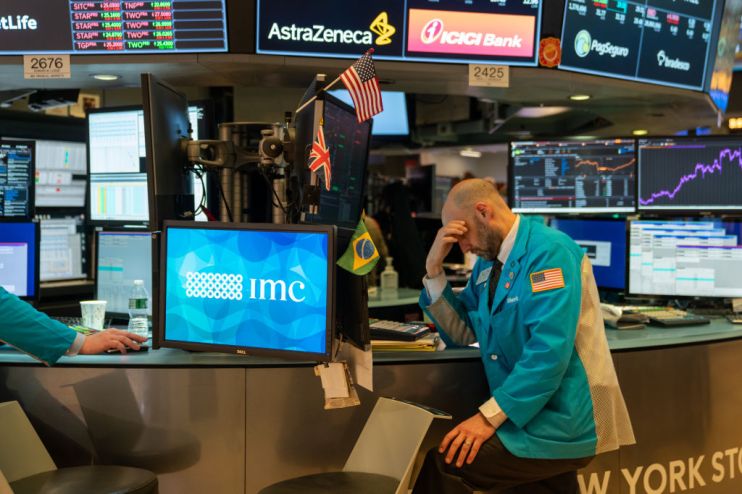
Covid-19 last week spread rapidly in Europe and the US. The jump in cases combined with a Saudi Arabia vs. Russia oil-price war and a draconian ban on Europeans travelling to the US to send stock markets crashing on their worst day since 1987.
Actions by central banks – the US Federal Reserve pumped money into short-term lending markets, the Bank of England slashed rates, and the European Central Bank (ECB) ramped up quantitative easing – did little to ease the sell-off.
Nor could government firepower such as the £12bn package from UK chancellor Rishi Sunak and a spending promise from the naturally thrifty German government ease investors’ fears.
“A global recession is now likely,” said Christian Keller, head of economics research at Barclays. “Europe looks to be fully affected by the virus and, increasingly likely, also the US.” There have now been more than 155,000 confirmed cases around the world, with more than 5,800 deaths.
“The significant restrictions to public life, including quarantines, school and university closures, reduced travel, limitations to the size of events et cetera, imply large negative effects on activity in the second quarter,” said Keller.
Barclays predicted global growth will be just 1.8 per cent this year. The US economy – the world’s biggest, which chalked up a 2.3 per cent expansion in 2019 – will grow by just 0.8 per cent, the lender said.
Performance will be even worse in Europe, Barclays predicted, with the Eurozone economy shrinking 0.5 per cent in 2020 and UK GDP falling by 0.2 per cent.
Analysts at BMO Capital Markets were even more pessimistic. They think the global economy will grow only 1.6 per cent this year, with US GDP expanding just 0.5 per cent. The weak growth will be driven by a plunge in output in the second quarter, they said.
Central banks have ‘no monetary bullets left’
Peter Berezin, chief global strategist at BCA Research, said a global recession is now almost inevitable. The only question is whether it will be a “prolonged downturn that produces a sizeable increase in unemployment rates,” he said.
How deep and long the downturn will be depends on the course of the coronavirus outbreak, the effects of the current chaos in stocks and bonds markets, and whether companies start sacking workers because they fear they will not survive, said Sal Gauteri, senior economist at BMO.
It has become increasingly clear that investors, companies and households have not been buoyed by interest rate cuts and other forms of stimulus. Many economists have said these measures will support economies in the longer-run, but in the mean time the daily spread of the virus is the only indicator that matters.
Moreover, with interest rates already close to record lows and central bank balance sheets chock full of government bonds, there are few levers left for policymakers to pull.
George Buckley, chief European economist at Japanese bank Nomura, said: “This is precisely the situation that we have been worried about for the past decade – another crisis, another recession and no monetary bullets left.”
Traders now predict the US Federal Reserve will cut rates to a target range of zero to 0.25 per cent, while the BoE could lower its rate to 0.1 per cent. Investors focus will stay on the spread of the virus, however, with a fall in cases the only thing guaranteed to boost markets and economies.