Election 2024: Which taxes will go up under Starmer’s Labour government?

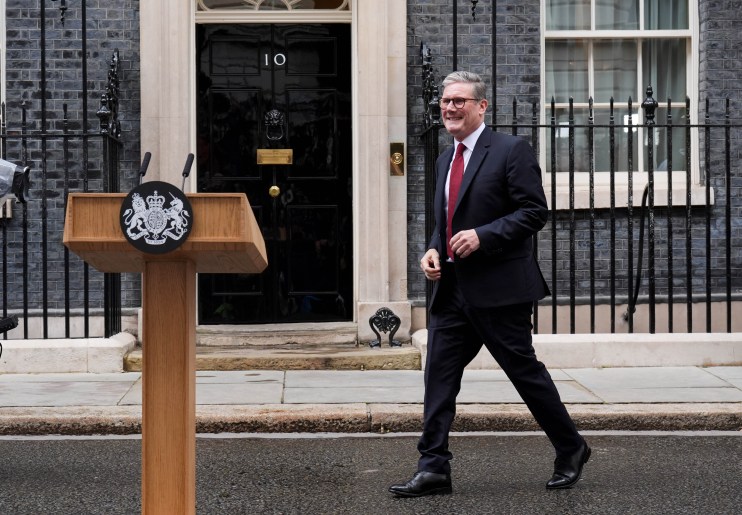
Keir Starmer’s Labour Party has been elected with a sweeping majority, winning over 400 seats that sprawl from from St Austell to Stirling.
It reclaimed former former red wall strongholds like Stoke, Grimsby and Redcar, while eating into former Conservative fortresses including Colchester and Aldershot, which went red for the first time in the seat’s 100-year history.
Labour’s colossal mandate is the climax of what was a bitter, acrimonious campaign, during which one of the major points of contention was tax.
Namely, whether Labour would, if elected, push up taxes in order to fund public spending.
The Tories controversially claimed that a Starmer government would raise taxes by £2,000 per household.
The figure widely rebuked, and the Treasury itself was forced to disown it, after Sunak and several of his ministers claimed the number was drawn up by neutral civil servants, when in actual fact it was based off assumptions devised by Tory aides.
But if taxes won’t go up by £2,000, what will happen to them?
What taxes Labour has promised not to rise?
The Conservative campaigns’ relentless focus on the tax burden forced Starmer and Rachel Reeves to rule out raising all three of the largest revenue drivers for the government – income tax, national insurance contributions, and VAT.
Last year, Reeves also ruled out imposing a blanket wealth tax, and over this summer’s six-week campaign, it also confirmed it would not change council tax bands, even though the Shadow Chancellor had previously called for them to be changed when she was a backbench MP.
But these explicit denials aside, Labour has struggled to be as categorical on its more general tax plans, and splits in messaging did begin to emerge over the course of the campaign. Reeves was – unsurprisingly – on the party’s hawkish side, saying at a campaign event in late May: There are no additional tax rises needed beyond the ones that I’ve said.”
But shortly after Reeves’ comments, Shadow Defence Secretary John Healey took a more equivocal stance. “None of our plans require us to look at extra tax,” he told Sky News, “but of course we have to see what the true state of the public finances is when we get to open the books.”
Tom Selby, director of public policy at AJ Bell said of Labour’s fiscal approach: “The pledge not to increase National Insurance, income tax or VAT led to feverish speculation of exactly what might be in new chancellor Rachel Reeves’ fiscal crosshairs, particularly if growth remains as elusive as it has been for the past two decades.”
Why does this put Labour in such a difficult position?
The UK’s fiscal outlook has been described as “parlous” by the Institute of Fiscal Studies (IFS), with the exchequer still recovering from the government’s decision to turn on the taps in response to consecutive major economic crises – Coronavirus and the war on Ukraine’s affect on energy prices.
In his most recent Spring Budget, Jeremy Hunt cut National Insurance Contributions by two per cent, having already slashed it by the same amount the previous fiscal statement. He then pushed the spending cuts required to to pay for it into the next government, leaving ‘unprotected’ departments facing £19bn’s worth of cuts in the coming years, according to the Resolution Foundation.
But despite the bleak fiscal environment, Labour spent much of the campaign promising there would be “no return to austerity”, prompting the IFS to accuse them and the Conservatives of engaging in a “conspiracy of silence” over tax, with neither willing to grasp the nettle.
Which taxes will Labour definitely rise?
In its manifesto, Labour outlined four main revenue raisers:
Applying VAT to private school fees: Labour has said that it will remove the exemption of VAT from fees paid to private schools, and apply a 20 per cent levy on their earnings earnings. Labour claims this this will raise £1.5bn a year.
Tightening up the ‘loopholes’ in the Conservatives’ abolition of the non-dom scheme: The party has pledged to “close further non-dom tax loopholes” that remain after Jeremy Hunt pledged to scrap the over 200-year-old policy which allowed wealthy foreigners to reside in the UK without paying tax on their overseas income or assets.
Starmer and Reeves’ policy goes further than the Conservatives, removing the right of wealthy foreign nationals to avoid taxes in their first four years of residency and revoking their right to avoid inheritance tax on foreign assets. Labour claims that – in conjunction with its attempts to clamp down on tax avoidance – the policy will raise £5.2bn.
Carried interest in private equity: Labour will also look to tighten what it sees as an income tax loophole that exists in the private equity industry. Carried interest or ‘carry’ is one of the main ways that private equity bosses make money, allowing them to scrape off a share of the profits of asset sales which is taxed at 28 per cent.
Labour, however, see it as a wheeze that private investors use to avoid income tax, and are looking to uplift it to 45 per cent, in line with the top rate. The party says the policy will raise half a billion pounds a year.
Windfall tax on north sea oil: In another attempt to drive revenue through tightening up taxes already exist, Labour has pledged to ‘close the loopholes in the windfall tax on oil and gas companies” in the North Sea. It has said it will extent the ‘sunset clause’ until the end of the next parliament – meaning it is likely to remain in place until at least 2028 – and it will increase the rate of the levy by three per cent. The move will raise £1.2bn a year, Labour said.
Are there other taxes might Labour rise?
Capital-gains tax (CGT) appears to be a likely target.
Reeves, Starmer and other front benchers have left a bit of wiggle room in their communications around the tax, which is applied to profits realised on assets.
They firmly ruled out any rises or changes on the capital people’s first homes, but were shiftier on any other reform to the tax, which is mostly levied at between 20 and 28 per cent.
When will we find out about Labour’s tax plans?
(And will there be an emergency budget?)
In 1997, fresh of the back of a similar landslide, Gordon Brown called an emergency budget immediately in the wake of his party’s general election win.
Rachel Reeves, however, has already ruled out holding similarly expedited fiscal statement to ensure that the Office for Budget Responsibility (OBR) – a George Osborne brainchild that did not exist in Brown’s tenure – had time to analyse and weigh in on Labour’s plans for the economy.
It takes 10 weeks for the OBR to produce its reporting assessing the economic impact of a Budget, meaning any fiscal statement can’t happen until at least Friday, September 13; a date which superstitious staffers may want to avoid.