Skip to content
Wednesday 19 August 2026London --:--Frankfurt --:--Zurich --:--
NewslettersSearchEN · DE · FR
MorningWire

European business, markets and politics

FTSE 100
10,728.04
+0.07%
DAX
26,128.36
-0.80%
CAC 40
8,509.36
0.00%
STOXX 50
6,468.17
-0.95%
  • Europe
  • Markets
  • Business
  • Economy
  • Regulation
  • Politics
  • Opinion
More
GermanyFranceEU InstitutionsCompetitionPublic AffairsBankingTechnologyEnergy
  • Germany
  • France
  • Europe
  • Markets
  • Business
  • Economy
  • Regulation
  • Politics
  • Opinion
  • DE
Wednesday 17 January 2024 6:00 am  |  Updated:  Tuesday 27 February 2024 11:36 am

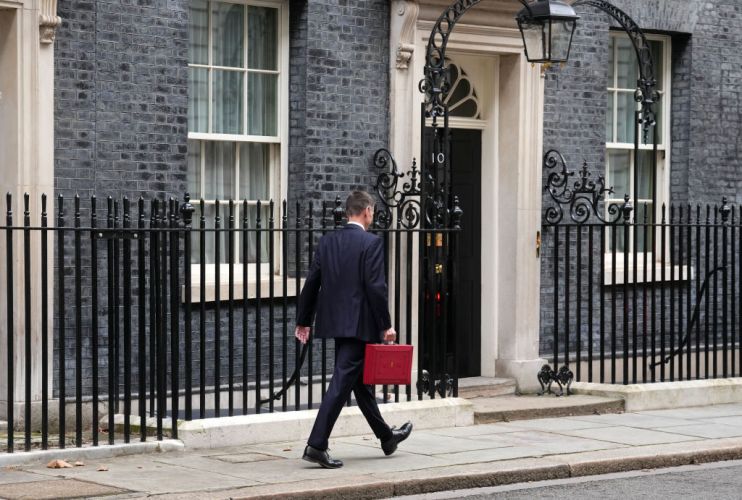
Electoral and fiscal pressures will clash over the coming year – there can only be one winner

By: Chris Dorrell

Add as a preferred source on Google
The move follows a reduction of the same amount in the Autumn Statement, meaning the basic rate will move down to eight per cent starting from April.

The main political parties have received no shortage of warnings about reckless fiscal plans ahead of this year’s election. 

In the first week of the year, Robert Stheeman, outgoing head of the Debt Management Office, warned that the “reality of the market” will always triumph over politicians. 

“Don’t kid yourself in thinking that you can develop policy in a vacuum without taking the market into account,” he cautioned.

Vivek Paul, UK chief investment strategist at Blackrock, made a similar warning last week. Reckless promises in the run-up to the election could see “the return of the bond vigilantes,” he said. 

One doesn’t need a long memory to know they have a point. 

Markets reacted with a vengeance when Liz Truss announced £45bn in unfunded tax cuts. The UK’s fiscal position looked uncredible, causing gilt yields to surge and bringing an ignominious end to Truss’s brief premiership. 

However, the Treasury has received some good news over the past couple of months.

As inflation has come in lower than expected, gilt yields – which are closely related to rate expectations – have fallen from peaks reached last Autumn. Yields reflect the cost of government borrowing. 

Last Autumn, ‘higher-for-longer’ mania was gripping financial markets sending yields on government bonds to their highest levels since the financial crisis. 

But traders don’t find the higher-for-longer narrative credible any more. Bond yields have fallen as a result. For example, the yield on the 10-year Gilt surpassed 4.6 per cent in October, but has since fallen to 3.8 per cent. 

Falling yields across the board means the Treasury will have an extra £12bn in headroom at the Spring Budget, according to ING. That’s on top of the £13bn Hunt received in the Autumn Statement. 

Read more

Reeves issues warning to successor as she battles to defend record

Reeves is eying mortgage reform as a key growth driver.

But these short term trends should not make any meaningful difference to the government’s fiscal calculations, since there are very good reasons to think that bond yields will rise again over the coming year. 

Over the next two years, the private sector will be asked to finance more government borrowing than ever because the Bank of England is no longer buying bonds.  

For over a decade after the financial crisis, the Bank was hoovering up government bonds to keep the cost of government borrowing low. But after inflation took off in 2021, the Bank reverted to selling bonds – known as quantitative tightening. 

This means the government will now have to find buyers in the private sector instead. 

Economists at Nomura think that the private sector will be asked to finance £206bn from private investors this year before rising to £237bn next year. That means the government will borrow more from the private sector in the next two years than the previous nine combined.  

The likelihood is that a big increase in supply without any increase in demand will put up the cost of government borrowing as the Treasury will be forced to offer a higher rate of return to attract buyers.  

In other words, the recent fall in bond yields is likely to be a short-term trend.

It is well-publicised that the government’s existing headroom reflects post-election spending plans that most experts think are unrealistic. 

Throw in the dynamics of the gilt market and the inherent uncertainty around inflation – which is front and centre of investors’ minds after the airstrikes on Houthi targets in the Red Sea – and the government’s additional headroom looks shaky.

And remember, all this is in the context of the highest levels of public debt since the 1960s.  Everywhere he looks, then, the Chancellor faces challenges making the maths – economic and political – work. 

Read more

Nigel Farage wins in Clacton – and triggers investigation

Nigel Farage, in a striped jacket and sunglasses, speaks outside a polling station.

Share this article

  • Facebook
  • X
  • LinkedIn
  • WhatsApp
  • Email

Similarly tagged content:

Sections

  • Markets & Economics
  • News

Categories

  • Economics

People & Organisations

  • Spring Budget 2024

Related Topics

  • Budget
  • Conservative Party
  • Jeremy Hunt
  • Spring Budget 2024
  • Treasury

Trending Articles

  • As it happened: FTSE 100 drops as oil prices rise after Trump makes Hormuz threat

  • Jobless Banquet: Youth unemployment surge ‘sends Neets to KFC’

  • US bond market jitters spark UK economy recession warning

  • Monzo chair makes early exit after boardroom rift

  • Aldi boss wades into supermarket ‘price-gouging’ row

More from Morning Wire

  • Reeves issues warning to successor as she battles to defend record

    Politics
    Reeves is eying mortgage reform as a key growth driver.
  • Nigel Farage wins in Clacton – and triggers investigation

    Politics
    Nigel Farage, in a striped jacket and sunglasses, speaks outside a polling station.
  • Brazen Burnham should call an election and put his ten year plan to the voters

    Politics
    Andy Burnham speaking to media outside 10 Downing Street with a crowd gathered.
  • In praise of Count Binface

    Opinion
    Count Binface wearing a silver mask and cape, standing in front of a podium during a press conference.
  • Four charts revealing scale of Andy Burnham’s economic challenge

    Economics
    Due to the lack of article title, content, categories, and tags, its impossible to create a specific, keyword-rich alt tex...
  • John Healey becomes Chancellor as Andy Burnham names top Cabinet appointments

    Politics
    Chancellor John Healey speaking at a professional event, likely a press conference or address.
  • Reform’s Richard Tice under parliamentary investigation

    Politics
    Reform UK leader Nigel Farage and Deputy Leader Richard Tice are set to meet with Andrew Bailey to discuss interest rates and stablecoins.
  • Rupert Lowe axes pensions triple lock and pledges tax cuts in economic plan

    Politics
    Rupert Lowe, former Southampton FC chairman, smiles while holding files on a city street, wearing a suit and pink tie
MorningWire

Independent European business, markets and political news for decision-makers.

Morning Briefing

Europe

  • Germany
  • France
  • EU Institutions
  • Europe

Business

  • Markets
  • Business
  • Economy
  • Regulation
  • Competition
  • Public Affairs

Editorial

  • Opinion
  • Editorial Policy
  • Corrections
  • Contact

Company

  • About Morning Wire
  • Privacy Policy
  • Terms of Use
  • Cookie Policy
© 2026 Morning Wire Ltd · Published by Morning Wire Media, Bahnhofstrasse 65, 8001 Zürich, Switzerland
Privacy · Terms · Cookies · Facebook