Skip to content
Friday 28 August 2026London --:--Frankfurt --:--Zurich --:--
NewslettersSearchEN · DE · FR
MorningWire

European business, markets and politics

FTSE 100
10,824.26
+0.29%
DAX
26,569.99
+0.77%
CAC 40
8,401.18
+0.98%
STOXX 50
6,485.67
+0.95%
  • Europe
  • Markets
  • Business
  • Economy
  • Regulation
  • Politics
  • Opinion
More
GermanyFranceEU InstitutionsCompetitionPublic AffairsBankingTechnologyEnergy
  • Germany
  • France
  • Europe
  • Markets
  • Business
  • Economy
  • Regulation
  • Politics
  • Opinion
  • DE
Wednesday 09 September 2020 5:49 am  |  Updated:  Wednesday 09 September 2020 11:32 am

Emotional intelligence can be just as important as intellect in the workplace

By: Graeme McCracken

Add as a preferred source on Google
INDIA-TECHNOLOGY-SUMMIT
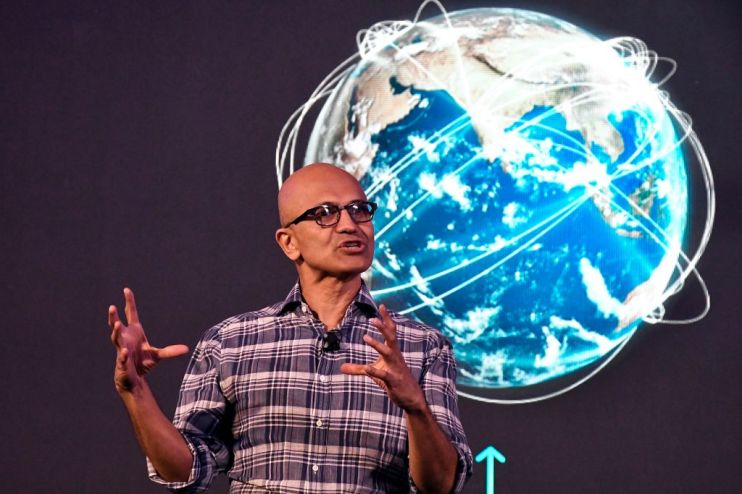
Microsoft CEO Satya Nadella explained that it is important for leaders “not to freak people out, but to give them air cover to solve the real problem.”

Sometimes it is hard to step back and see yourself as others see you. Yet when you do, it can be a game changer. 

For me, that moment came during an internal review with a colleague. My perception of myself as a boss who is empathetic to the people around me was upturned with one throwaway comment.

I am a six-foot plus Scot, and it turns out appearances can be intimidating. How you are perceived is not just a personal issue, it is one that impacts business growth. In a world where the “do as I say” dictatorial leadership yields only short-term results at best, the case for balancing emotional intelligence with intellect is a strong one. 

Take a recent study of 4,000 senior leaders, conducted by Hult Business School. It found that 75 per cent of respondents felt it was extremely unlikely their staff would find them scary. 

Yet there is a body of research based on the findings from a five-year programme that shows many people think twice before walking through the boss’s open door.

As leaders, we need to acknowledge that people sometimes see us as scarier than we realise – and that it is hurting our businesses. 

That is as true for a business like mine, which is entrenched in data and cognitive intelligence, as it is for any other – growth is driven by people as much as tech. I have also learned that trust, respect and kindness are the cornerstones of EQ in business.

People buy people, and it is the same internally as well as externally; given the choice, you prefer to deal with those you trust and who share your values.

The age of the autocrat is thankfully fading, at least in the business world. Digital transformation is reconfiguring organisations around collaboration, and within this scenario, success is dependent on flattening the leader-follower pyramid. 

From an EQ perspective, this requires leaders to listen more than they talk.

Read more

Capgemini MD: London must keep reinventing itself

Rob Walker of Capgemini presenting on stage, with a digital screen showing +10.5 growth behind him.

Trust goes both ways. While staff need to trust in the leader’s strategic vision for the business, in turn leaders need to trust in the expertise of their teams to achieve those objectives. 

In a practical sense that means knowing when to step back and to gently nudge people in the right direction, without being overtly directive or overbearing.  

Microsoft’s CEO Satya Nadella summed up this philosophy in an interview with USA Today. He explained that it is important for leaders “not to freak people out, but to give them air cover to solve the real problem.”

Speaking from experience, I can confirm this is not always easy. It requires a willingness to let go and that can feel counterintuitive. However, it is the right thing to do. Kindness is an important facet of EQ – one that has never been as important in most of our working lives as in the past months – but to me the key lies in empowerment.

Empathy means putting yourself in someone else’s shoes and no one wants to be just a cog in the machine. Ceding ownership to those across the business signals inclusivity and a shared purpose. Enthusiasm drives loyalty and ambition generates innovation.

I should add, empathetic leadership does not mean you shouldn’t make your teams a little uncomfortable. It means ensuring people understand why you’re doing it. 

Pushing staff beyond their comfort zones allows them to develop. Ultimately, the leader’s role is to offer the safety net.

In essence, I have not had to change who I am to make people more comfortable in approaching me. 

Rather, in encouraging leadership throughout the business I have learned to embrace my own discomfort.

Graeme McCracken is managing director at agriculture tech and data business Proagrica

Read more

How I earn cashback on everyday purchases with the Complete Savings shopper rewards programme

Happy couple shopping online with credit card and laptop, likely using CompleteSavings or similar service.

Share this article

  • Facebook
  • X
  • LinkedIn
  • WhatsApp
  • Email

Similarly tagged content:

Sections

  • Jobs and Money
  • News
  • Opinion

Categories

  • Business
  • Opinion
  • Personal Development

Trending Articles

  • Pensioners to hand over bank statements in government benefits crackdown

  • Jamie Carragher: HMRC petitions for Sky Sports star to be declared bankrupt

  • Brewdog founder James Watt hits out at ‘total silence’ over new venture

  • Lloyds Bank and Halifax users unable to use app in latest outage

  • Economists urge Bank of England to halt bond sales as borrowing costs climb

More from Morning Wire

  • Capgemini MD: London must keep reinventing itself

    Opinion
    Rob Walker of Capgemini presenting on stage, with a digital screen showing +10.5 growth behind him.
  • How I earn cashback on everyday purchases with the Complete Savings shopper rewards programme

    Partner
    Happy couple shopping online with credit card and laptop, likely using CompleteSavings or similar service.
  • Why The Outer Hebrides is Scotland’s ultimate wellness escape

    Life&Style
    Aerial view of Outer Hebrides coastline, turquoise sea, white sand beach, green fields, and scattered homes.
  • The best weapon against AI slop is a good lunch

    Opinion
    Pub in Leadenhall Market, London
  • I built my career on social media as a teen. I still think banning under-16s is right

    Opinion
    Smartphone screen displaying a folder of social media app icons including Facebook, Instagram, WhatsApp, and YouTube.
  • Hiscox finance chief: London’s AI adoption is too slow

    Opinion
    Paul Cooper, a man in a navy suit, gestures during a business meeting at a conference table.
  • Google Pixel 11 review: Can this new smartphone lure away iPhone users?

    Life&Style
    Person in yellow jacket holding a coral Google Pixel phone, with a smartwatch on their wrist, next to a car.
  • Give Emit some Love in the Ebor

    Sport
    Jockey in green and light green silks, wearing a helmet and goggles, adjusting his headwear.
MorningWire

Independent European business, markets and political news for decision-makers.

Morning Briefing

Europe

  • Germany
  • France
  • EU Institutions
  • Europe

Business

  • Markets
  • Business
  • Economy
  • Regulation
  • Competition
  • Public Affairs

Editorial

  • Opinion
  • Editorial Policy
  • Corrections
  • Contact

Company

  • About Morning Wire
  • Privacy Policy
  • Terms of Use
  • Cookie Policy
© 2026 Morning Wire Ltd · Published by Morning Wire Media, Bahnhofstrasse 65, 8001 Zürich, Switzerland
Privacy · Terms · Cookies · Facebook