Empowering communities with alternative currencies towards a post-Covid economy

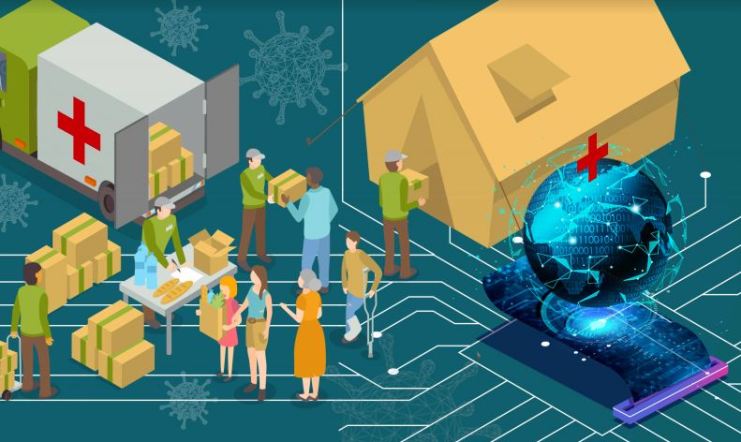
With humanitarian operations becoming more frequent, global and protracted, stakeholders are going to need to find alternative, multi-year pools of funding as well as new financial mechanisms to increase effectiveness and efficiency of existing resources.
There was a time when humanitarian organisations only focused on short-term emergencies while development organisations focused only on long-term socioeconomic programs.
However, this line between humanitarian and development is blurring to the point where it is now called the “Hum-Dev Nexus”. Organisations like the World Health Organization (WHO) have issued countless policy papers on the need to bridge the Hum-Dev divide in health.
Even the Red Cross and Red Crescent Movement has begun to pivot towards developing disaster relief interventions that are simultaneously response and recovery, and one example of this is Community Inclusion Currencies (CICs), a program of alternative, blockchain-based currencies, conceived by Grassroots Economics Foundation, that the Red Cross and Red Crescent Movement, together with public and private partners, is developing.
We believe the time has come for institutions sitting at the Hum-Dev nexus to think more about encouraging platforms and ecosystems rather than bespoke interventions. Adaptability is the essence of innovation and the next generation of program managers, policy makers, and front line responders need this perspective.
At the onset of the Covid-19 pandemic, the CIC program was focused on improving resilience and livelihoods in vulnerable communities in Kenya.
In early April 2020, with a weeks’ notice, the team successfully pivoted the CIC program to become a rapid response and risk communications solution. With carefully crafted health interventions and analytics, we used CICs to support Community-Based Disaster Response Teams and Health Workers, track donor funding, and raise awareness around sanitation and social distancing.
Because we issue digital tokens, as a kind of local currency, to community members, our systems record every CIC related transaction to the blockchain. For example, when a CIC user purchases soap from a small kiosk with CIC tokens, the customer’s demographics, location, and goods are captured. The system that we developed analyses the data and creates a real-time dashboard. Donors and front line health workers can then use this information to monitor impact and make specific changes to the interventions as needed.
This data can then be fed into larger databases which make up the datasets that inform early warning risk models about the situation in the field. From this data analysis, we could possibly identify when a second wave or early recovery is underway.
And with this data and risk engine in hand, in collaboration with the Grassroots team and research institutions, new financial products, such as Insurance Linked Securities, can be structured and marketed to private investors. For example, our volcano CAT Bond uses a similar risk model and financing modality.
To date, in Kenya, more than 10 million CICs have been issued and given to roughly 23,000 households that can trade them among themselves using simple feature phones with no internet.
Users who register free of charge are given 400 CIC vouchers and encouraged to spend them among each other and accept them for goods and services. Donors have supported the Red Cross and Red Crescent Movement in developing a pilot $40,000 reserve fund where women’s groups can exchange CICs. This reserve fund can be added to by any donor as well as local actors to generate more CICs on the blockchain to distribute to vulnerable populations.
The concept assumes that people have goods and services on supply with local demand that is simply not being filled by scarce national currency. Filling that gap with a local medium of exchange seems to be working.
For example, a recent field survey of almost 500 CIC users by Kenya Red Cross Society found that 97 percent saw the currency as an important part of their income while two-thirds attributed their increase in food consumption to the CIC.
Since April, these 23,000 households have traded more than $400,000 worth of goods and services amongst themselves in more than 80,000 transactions. While this is currently deemed a Covid-19 response, these figures indicate it can and should also form part of future resilience-building within vulnerable communities. At the current rate these communities will have traded more than a million times with each other in one year, generating a self-sufficient local economy.
While the Hum-Dev Nexus paradigm shift is still in its infancy, the potential here is exciting and creates massive opportunities to test and develop new, transformational partnerships with not only development agencies but also private investors, such as diaspora.
To wit, remittance flows to low and middle income countries from developed countries amounted to more than $400 billion in 2018. By comparison, the entire Ordinary Development Assistance budget for humanitarian assistance was only $29 billion. Unlocking the power of alternative, or blockchain-based, financial instruments such as Community Inclusion Currencies, then, makes not only humanitarian and development sense, it makes economic sense as well.
Will Ruddick of Grassroots Economics and Adam Bornstein of the Danish Red Cross in conversation with James Bowater.