Energy security hopes belong in wonderland unless Britain builds again

Alice’s Adventures in Wonderland is set for a fresh stage revival later this year within the vaults of London Waterloo, the latest rendition of Lewis Caroll’s literary nonsense staple – where characters boast of impossible things.
Much like the Red Queen, the government is hoping the British public will also believe in impossible things, as many as six before breakfast judging by the latest setbacks.
It wants us to believe 50GW of offshore wind generation will be reached by the end of the decade, investor confidence in onshore wind will be revived, the country’s creaking water network can be fixed, nuclear’s role in the energy mix will be restored, North Sea oil and gas projects can be sustained, and that the UK is ready for a vast ramp up of electric vehicles.
Sadly, such wonderful dreams of a secure, greener energy future powered by renewable generation also belong down the rabbit hole, where they will not be hampered by the reality of byzantine planning laws, obstinate localism, departmental dysfunction and poorly laid out policies.
Energy ambitions stall
Even the good news comes with an awareness that all is not well.
Last week, energy secretary Grant Shapps finally rubber-stamped Hornsea Four, the 2.9GW wind farm off the Yorkshire coast, which will become the UK’s second largest offshore wind farm.
It has finally been given the green light after a hefty five-month delay and a turgid two years of hoop jumping through the country’s planning system.
What should have been a cause for celebration instead is little more than a stinging reminder of the escalating challenge the UK has in achieving energy security following Russia’s invasion of Ukraine.
Remarkably, Hornsea had a relatively speedy time through the planning system, with renewable projects routinely delayed as much as a decade amid the wait for local approval and grid connectivity.
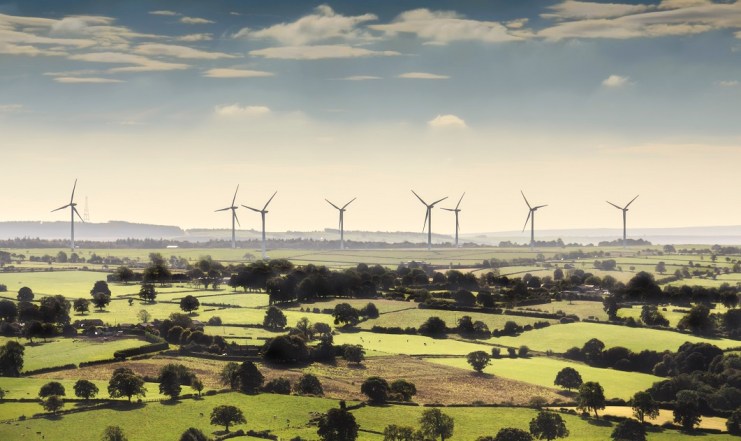
Offshore wind’s on-land counterparts are facing an even more challenging time, with only two turbines across England and Wales hooked onto the grid last year, less than war-torn Ukraine.
Industry hopes this will be rectified appear in vain, with the also government closing its consultation period last week, with calls for planning laws for new turbines to be brought in line with any other infrastructure project are expected to fall on deaf ears.
Meanwhile, Thames Water’s woes – which have outraged the public – concerning sewage spills, creaking infrastructure and mountains of debt have been worsened by the fact it has been met with persistent opposition for new reservoirs and pipelines despite a looming 1bn litre shortfall, with three decades since Carrington, the last major reservoir was built in this country.
Alongside planning problems plaguing the energy industry, there also delays around financing.
In the same week Hornsea’s hiccoughs were laid bare, the government pushed back its launch of industry vehicle GB Nuclear, amid a generational challenge to revive a declining power source in the country’s energy mix.
The government wants to more than treble the country’s nuclear capacity by 2050, yet only two new gigawatt power plants are close to viability – one deep in the planning stages, the other nearly constructed – while it has fudged funding small modular reactors, opening up a competition rather than coming up with a clear pipeline for projects.
This comes with 85 per cent of the country’s nuclear generation from its ageing fleet set to go offline in the next decade.
Government lacks clarity in strategy
Oil and gas exploration also feature in the country’s energy security strategy, yet further exploration has been severely hampered by an obstructive windfall tax that has undermined the confidence of banks and investors in the sector – with the regulators predicting a halving of investment in the region by the end of the decade.
Flagship project Rosebank, meanwhile, looks set for fresh delays – with the UK’s largest undeveloped North Sea fossil fuel project no longer set for approval before parliament.
The reality is that regardless of Shapps’ spin linking climate protestors to Labour, no one has managed to ‘Just Stop Oil’ more effectively than this government.
In the case of electric vehicles, the contrast between rhetoric and reality has never been plainer, with Westminster alone having more charging points than six cities in the midlands and the North combined – putting huge pressure on the government to ramp up infrastructure.
Planning problems, funding issues and indecision all speaks to a country where irrespective of a problem’s urgency, little is done.
Before its closure and spin-off into two new panels, the BEIS Select Committee published its own recommendations for decarbonising the energy sector earlier this year.
This includes simplifying the vast range of energy strategies, reforming planning laws and stabilising policy so that private sector confidence can be rebuilt and investment unlocked – which will mean projects escape logjams and are actually built.
There have also been calls for a clearer long term delivery plan from the National Audit Office and Climate Change Committee.
Less than 18 months from the next election, a plausible route to energy security and net zero remains lost in wonderland.
It is time the government came clean with a coherent strategy – where Britain actually builds things again.