ESG is ‘dying’ – but that might be a good thing, says former Blackrock green chief

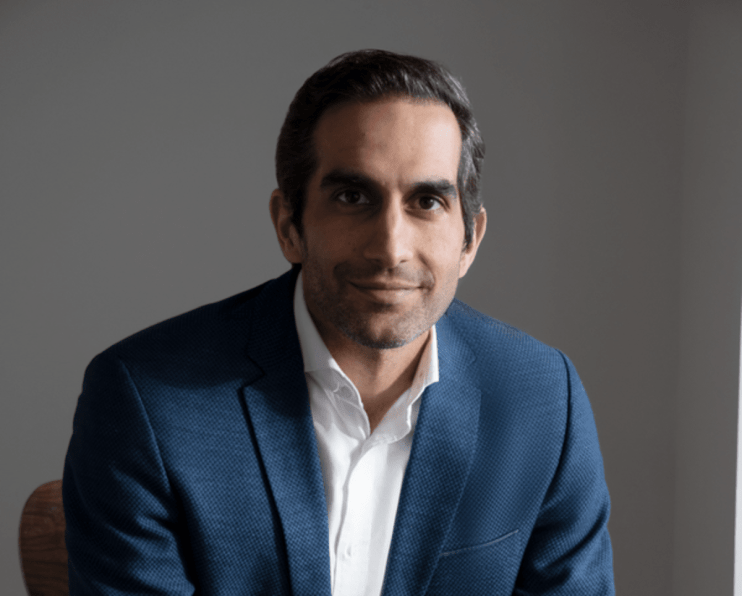
Every week, Charlie Conchie sits down with the biggest movers and shakers in financial services. This week it’s Tariq Fancy, Blackrock’s former sustainable investing chief
When Tariq Fancy left his role as Blackrock’s chief sustainable investment officer in 2019, disillusioned and downbeat, he buried his head in old economics books.
He turned first to the English thinker Arthur Pigou, who argued over 100 years ago that negative “externalities” created by companies should be taxed. Then William Nordhaus who won the Nobel prize for economics in 2018 for a model on “how the economy and the climate co-evolve”.
What did he glean from the deep dive back into theory?
“We have all the answers,” Fancy tells Morning Wire “But we aren’t using them.”
Not only that, but “a lot of the large firms, the American ones, are actually taking advantage of political spending and lobbying to prevent change from happening.”
‘Allergic to bullshit’
Fancy’s views might strike a similar tone to scores of green campaigners who point to corporate greed as the root of all ill.
The difference, of course, is that Fancy was forged in the world of high finance. He cut his teeth in the 2000s as a distressed investor scooping up struggling companies after the dot com bubble burst. He learnt his trade under the tutelage of Mark Rachesky, former right hand man of billionaire corporate raider Carl Icahn.
But it was after a friend was diagnosed with terminal cancer, that his career and the motivations behind it began to turn. Fancy packed in New York and worked with his university pal as he founded an educational charity in Kenya in the time he had left.
“It kind of pushed me to think ‘I’m gonna do something good someday’,” he says. “When you realise your time’s running out, it’s now or never. I could see where he focused his attention.”
It might sound saccharine from some, but Fancy is a man who speaks so clear-headedly about purpose that you can buy it. There’s also the fact that he packed in multimillion pound paypackets in New York to found his own not-for-profit firm, The Rumie Initiative, which gives people access to mobile phones in the developing world.
It was when he was headhunted to return to Blackrock as its sustainable investing chief in 2018 however, he says his training in distressed investing began to kick back in.
“Distressed [investors] are a little bit more allergic to bullshit,” he adds.
This is not about investing. This seems to be about marketing
ESG battles
The world’s biggest asset manager Blackrock has taken centre stage in the battles over environmental, social and governance [ESG] investing over the past five years, notable first as a champion and then for its quiet retreat following a political backlash in the US.
ESG, a catch-all term that has swallowed a range of supposedly ethical business practices, has become a culture war issue across the Western world.
Florida Governor and failed presidential candidate Ron DeSantis recently criticised Blackrock for using its “economic power” to instill a “left wing agenda.” A Texas school fund told Blackrock last month it was terminating its contract to manage around $8.5bn of state money, accusing the $10trillion dollar firm of boycotting fossil fuel energy producers.
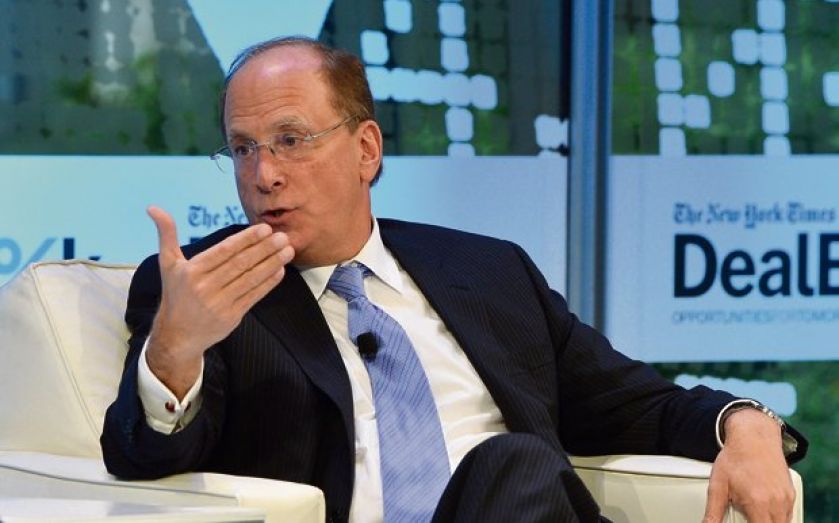
In his closely-watched letter to CEOs in 2022, Blackrock’s boss Larry Fink peppered the message with reference to ESG, sustainable investing and equality. That year, the firm lost about $4bn in assets in response to its ESG stance – a blip compared to its $230bn in inflows.
But in this year’s missive, ESG was nowhere to be seen, replaced only with hard-headed references to “energy pragmatism”.
‘A PR Strategy’
For Fancy, it reveals the emptiness of Fink’s pronouncements on ESG and shows this was all ultimately “a PR strategy.” As soon as the publicity value waned, so did the use of the acronym. ESG became a means to hoover up assets, charge higher fees, all while doing largely the same thing, he says.
“This is not about investing. This seems to be about marketing. I think the proof is in the pudding. If this were about investing, which [Fink] claimed, he would still be doing it,” Fancy says.
“He’d say, ‘I don’t care if Republicans are complaining, we’re fiduciaries. This makes money for clients. You like making money don’t you Republicans? Great. Shut up.’ But instead, he basically just stopped talking about it.”
When he joined Blackrock, Fancy says he came to the quick realisation his role too was one of marketing rather than investment. If ESG strategies actually made money, the investment professionals wouldn’t need “not-for profit people” to “come and tell them”.
Instead Blackrock was shouting about the financial incentives while failing to mention this was playing little role in returns or making any impact on the ground. The “overall narrative was misleading”, he adds.
“My sense was not so much Blackrock was doing the wrong thing, but that Larry and other leaders were out there at Davos spewing a bunch of stuff that they must have known wasn’t true, and was just aligned with their short term financial incentives,” he says.
“It was a PR strategy valuable in a particular point in time, like they might talk about Black Lives Matter in 2020.
“Suddenly every company discovered black people existed in 2020 – it was amazing. But the truth is, if they really mean it, they’re going to be doing it even when George Floyd doesn’t get killed.”
ESG is dying
Fancy shot into the public consciousness in 2021 when he fired his first public barb at Fink, claiming that “the financial services industry is duping the American public with pro-environment, sustainable investing practices”. For many, his comments cut through the whirligig of ESG at its peak and revealed what many already suspected to be the reality.
Since then, ESG has come to something of a reckoning. Investors have soured en masse and money has begun to flow out of the market. In the last three months of 2023, global sustainable funds experienced net outflows of $2.5bn, marking the first time ever they have entered negative territory.
That shift has been accelerated by the energy shocks triggered by the Ukraine war and the flight back to the old economy of fossil fuels and steady supply. Regulators globally are also moving in and clamping down on the use of words like “sustainability”, “ESG” and “green” on investment products after greenwashing ran rampant.
I think ESG’s death was expedited because in the US it got politicised. But I think in general, does it need to persist?
While Fink says Blackrock’s stance has not changed, he claims the term itself has been too “weaponised” by the far-right and left to use anymore.
“I think it’s dying,” Fancy says. “I think it’s death was expedited because in the US it got politicised. But I think in general, does it need to persist?”
His ultimate solution sounds a simple one. More regulation to stop companies polluting and less money in politics to stop firms from bending the rules in their favour. Without that, he says companies will continue doing what they always have.
“My argument is if you really want to make change, you have to really use the tools of government,” he adds.
Blackrock for its part does not mind throwing barbs back at Fancy. In a response to questions from City A.M., the firm claimed he “spent less than two years at Blackrock but more than four years later continues to seek publicity for himself by trading on the firm’s name.”
“Blackrock is a fiduciary, which means we always put our clients’ interests first,” the firm said. “We will continue to manage their money consistent with their long-term goals and objectives.”
Blackrock has some $802bn sustainable assets under management, according to its own figures.
Even so, while he waits for governments to move in, Fancy’s finger is pointed squarely at his old boss and the bastions of big business.
“We’re in a race against time,” he says. “And one generation has got their hands at the wheel and they’re creating irreversible change.”