EU referendum polls: Eurosceptics’ unholy alliance with the anti-EU hard left – your enemy’s enemy isn’t your friend

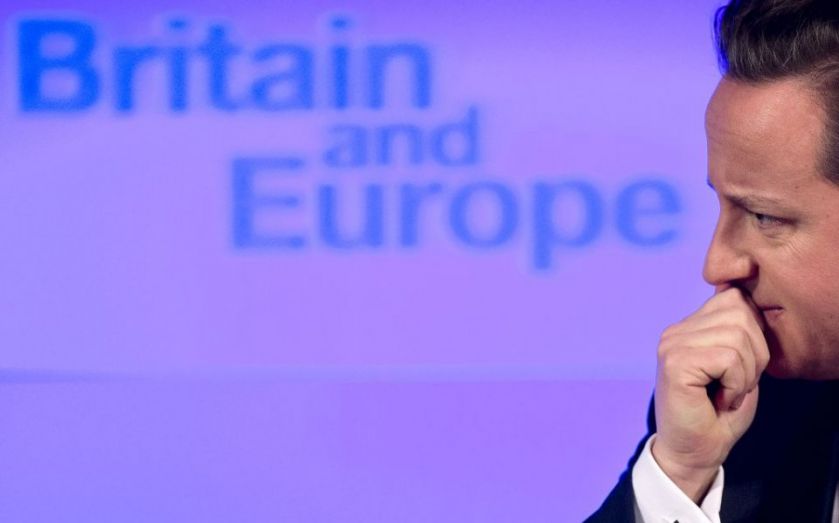
With the Prime Minister apparently arranging panicked meetings of special advisers to aid the floundering Britain Stronger in Europe campaign, the UK’s EU referendum debate is effectively underway. Polls appear to show Brexiteers on the march. With the EU stumbling from one crisis to the next, and the poverty of positive messages emanating from Europhiles, the stage looks set for a close vote that the “Leavers” could win.
But for those of us who favour an EU exit on the basis of the opportunity it would provide Britain to be a liberal, free-trading nation, a nagging doubt remains. In working across ideological divides to win a “Leave” vote, will victory be considered a mandate for policies we’d oppose at a domestic level?
To some extent, there’s always been a divide among eurosceptics about whether this matters – especially among those who’d define themselves as pro-market classical liberals. All of us agree that free trade and exchange do not require a harmonised regulatory framework or membership of a political union. But all would agree that, in principle, the free movement of goods, services, capital and labour, as Mark Carney outlined last week, makes our economy more dynamic.
Read more: David Cameron says no second Brexit vote
It would be churlish to deny that the EU has entrenched the latter policies across Europe. But whereas many free-marketeers celebrate the idea of constraining the UK government in this way but argue that the EU is no longer a liberalising force elsewhere, other free-market Conservatives emphasise that these constraints themselves undermine countries’ democratic rights. At the heart of this is a disagreement on what matters more: whether countries’ decide their own policies (whatever they might be) or what policies we ultimately get.
Of course, to win the referendum, even principled liberal eurosceptics must reach out across the aisle. But many are playing a dangerous game in seeking to exploit every left-wing gripe to push opinion in an anti-EU direction – in turn legitimising ill-justified policies and hardcore political opponents. Highlighting that EU rules would stop Jeremy Corbyn renationalising the railways, limit our government from providing state aid to industries such as steel, and prevent us from further narrowing the VAT base by exempting tampons and other products may seem like a good way to harness support against EU membership. But what happens the day after we leave when a referendum result may be seen as a vindication of this agenda?
Worse, some free-market Tories place so much weight on their euroscepticism that they celebrate the electoral performance of parties in other countries with agendas far removed from their own. In just the past 24 hours, we’ve seen many eurosceptics claim that the Portuguese President’s decision to invite the largest party to attempt to form a government (totally in line with normal procedures and conventions) is anti-democratic, because the disparate left-ish parties got over half the vote. Never mind that they never stood on one ticket – for some classical liberal eurosceptics it seems ensuring communists get into power is desirable, provided they oppose the EU’s agenda. Victory for the eurosceptic Law and Justice Party in Poland has been heralded by many too, despite it being an extraordinary stretch to claim they share any sort of free-market worldview. Most egregiously, some went as far as supporting the disastrous left-wing agenda of Syriza in Greece.
A referendum cannot be won with a narrow message that Britain could be a free-market utopia if liberated from Brussels. Nor, of course, should we fall for the Nirvana fallacy – comparing the EU with all its faults to a perfect policy environment in the UK. But often free-market eurosceptics almost slip into suggesting that whatever policies are implemented, the country would everywhere and always be better if decisions were made in Britain, and that everything the EU does is wrong. This is leading to all sorts of weird alliances, legitimising backward-looking and damaging ideas. In the longer term, the enemies of your enemy are not your friends.